
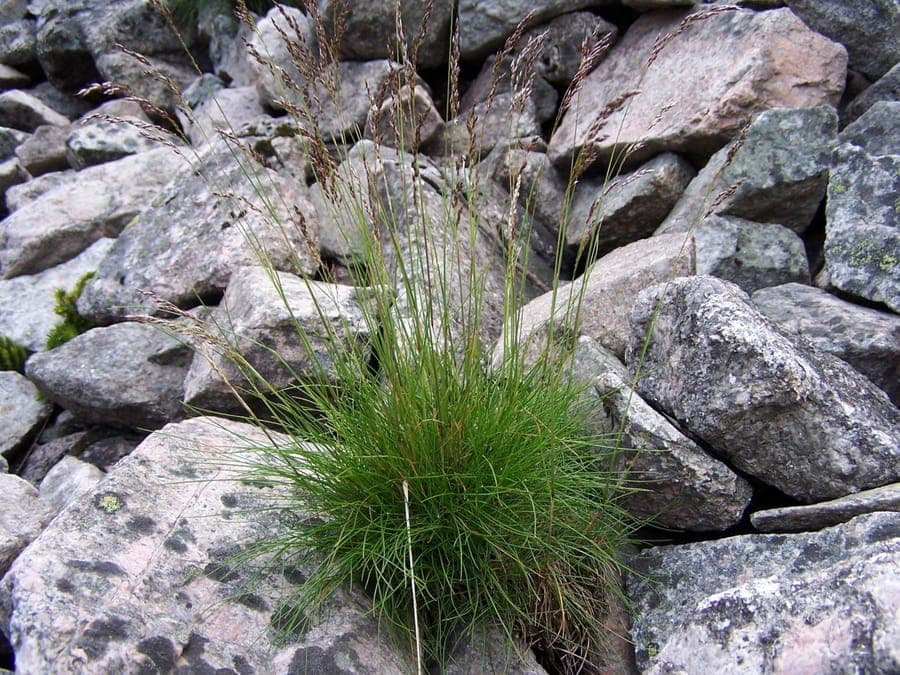
Jerzy Opioła / CC BY-SA 4.0, via Wikimedia Commons
Variegated fescue: complete guide
Festuca varia
¿Quieres ver Variegated fescue: complete guide en tu jardín?
1 minuto, sin tarjeta de crédito
Variegated fescue, scientifically Festuca varia, is a European alpine grass from the Poaceae family distributed across European mountains through to the Caucasus. This compact grass species is valued for its dense growth habit, blue-green foliage, and exceptional winter hardiness. The grass grows in small, tight bunches reaching just 15 to 30 centimeters tall, making it perfect for alpine rockeries, stone steps, and rock gardens in mountainous regions.
Variegated fescue is a true alpine plant capable of surviving temperatures to minus 40 degrees Celsius. The species is perfectly adapted to cold, dry alpine environments and naturally inhabits rocky mountain meadows. From June through August, the grass produces yellowish-brown flowers that are subtle yet elegant. This alpine grass fascinates collectors of rock gardens and alpine plant collections.
Appearance
Variegated fescue grows in extremely compact, dense bunches with fine, linear foliage. The leaves display blue-green to grey-green coloration and form stiff, upright clumps. The plant reaches only 15 to 30 centimeters in height, making it highly suitable for rock gardens. Flower panicles appear in June-July and are yellow to yellow-brown, very compact in appearance. The entire plant presents a neat, orderly appearance.
Ideal location and light
Variegated fescue performs best in full sun within alpine settings. Position the grass where it receives at least 6 to 8 hours of direct sunlight daily. The plant tolerates shade poorly and becomes sparse in partial shade. This is a true alpine plant preferring open, sunny, windy positions. More sunlight produces more compact, attractive growth.
Soil and nutrition
Variegated fescue grows in poor, stone and gravel-rich soils just like its natural alpine habitat. Use very well-draining potting soil with plenty of sand, gravel, and small stones. The plant thrives in acidic to neutral soils with pH 4.5 to 5.0. Feeding is almost unnecessary; poor soil is actually preferred. Heavy soils must be substantially amended with gravel.
Diseño gratis
¿Quieres ver Variegated fescue: complete guide en tu jardín? Crea un diseño gratis ahora.
Watering
Variegated fescue is extremely drought tolerant. Water only minimally during the growth phase. The plant actually performs better in relatively dry conditions. Overwatering can lead to root rot. In alpine habitats, the grass receives only seasonal rains, so moisture excess is undesirable. Ensure potting soil drains completely.
Pruning and maintenance
Variegated fescue requires virtually no maintenance. Remove dead leaf material very carefully. Pruning is unnecessary; the plant maintains its compact form automatically. The plant grows so slowly that practically no maintenance is needed except occasional removal of dead material.
Maintenance calendar
March-April: Provide minimal feeding or none at all. Water very carefully. May-July: Enjoy the flowers. Water very minimally. August-September: Plant remains highly decorative. No water needed. October-February: Plant dormancy. Do not water.
Winter hardiness
Variegated fescue ranks among the hardiest grasses, hardy in USDA zones 3 to 8, possibly even zone 2. The grass survives temperatures to minus 40 degrees Celsius. In mountain regions, no winter protection is required. This grass proves perfect for extremely cold regions.
Propagation
Variegated fescue can be carefully divided in spring. The plant grows very slowly, however, so division is not frequently needed. Seed propagation is possible but requires extremely patient work in cold, wet seed compost.
Companion plants
Variegated fescue combines beautifully with other alpine plants. Small Sedum species, alpine feather flowers, and small rock plants form attractive combinations. Saxifraga species, Armeria maritima, and small Dianthus work excellently. This grass belongs in rock gardens and alpine collections.
Conclusion
Variegated fescue represents an essential plant for anyone creating alpine and rock gardens in cold regions. With its compact form, exceptional winter hardiness, and minimal maintenance requirements, it proves perfect for mountain gardens. Available through specialized alpine plant nurseries throughout Europe and North America.
¿Quieres ver Variegated fescue: complete guide en tu jardín? Crea un diseño gratis ahora.
Sube una foto, elige un estilo y obtén un diseño fotorrealista con lista de plantas en menos de un minuto.
Más de 10.000 jardines diseñados
Sin tarjeta de crédito


Plantas similares
Sporobolus pungens: complete guide
Sporobolus pungens
Sporobolus pungens is a stoloniferous Mediterranean coastal grass with outstanding salt and drought tolerance, perfect for seaside and dry gardens.
Mediterranean aegilops: complete guide
Aegilops biuncialis
Everything about Aegilops biuncialis, a Mediterranean annual grass with ornamental spikes and outstanding drought tolerance for dry gardens.
Silver bluestem: complete guide
Bothriochloa saccharoides
Full guide to Bothriochloa saccharoides (silver bluestem): site, soil, watering, winter hardiness, pruning, and garden companions.