
Kurt Stüber [1] / CC BY-SA 3.0, via Wikimedia Commons
Bitter daisy: complete guide
Erigeron acris
¿Quieres ver Bitter daisy: complete guide en tu jardín?
1 minuto, sin tarjeta de crédito
Overview
Bitter daisy (Erigeron acris), also known as Rough fleabane, is a robust biennial in the Asteraceae family (daisies/composites). This elegant bloomer is naturally distributed across temperate Eurasia to Myanmar. The plant thrives in dry, nutrient-poor conditions and demands minimal maintenance after establishment. For gardeners seeking effortless long-lasting flowers, this is an excellent choice.
Its strong biennial growth cycle (rosette first year, flowers second year) makes this plant especially suited to wildflower garden designs. Through gardenworld.app, create a garden plan featuring this robust bloomer alongside other composites in a spontaneous, ecologically sound landscape.
Appearance & bloom cycle
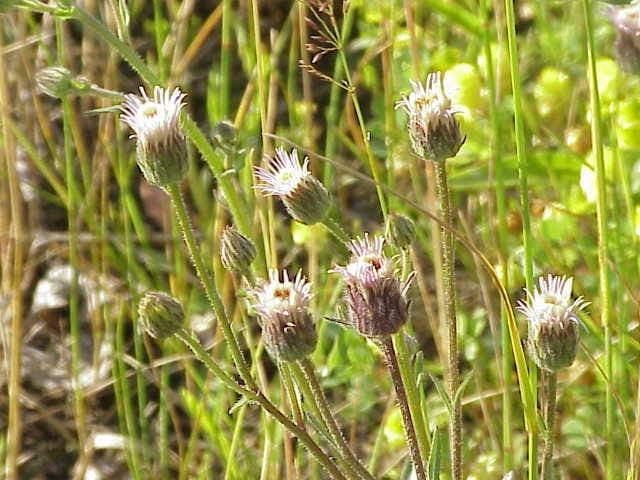
Erigeron acris is an elegant plant reaching 30-80 cm tall depending on growing conditions. In its first year, the plant forms a low rosette of oblong leaves. In the second year, upright flower stems emerge with heads of numerous small, purple-pink flowers.
Flowers are typical composite structure: tiny yellow disc florets surrounded by numerous delicate purple-pink ray florets. A single plant carries 50-100 flower heads, providing extended bloom. Blossoms attract numerous pollinators throughout their display period.
Blooming extends from June through September. After seed ripening, the plant usually dies, but self-seeding ensures new generations the following season.
Ideal location
Erigeron acris thrives in full sun to light shade. A minimum of 5-6 hours of direct sunlight daily is essential. The plant flowers abundantly in sunny gardens but tolerates some afternoon shade.
The plant is fully hardy (USDA zone 3-9) and performs well through all Northern European winters. No special protection needed.
Soil & nutrition
Bitter daisy grows across a wide spectrum of soils, from sandy to mixed loams. However, the plant thrives best in nutrient-poor, moderately dry conditions. Heavy, waterlogged soils may cause root rot.
Fertilization is usually unnecessary; excess nutrients can actually be counterproductive. This plant performs optimally in naturally poor soils. No supplemental feeding required.
Diseño gratis
¿Quieres ver Bitter daisy: complete guide en tu jardín? Crea un diseño gratis ahora.
Watering
Once established, Erigeron acris tolerates drought well. Regular watering during the first growing year promotes strong root development. After establishment, supplemental water is only needed during extreme dry spells.
Waterlogging must be avoided; well-draining soils are essential. In normal temperate climates, supplemental watering is rarely necessary.
Pruning & shaping
Bitter daisy requires virtually no pruning. Deadheading may extend bloom period but is unnecessary. The plant naturally maintains neat form without uncontrolled growth.
If self-seeding is undesired, remove seed heads before maturation.
Maintenance calendar
April-May: Sow seeds or plant seedlings June-September: Flowering period; minimal intervention needed October-November: Harvest seed for next season December-March: Winter dormancy; no maintenance required
Winter hardiness
Erigeron acris is fully hardy (USDA zone 3-9) and thrives through all Northern European winters. Snow cover provides natural frost protection. No winter protection required.
The plant grows as a biennial, so the first winter dormancy period is critical. Young plants must be sufficiently established for winter survival.
Companion plants
Bitter daisy pairs beautifully with:
- Other composites (Achillea, Rudbeckia) for cohesion
- Ornamental grasses (Stipa, Festuca) for structure
- Brassicas (Alyssum, Erysimum) for color variation
- Lavender (Lavandula) for fragrant affinity
- Mullein (Verbascum) for vertical accents
Final thoughts
Bitter daisy (Erigeron acris) is a robust, maintenance-free bloomer perfect for low-maintenance wildflower gardens. Purple-pink flowers attract pollinators while providing long-season summer beauty. Through gardenworld.app, design a naturally flowing garden plan where this strong composite excels.
Whether creating a small wildflower patch or a larger flowering border: Bitter daisy fully deserves inclusion. The plant demands virtually no intervention while adding ecological value and visual beauty to your landscape.
¿Quieres ver Bitter daisy: complete guide en tu jardín? Crea un diseño gratis ahora.
Sube una foto, elige un estilo y obtén un diseño fotorrealista con lista de plantas en menos de un minuto.
Más de 10.000 jardines diseñados
Sin tarjeta de crédito

