
Christian Fischer / CC BY-SA 3.0, via Wikimedia Commons
Bog-heather: complete guide
Erica tetralix
¿Quieres ver Bog-heather: complete guide en tu jardín?
1 minuto, sin tarjeta de crédito
Overview
Bog-heather (Erica tetralix), also known as cross-leaved heath, is a native Northern European heathland shrub specially adapted to wet, nutrient-poor, acidic soils. This attractive heather naturally inhabits boggy and heathland areas across the Netherlands, Belgium, Britain, and Scandinavia. The plant belongs to the Ericaceae family and forms an important component of protected wetland habitats.
Bog-heather is ideal for creating an ecologically responsible native plant garden. Through gardenworld.app, you can design a landscape where this valuable native species shines, combined with complementary wetland plants. The plant attracts insects and birds, contributing significantly to garden biodiversity.
Appearance & bloom cycle
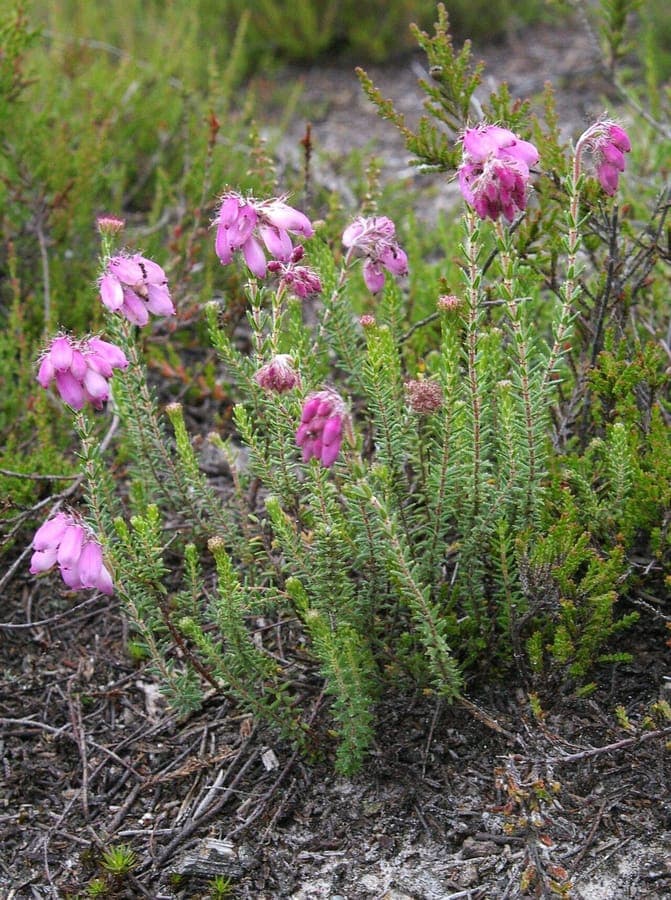
Bog-heather is an evergreen, compact shrub reaching 30-60 cm in height. Its most striking feature is the fine, silvery-grey foliage densely arranged along the stems. This grey coloration results from minute hairs covering the leaves, giving the plant a distinctive silvery sheen.
The flowers are small, tubular, and purple-pink to pink in color, grouped in dense clusters at stem tips. Blooming extends from July through September, making this heather an exceptionally valuable late-summer bloomer. After flowering, brownish seed capsules persist for months, adding autumn and winter interest.
Ideal location
Bog-heather thrives in full sun to light shade. In wetter regions like the Netherlands, Belgium, and northern France, it tolerates more shade than Mediterranean heathers. A minimum of 4-5 hours of direct sunlight daily is ideal.
The plant is fully hardy (USDA zone 5-8) and tolerates temperatures to -25°C. Established plants in Northern European gardens require no winter protection. It's one of the hardiest heathers available.
Soil & nutrition
Erica tetralix requires very acidic (pH 4.5-5.5), moist but well-drained soil. This is the critical requirement: the plant naturally inhabits wet conditions but develops root rot if water stagnates. Heavy clay soils must be significantly improved with sand, perlite, and organic matter.
Nutrient requirements are minimal. Erica tetralix actually thrives in nutrient-poor soils; extra feeding can be counterproductive. A light annual application of slow-release fertilizer in spring is sufficient.
Diseño gratis
¿Quieres ver Bog-heather: complete guide en tu jardín? Crea un diseño gratis ahora.
Watering
Unlike drought-tolerant heathers, Bog-heather prefers consistently moist conditions. In Northern European climates, natural rainfall usually maintains adequate moisture. However, supplemental watering is beneficial during dry spells, especially during the growing season.
Container plants require regular watering but with perfect drainage. Drying out is more damaging than occasional overwatering. During growth, mist regularly every two days.
Pruning & shaping
Bog-heather requires less pruning than many heathers. Light trimming after blooming (September-October) encourages denser growth. Remove approximately 10-20% of shoots.
Avoid harsh pruning; this heather doesn't resprout well from severely cut wood. The natural form is usually very attractive and requires only minimal maintenance.
Maintenance calendar
April: Begin growth season; check soil moisture May-June: Intensive growth; mist regularly July-September: Flowering period; maintain consistent moisture October-November: Light post-bloom trimming December-March: Winter dormancy; water only during extreme drought
Winter hardiness
Bog-heather is fully hardy throughout Northern European regions (USDA zone 5-8). Temperatures to -25°C are readily tolerated. No winter protection is necessary. Snow cover even provides additional frost protection.
This plant is ideal for creating a wildlife-friendly garden where native species provide structure year-round.
Companion plants
Bog-heather pairs beautifully with:
- Other Erica species for continuous bloom
- Calluna vulgaris (common heather) in group plantings
- Myrica gale (bog myrtle) for fragrant interest
- Drosera species (sundews) for unique character
- Sphagnum moss as ground cover
- Vaccinium oxycoccos (cranberry) for berries
These native combinations create authentic wetland garden landscapes.
Final thoughts
Bog-heather (Erica tetralix) is a beautiful, native choice for creating an ecologically responsible wet garden. The silvery foliage and purple flowers provide year-round interest. Through gardenworld.app, develop a sustainable garden plan where this valuable plant reaches its full potential.
Whether establishing a small wildlife sanctuary or a larger wetland biotope: Bog-heather fully deserves inclusion. Through gardenworld.app, expert guidance ensures optimal plant density, compatible companions, and ecological gardening practices.
¿Quieres ver Bog-heather: complete guide en tu jardín? Crea un diseño gratis ahora.
Sube una foto, elige un estilo y obtén un diseño fotorrealista con lista de plantas en menos de un minuto.
Más de 10.000 jardines diseñados
Sin tarjeta de crédito


Plantas similares
Besom heath: complete guide
Erica scoparia
Discover all about Besom heath (Erica scoparia): a Mediterranean shrub with distinctive green flowers, perfect for sandy, well-drained sites.
Tree heath: complete guide
Erica arborea
Everything you need to know about Erica arborea: care, ideal location, soil and bloom time. Perfect for Mediterranean gardens and heathland designs. Plan your layout on gardenworld.app.