
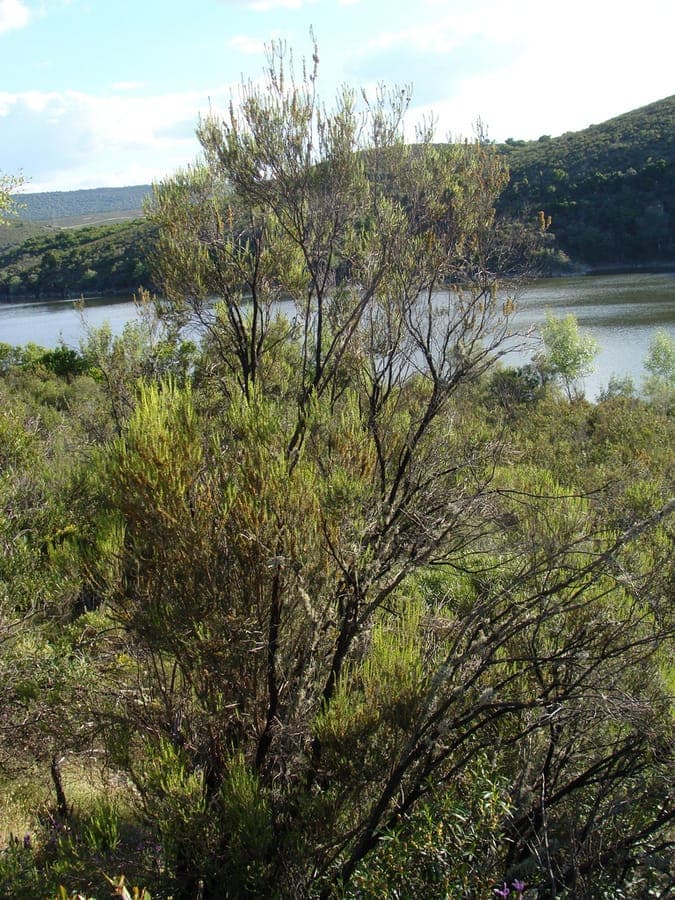
naturalezafrague / CC BY-SA 2.0, via Wikimedia Commons
Besom heath: complete guide
Erica scoparia
¿Quieres ver Besom heath: complete guide en tu jardín?
1 minuto, sin tarjeta de crédito
Overview
Besom heath (Erica scoparia), also known as green heather, is a fascinating heathland shrub native to the western Mediterranean region and North Africa. This compact shrub belongs to the Ericaceae family and thrives in dry, sandy conditions. The name 'scoparia' refers to its traditional use in broom-making. In northern European gardens, this heather performs well in nutrient-poor, acidic soils, especially when combined with other heathland plants.
If you're creating a low-maintenance Mediterranean garden, Besom heath is an excellent choice. Through gardenworld.app, you can design a custom garden plan where this beautiful heather shrub is perfectly positioned alongside other drought-tolerant plants. It contributes to a natural, ecologically-sound garden design.
Appearance & bloom cycle
Besom heath is an evergreen, finely-branched shrub reaching 30-60 cm in height and spread. Its foliage consists of tiny needle-like leaves densely arranged along the stems, giving the plant an elegant appearance. The flowers are small, tubular, and distinctively green - an unusual characteristic that sets this species apart from most other heathers.
Blooming occurs from May to July, with thousands of tiny flowers adorning the plant. The blooms serve as excellent nectar sources for bees and other pollinators. After flowering, small seed capsules persist on the plant, adding winter interest.
Ideal location
Besom heath prefers sunny to lightly shaded positions. A minimum of 5-6 hours of direct sunlight daily is ideal. The plant reaches its fullest potential in full sun, where growth remains compact and flowering is most abundant. In gardens across northern Europe, this heather excels in sunny corners and south- or west-facing slopes.
The plant is moderately hardy (USDA zone 8-9) and tolerates temperatures down to -10°C, though protection during extreme freezes is beneficial. Positioning against a sheltered south-facing wall significantly improves winter survival.
Soil & nutrition
Erica scoparia requires very well-draining, nutrient-poor, acidic soil (pH 5.0-5.5). Heavy clay soils must be amended with coarse sand, perlite, or peat moss. For container culture, use a mixture of heather soil blended with sharp sand.
Regarding nutrition: this heather needs minimal feeding. Excessive nutrients promote leafy growth at the expense of flowering. A single annual application of slow-release fertilizer in spring is more than sufficient. In naturally poor soils, fertilization is often unnecessary.
Diseño gratis
¿Quieres ver Besom heath: complete guide en tu jardín? Crea un diseño gratis ahora.
Watering
Erica scoparia is quite drought-tolerant once established, thanks to its shallow, fine root system. However, regular misting is essential, particularly during the growing season. In northern European climates, natural rainfall is usually adequate, but supplemental water is needed during dry spells.
Maintaining consistently moist but never waterlogged soil is critical; excess moisture causes root rot. The ideal balance is: regularly moist but well-drained. Container-grown plants need less water during winter, though complete drying out should be avoided.
Pruning & shaping
While Erica scoparia naturally maintains a compact form, light pruning after flowering (July-August) encourages denser growth. Trim approximately one-third of the shoots. This prevents the plant from becoming leggy and overgrown.
Avoid cutting into old wood; this heather doesn't readily resprout from severely cut stems. Regular light trimming to maintain shape is far better than drastic pruning.
Maintenance calendar
March: Check drainage and apply fertilizer if needed May-July: Flowering period; ensure consistent watering July-August: Post-bloom pruning for compact form September-October: Propagation via seed or semi-hardwood cuttings November-February: Minimal care; protect during extreme frost
Winter hardiness
Erica scoparia is moderately hardy (USDA zone 8-9). In milder regions, the plant can remain outdoors year-round, but in harsh winters with temperatures below -10°C, protection is advisable. Container specimens are best moved to a cool, sheltered location such as against a south-facing wall.
Snow cover provides natural protection against frost damage. In southern regions, this heather grows outdoors without difficulty.
Companion plants
Besom heath pairs beautifully with:
- Other Erica species (E. tetralix, E. carnea) for extended bloom
- Calluna vulgaris (common heather) for contrast
- Cistus (rock roses) for dry-site companions
- Buxus microphylla for structural interest
- Thymus vulgaris (thyme) for fragrant underplanting
While not all heathers thrive on identical soils, these combinations excel in dry, acidic heathland gardens.
Final thoughts
Besom heath (Erica scoparia) is an elegant, low-maintenance choice for creating a dry heathland garden aesthetic. Its green flowers are unique and striking, while the plant demands almost no care after establishment. With gardenworld.app, you can develop a comprehensive garden plan where this Mediterranean shrub fits perfectly into your landscape vision.
Whether planting a small container specimen or establishing an expansive heather garden: Besom heath fully deserves a place. Through gardenworld.app, expert guidance ensures optimal positioning, spacing, and complementary planting partners.
¿Quieres ver Besom heath: complete guide en tu jardín? Crea un diseño gratis ahora.
Sube una foto, elige un estilo y obtén un diseño fotorrealista con lista de plantas en menos de un minuto.
Más de 10.000 jardines diseñados
Sin tarjeta de crédito


Plantas similares
Bog-heather: complete guide
Erica tetralix
Discover all about Bog-heather (Erica tetralix): a native Northern European heather for wet, acidic soils with purple flowers and silvery foliage.
Tree heath: complete guide
Erica arborea
Everything you need to know about Erica arborea: care, ideal location, soil and bloom time. Perfect for Mediterranean gardens and heathland designs. Plan your layout on gardenworld.app.