
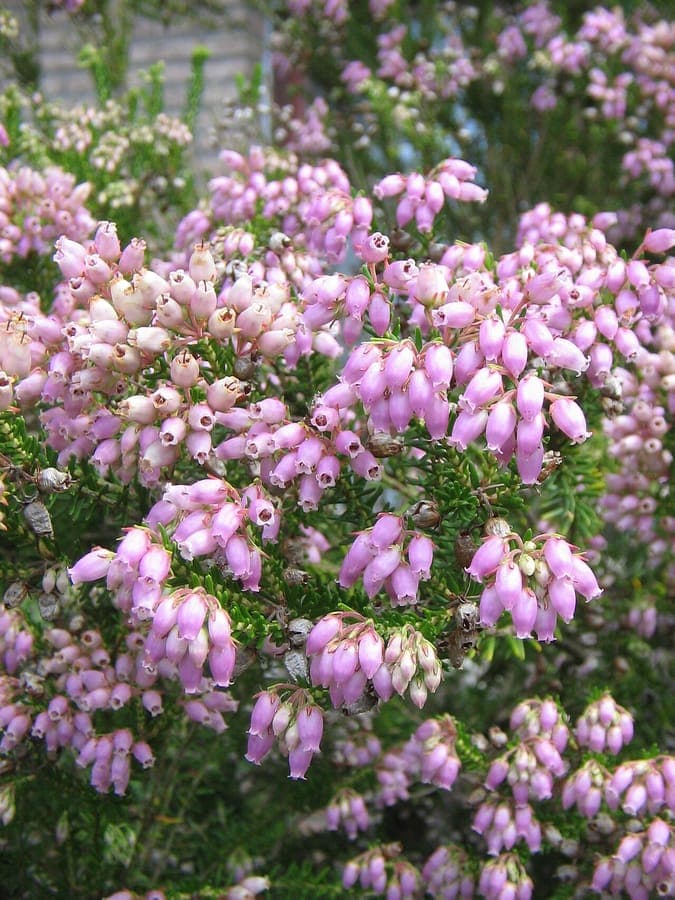
Meneerke bloem / CC BY-SA 3.0, via Wikimedia Commons
Erica terminalis: complete guide
Erica terminalis
¿Quieres ver Erica terminalis: complete guide en tu jardín?
1 minuto, sin tarjeta de crédito
Erica terminalis, commonly known as Corsican heath, is a flowering Mediterranean heath species native to the Mediterranean region. This elegant plant grows wild in southern and eastern Spain, Corsica, Sardinia, and Italy, and is a favorite among gardeners seeking to create a Mediterranean atmosphere.
Overview
Corsican heath is a compact shrub that can grow to approximately 60-80 centimeters in height. The plant blooms primarily in summer and early autumn with small, pink to rose-red flowers that grow in clusters along the stems. The plant has thin, needle-like leaves that remain green throughout the year. Erica terminalis is highly attractive to bees and other pollinators.
Appearance and Bloom
The plant forms a dense, bushy shrub with slender, upright stems. The leaves are small, linear, and typically green, though they may turn red in winter. The flowers are the true attraction: they are small, tubular, and range from pink to rose-red. Blooming concentrates at the branch ends and lasts from June to September, providing the garden with extended color.
Ideal Location
Place your Corsican heath in a sunny location. The plant needs at least 6 hours of direct sunlight daily to bloom well. In very shaded locations, the plant will grow thin and produce fewer flowers. A south or west-facing aspect is ideal. The plant can also grow in partial shade, but blooming will be reduced.
Soil
Erica terminalis prefers acidic, well-draining soil. The plant does not thrive in chalky soils. Amend your garden soil with peat or other acidic material if you have neutral or alkaline soil. A mixture of garden soil or heather-specific soil with sand improves drainage. The plant does not tolerate waterlogging.
Watering
Water regularly during the growing season (spring and summer), especially during dry periods. Keep the soil moist but not wet. In autumn and winter, you can water less, though you must not let it dry out completely. Avoid hard water; use rainwater when possible. This is especially important in areas with chalky water.
Pruning
Pruning is important for maintaining a compact form. After blooming (in October), you can lightly prune the plant by cutting back about one-third of new growth. This encourages branching and a fuller plant next season. Heavy pruning can weaken the plant.
Maintenance Calendar
Spring: Check soil moisture. Begin feeding once every 4 weeks as new growth appears. Summer: Water regularly, especially during heat waves. Continue feeding. Deadhead spent flowers for extended blooming. Autumn: Begin reducing feeding after blooming. Light pruning after bloom. Winter: Minimal watering. Protect against frost in areas with severe winters.
Winter Hardiness
Erica terminalis is relatively winter-hardy and can tolerate temperatures down to about -5 degrees Celsius, though it prefers not to be exposed to frost. In areas with severe winters, protect the plant with mulch around the base or against a wall. In containers, winter protection is essential. Ensure the plant does not freeze while wet.
Companion Plants
Corsican heath grows well with other Mediterranean plants such as Rosemary, Lavender, Santolina, and other low-growing heaths. This combination creates a warm, Mediterranean plant bed. You can also group it with other acid-loving plants if you have neutral soil.
Closing
Erica terminalis is a charming addition to any Mediterranean garden or even as a potted plant. With good drainage, full sun, and regular maintenance, you will enjoy long periods of beautiful blooms. Most garden centres stock heather-specific soil and fertilizers. The plant attracts many bees, so you also contribute to pollinator-friendly gardens. Find more Mediterranean plants on gardenworld.app.
¿Quieres ver Erica terminalis: complete guide en tu jardín? Crea un diseño gratis ahora.
Sube una foto, elige un estilo y obtén un diseño fotorrealista con lista de plantas en menos de un minuto.
Más de 10.000 jardines diseñados
Sin tarjeta de crédito


Plantas similares
Zenobia pulverulenta: complete guide
Zenobia pulverulenta
Everything about Zenobia pulverulenta (honeycup): siting, acid soil, pruning and the fragrant white bells, in this complete care guide.
Dwarf huckleberry: complete guide
Gaylussacia dumosa
Everything about dwarf huckleberry (Gaylussacia dumosa): acidic soil, partial shade, pruning and care for this compact North American berry shrub.
Drooping leucothoe: complete guide
Leucothoe fontanesiana
Everything about drooping leucothoe (Leucothoe fontanesiana): shade tolerance, soil, watering, pruning, hardiness and companion plants.