
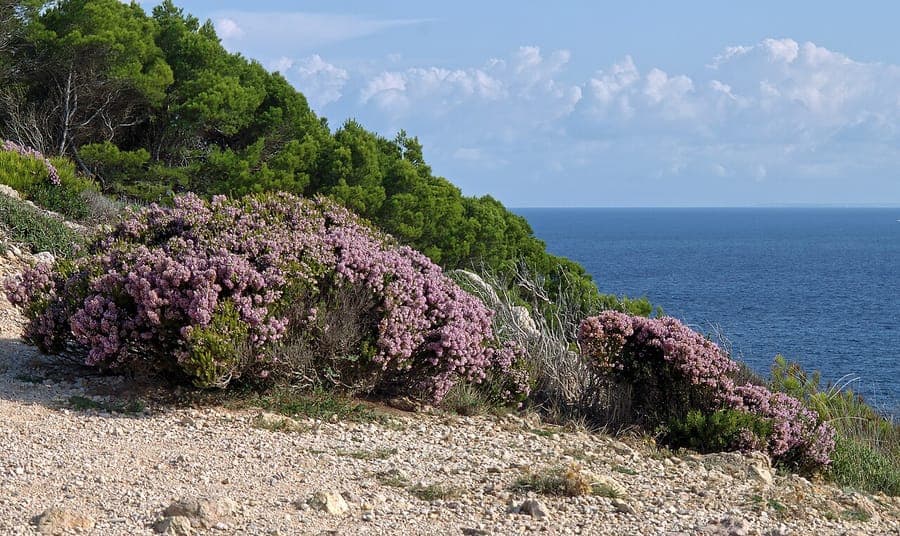
H. Zell / CC BY-SA 3.0, via Wikimedia Commons
Erica multiflora: complete guide
Erica multiflora
¿Quieres ver Erica multiflora: complete guide en tu jardín?
1 minuto, sin tarjeta de crédito
Overview
Erica multiflora, also known as Mediterranean heath, many-flowered heather, or many-flowered heath, is an elegant, shrubby plant from the Ericaceae family. This plant grows naturally in the western and central Mediterranean region and is renowned for its winter flowering period from October to May. The plant is extremely drought-tolerant and blooms even in ungrateful conditions.
Appearance and bloom
Mediterranean heath forms compact, bushy shrubs 60 to 120 centimeters tall. The plant has very thin, needle-like leaves densely packed together. The flowers are the star: countless small pink to purplish flowers appear in long clusters from October to May.
Ideal location
Mediterranean heath thrives best in sunny locations with at least 6 to 8 hours of full sun daily. The plant is extremely wind-resistant and can even grow in strong sea breezes. The plant is also very frost-resistant and can tolerate temperatures down to -5 degrees Celsius.
Soil
Mediterranean heath feels at home in acidic, well-draining soils. A mixture of heather soil and gravel or sand is ideal. Heather plants are very sensitive to lime-rich soils. Ensure very good drainage to prevent water accumulation.
Watering
Provide regular but moderate watering, especially in the dry season. Once established, Mediterranean heath is extremely drought-tolerant. However, avoid waterlogging that leads to root rot. In Mediterranean climates, supplemental watering in summer is usually not needed.
Diseño gratis
¿Quieres ver Erica multiflora: complete guide en tu jardín? Crea un diseño gratis ahora.
Pruning
Pruning is not strictly necessary, but light pruning after bloom in May can help keep the plant compact and bushy. Remove spent flowers and diseased wood. Heavy pruning is not advisable.
Maintenance calendar
January-March: Enjoy the bloom and remove spent flowers. April-May: Give light pruning after bloom if desired. June-September: Minimal maintenance. October-December: Winter blooming period begins.
Winter hardiness
Mediterranean heath is fairly winter hardy and can tolerate temperatures down to about -5 degrees Celsius. In cold climates, protection may be necessary. However, the plant is extremely suitable for Mediterranean climates and coastal applications.
Companion plants
Mediterranean heath combines beautifully with other Mediterranean plants such as lavender, rosemary, and thyme. In xeriscapes, it forms an attractive contrast with silver-grey foliage plants.
Conclusion
Mediterranean heath is an elegant choice for dry, sunny locations with acidic soil. The winter flowering period makes it a valuable addition to winter gardens. Discover this splendid plant through gardenworld.app for advice on Mediterranean plant selection. For more information about heath species and cultivation, visit gardenworld.app.
¿Quieres ver Erica multiflora: complete guide en tu jardín? Crea un diseño gratis ahora.
Sube una foto, elige un estilo y obtén un diseño fotorrealista con lista de plantas en menos de un minuto.
Más de 10.000 jardines diseñados
Sin tarjeta de crédito


Plantas similares
Zenobia pulverulenta: complete guide
Zenobia pulverulenta
Everything about Zenobia pulverulenta (honeycup): siting, acid soil, pruning and the fragrant white bells, in this complete care guide.
Dwarf huckleberry: complete guide
Gaylussacia dumosa
Everything about dwarf huckleberry (Gaylussacia dumosa): acidic soil, partial shade, pruning and care for this compact North American berry shrub.
Drooping leucothoe: complete guide
Leucothoe fontanesiana
Everything about drooping leucothoe (Leucothoe fontanesiana): shade tolerance, soil, watering, pruning, hardiness and companion plants.