
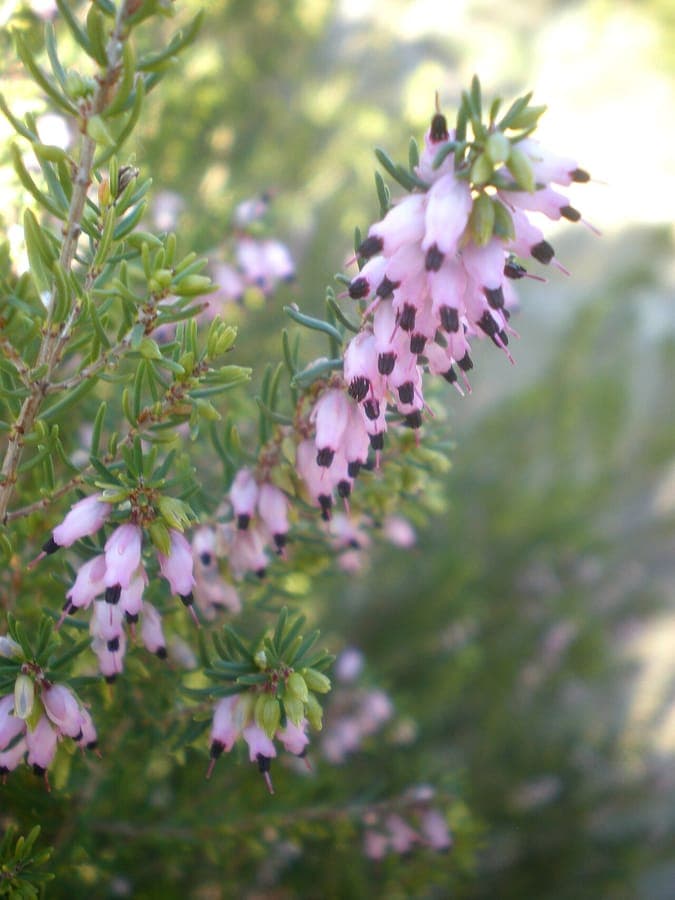
Consultaplantas / CC BY-SA 4.0, via Wikimedia Commons
Erica erigena: complete guide
Erica erigena
¿Quieres ver Erica erigena: complete guide en tu jardín?
1 minuto, sin tarjeta de crédito
Overview
Erica erigena, commonly known as Irish heath or Western heath, is a striking evergreen shrub from the Ericaceae family. Native to Ireland, southwestern France, the Iberian Peninsula, and northern Morocco, this winter-flowering plant thrives in heathland environments and brings structural elegance to modern gardens during the coldest months when few other plants bloom.
The Irish heath offers far more than seasonal color: its fine, needle-like foliage provides year-round texture, while its compact growth habit suits diverse garden settings. For gardenworld.app users seeking a winter-focused front yard redesign, Erica erigena is an excellent specimen plant.
Appearance & Bloom
Erica erigena grows as a slender, upright shrub reaching approximately 80 centimeters in height. Its needle-like foliage is exceptionally fine and densely packed, creating a lightweight, refined visual form. The plant flowers from January through March, making it invaluable during winter when garden color is scarce.
The flowers are small, tubular, and rich purple in tone - a more sophisticated hue than many common heather varieties. Blooms appear in clusters along the stems, creating delicate, elegant floral displays. In full bloom, the branches are studded with tiny purple bells, forming a spectacular winter statement.
The plant retains its foliage year-round, providing green structural interest even during dormant seasons. This evergreen character makes it valuable for maintaining garden geometry and framework throughout all seasons.
Ideal Location
Erica erigena has specific location requirements for optimal growth. The plant thrives in full sun exposure - at least 8 hours of direct daily sunlight is essential. This intensive light requirement ensures rich flowering and compact growth patterns.
Choose sites with good air circulation where moisture doesn't accumulate excessively. A southwest-facing position with wind protection from taller specimens is ideal. Avoid high-traffic areas where the shrub could sustain damage.
In gardens where other Erica varieties already grow, Irish heath serves excellently as a winter-season filler. Combinations with yellow-flowering winter Skimmia or deep green Ilex varieties create striking color contrasts.
Soil
Soil requirements for Erica erigena are quite specific. The plant demands acidic conditions with a pH range between 5.0 and 5.5 - this is arguably the most critical factor for long-term success.
The soil must drain freely while retaining some moisture. Heavy clay soils require substantial amendment with sand or peat. In many regions, neutral to alkaline native soils demand acid substrate creation around the planting area.
Apply a 5-7 centimeter mulch layer using acid-based materials (pine needles, heather peat, or acidic compost) around the plant. This maintains both moisture levels and soil pH.
Diseño gratis
¿Quieres ver Erica erigena: complete guide en tu jardín? Crea un diseño gratis ahora.
Watering
Erica erigena prefers consistent moisture without waterlogging - a balance requiring careful attention.
During the growing season (spring and summer), water regularly to keep soil consistently moist but never waterlogged. Once weekly watering, adjusted for rainfall, typically suffices.
During blooming season (winter), reduce watering slightly while maintaining adequate moisture. Ensure thorough establishment watering after planting, and avoid rapid cycling between dry and saturated conditions.
Rainwater is preferable for this plant, as it is naturally more acidic than municipal tap water in most regions. This helps maintain optimal pH levels.
Pruning
Erica erigena responds well to moderate pruning, though this is not essential maintenance.
After flowering (March-April), lightly prune to maintain compact shape. Remove spent flowers and dead wood. Avoid cutting back into old wood - the shrub regrows less vigorously from very old material.
Heavy pruning should be avoided. Light shape-correction annually maintains optimal health.
Maintenance Calendar
- January-March: Flowering period, minimal intervention, water as needed
- April: Light post-bloom pruning, remove dead foliage
- May-July: Active growth phase, regular watering, no fertilizer needed
- August-September: Pre-blooming preparation, normal watering
- October-December: Reduce watering gradually, bloom anticipation
Winter Hardiness
Erica erigena is reasonably hardy, suitable for USDA zones 7-9 and most European climates. The plant tolerates frost down to approximately -10 degrees Celsius, though it prefers milder conditions.
In many Benelux regions where extreme frost is less frequent, Irish heath typically survives without protection. In mountain areas or severe winter climates, protective measures (burlap wrapping) prove beneficial.
Remove accumulated snow carefully from branches to prevent damage.
Companion Plantings
Erica erigena combines beautifully with other acid-loving plants and winter-bloomers.
- Calluna vulgaris: Common heather in red or pink for color contrast
- Ilex verticillata: Winterberry holly for red-berry winter interest
- Skimmia japonica: Green foliage with yellow spring flowers
- Helleborus niger: Christmas rose for extended winter bloom
- Carex species: Grass-like texture for structural contrast
These combinations create compelling winter-interest landscapes with extended color and texture appeal.
Closing
Erica erigena is an invaluable mid-tier shrub for designers and home gardeners seeking sophisticated winter color. With proper drainage, acidic soil, and moderate care, it flourishes for decades in the same garden location.
For European gardens, it offers something rare: dependable winter flowering in rich, refined hues combined with fine texture present year-round. Whether planning front-yard redesigns through gardenworld.app or traditional landscape work, Erica erigena merits serious consideration.
Availability: Check major garden retailers for local stock. Northern European nursery availability continues to grow for established cultivars.
¿Quieres ver Erica erigena: complete guide en tu jardín? Crea un diseño gratis ahora.
Sube una foto, elige un estilo y obtén un diseño fotorrealista con lista de plantas en menos de un minuto.
Más de 10.000 jardines diseñados
Sin tarjeta de crédito


Plantas similares
Zenobia pulverulenta: complete guide
Zenobia pulverulenta
Everything about Zenobia pulverulenta (honeycup): siting, acid soil, pruning and the fragrant white bells, in this complete care guide.
Dwarf huckleberry: complete guide
Gaylussacia dumosa
Everything about dwarf huckleberry (Gaylussacia dumosa): acidic soil, partial shade, pruning and care for this compact North American berry shrub.
Drooping leucothoe: complete guide
Leucothoe fontanesiana
Everything about drooping leucothoe (Leucothoe fontanesiana): shade tolerance, soil, watering, pruning, hardiness and companion plants.