
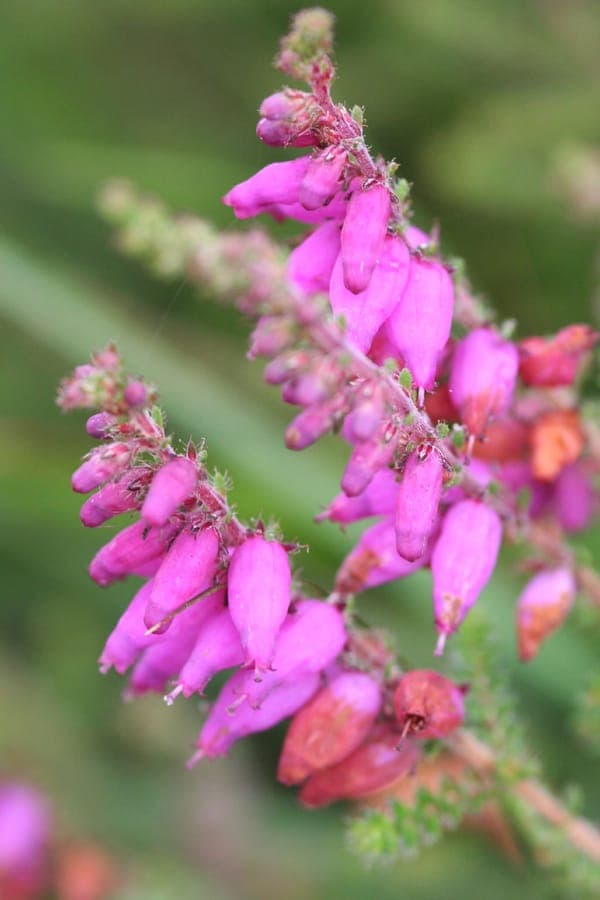
Alastair Rae / CC BY-SA 3.0, via Wikimedia Commons
Erica ciliaris: complete guide
Erica ciliaris
¿Quieres ver Erica ciliaris: complete guide en tu jardín?
1 minuto, sin tarjeta de crédito
Overview
Erica ciliaris, known as Dorset heath or Ciliate heath, is an elegant shrub belonging to the Ericaceae family. Native to Western Europe extending to Northern Morocco, this heather is beloved by gardeners for its extended flowering period and ornamental value. It is an excellent choice for heather gardens, rock gardens, and Mediterranean-style designs. The plant is appreciated in both formal and informal garden settings throughout temperate regions.
Appearance & Bloom
Dorset heath is a compact, low-growing shrub typically reaching 30-60 centimeters in height with sprawling width. The plant produces hundreds of small purple flowers from June through October and occasionally into November, ensuring an extended flowering period. The flowers hang elegantly in rich purple tones, creating a mesmerizing and robust visual effect. Needle-like foliage is small and dark green, providing refined texture and year-round interest. Without pruning, the plant forms a compact, rounded shape.
Ideal Location
This plant thrives in full sun to light partial shade, though full sun is ideal for maximum blooming. The plant requires at least 6-8 hours of direct sunlight daily for optimal flower development. In heavy shade, bloom diminishes significantly and plants may become leggy and weak. Position the plant where it is protected from strong winds and harsh exposure.
Soil
Dorset heath demands strongly acidic soil with a pH of 4.0 to 4.5, which is essential for health. The plant thrives in sandy, well-draining soil with minimal fertility. Add peat or heather soil to heavy soils to significantly improve drainage and water penetration. This plant absolutely cannot grow in limey soils; acidic conditions are critical for success and longevity.
Watering
Dorset heath requires regular watering, especially during growing season and dry spells. Keep soil consistently moist but not waterlogged or standing in water. During dry summers, water twice weekly for optimal moisture. Reduce watering in winter as growth slows. Proper water drainage is important for root health and preventing rot.
Diseño gratis
¿Quieres ver Erica ciliaris: complete guide en tu jardín? Crea un diseño gratis ahora.
Pruning
Immediately after flowering (November-December), prune carefully by removing faded flowers and damaged twigs. Cutting to approximately one-third of length promotes compact, bushy growth for next year. Avoid spring pruning when new growth begins. Regular maintenance pruning helps keep the plant healthy and attractive throughout many years of enjoyment.
Maintenance Calendar
- Spring (March-May): Growing season begins. Water and fertilize regularly. Monitor for pests and diseases. Watch for emerging shoots.
- Summer (June-August): Flowering period peaks. Heavy bloom production. Regular watering essential during dry spells. Deadheading encourages more blooms.
- Fall (September-October): Flowering intensity increases. Prepare for winter by removing dead material. Enjoy peak color display.
- Winter (November-February): Complete pruning after flowering. Minimal watering needed. Protective mulch helpful during cold periods. Monitor for frost damage.
Winter Hardiness
Dorset heath is hardy to approximately -10 degrees Celsius, making it suitable for many climate zones worldwide. In very cold climates, protect plants with mulch around the base and sheltered positioning. In regions with severe winters, protective covering or microclimate positioning may be beneficial. The plant may experience winter moisture problems more than frost damage.
Companion Plants
Dorset heath pairs beautifully with other heather species, sedges, and other acid-soil lovers such as blueberries. Combine with fall-flowering erica or bell heathers for extended seasonal color. Add winter-interest groundcovers for year-round appeal. Checker lilies and other alpine plants create attractive combinations in rock gardens.
Closing
Dorset heath is a beautiful and reliable heather that adorns your garden with purple flowers for months each year. With acidic soil, good drainage, and regular watering, this plant will flourish and thrive year after year. Explore more plants at gardenworld.app/en and gardenworld.app/en/plants for inspiration and growing guides.
¿Quieres ver Erica ciliaris: complete guide en tu jardín? Crea un diseño gratis ahora.
Sube una foto, elige un estilo y obtén un diseño fotorrealista con lista de plantas en menos de un minuto.
Más de 10.000 jardines diseñados
Sin tarjeta de crédito


Plantas similares
Zenobia pulverulenta: complete guide
Zenobia pulverulenta
Everything about Zenobia pulverulenta (honeycup): siting, acid soil, pruning and the fragrant white bells, in this complete care guide.
Dwarf huckleberry: complete guide
Gaylussacia dumosa
Everything about dwarf huckleberry (Gaylussacia dumosa): acidic soil, partial shade, pruning and care for this compact North American berry shrub.
Drooping leucothoe: complete guide
Leucothoe fontanesiana
Everything about drooping leucothoe (Leucothoe fontanesiana): shade tolerance, soil, watering, pruning, hardiness and companion plants.