
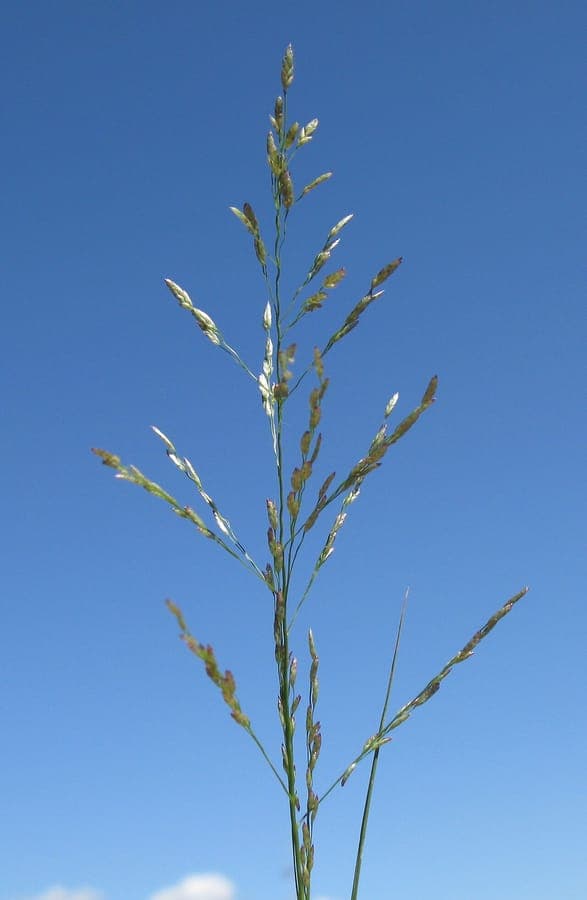
Harry Rose from South West Rocks, Australia / CC BY 2.0, via Wikimedia Commons
Mexican Love Grass: complete guide
Eragrostis mexicana
¿Quieres ver Mexican Love Grass: complete guide en tu jardín?
1 minuto, sin tarjeta de crédito
Overview
Mexican love grass (Eragrostis mexicana) is a fine-textured ornamental grass originating from North to South America. This elegant plant thrives in warm, sunny locations and brings a soft, delicate texture to garden designs. The graceful, feathery panicles create an airy effect that works beautifully in borders, containers, and landscape displays. It's a forgiving plant that adapts to various growing conditions, making it ideal for gardeners of all skill levels.
Appearance and Bloom
Mexican love grass grows 30-60 cm tall with delicate, finely-textured foliage creating an overall soft appearance. The narrow leaves give the plant its characteristic fine texture. Flowering occurs from July to September, producing green to yellowish panicles that dance on slender stems. The blooms remain attractive even after drying, providing visual interest well into autumn and winter. The graceful, weeping character of the panicles adds movement and lightness to any planting.
Ideal Location
This grass performs best in full sun, requiring at least 6 hours of direct sunlight daily for optimal growth and flowering. Position it in a location where sunlight reaches throughout the day. Partial shade can be tolerated, but flowering will be reduced. Provide protection from strong winds that can damage the delicate panicles. Wind shelter or support structures may be needed in exposed locations to maintain the plant's graceful appearance.
Soil Requirements
Well-draining soil is essential for Mexican love grass. Heavy clay soils should be amended with sand or compost to improve drainage. Sandy or sandy loam soils are ideal growing mediums. Soil pH can range from neutral to acidic. Fertile soil is not necessary - this grass actually prefers lean soils. Add organic matter cautiously, as excessive nutrition can promote overly vigorous, lush growth that reduces the plant's characteristic delicate appearance.
Watering
Mexican love grass is drought-tolerant once established. Water regularly during the first growing season to ensure good root development. Thereafter, supplemental watering during dry periods is usually sufficient. For container-grown plants, keep soil moist but never waterlogged. Absolutely avoid overwatering, especially during dormancy. During hot, dry spells, occasional deep watering encourages lush flowering.
Diseño gratis
¿Quieres ver Mexican Love Grass: complete guide en tu jardín? Crea un diseño gratis ahora.
Pruning
Cut back the grass in early spring (March-April) to approximately 10 cm above ground before new growth emerges. This promotes compact, fuller growth. Remove dead or damaged foliage throughout the year. After blooming, dried panicles can be removed if desired, though they retain ornamental value through winter. Use sharp pruning shears rather than string trimmers for clean cuts that promote healthy regrowth.
Maintenance Calendar
March-April: Spring cleanup and cutback. May-June: Active growth period, regular watering. July-September: Flowering season, enjoy the graceful panicles. October-November: Growth slows, reduce watering frequency. December-February: Dormant period, minimal care required. Spring: Check soil conditions and amend if needed. Annual: Consider division or seed collection for propagation.
Winter Hardiness
Mexican love grass is moderately winter-hardy, thriving in USDA zones 8-9. In colder regions (zones 5-7), severe frost can damage or kill the plant. Where winter protection is necessary, grow in containers and overwinter indoors. Mulching around the base provides additional protection. Ensure soil drains well to prevent root damage from ice formation and waterlogging.
Companion Plants
Mexican love grass pairs beautifully with other drought-tolerant plants. Combine with sedums, ornamental sages, or landscape-scale shrubs for striking textural contrasts. In containers, it works well with succulents and silver-foliaged plants. The soft panicles complement herbaceous perennials like Lavandula and Salvia. Its fine texture creates elegant contrast with bold-foliaged plants and creates airy, dynamic plantings.
Closing
Mexican love grass is an excellent addition to sunny, well-drained gardens seeking graceful movement and fine texture. With minimal maintenance, it develops into a stunning ornamental that brightens the landscape from summer through winter. Follow this guide and your garden will enjoy years of beauty from this elegant grass. For more gardening inspiration, visit gardenworld.app to explore additional plant species. Enjoy growing Mexican love grass - gardenworld.app makes garden design simple and beautiful!
¿Quieres ver Mexican Love Grass: complete guide en tu jardín? Crea un diseño gratis ahora.
Sube una foto, elige un estilo y obtén un diseño fotorrealista con lista de plantas en menos de un minuto.
Más de 10.000 jardines diseñados
Sin tarjeta de crédito


Plantas similares
Sporobolus pungens: complete guide
Sporobolus pungens
Sporobolus pungens is a stoloniferous Mediterranean coastal grass with outstanding salt and drought tolerance, perfect for seaside and dry gardens.
Mediterranean aegilops: complete guide
Aegilops biuncialis
Everything about Aegilops biuncialis, a Mediterranean annual grass with ornamental spikes and outstanding drought tolerance for dry gardens.
Silver bluestem: complete guide
Bothriochloa saccharoides
Full guide to Bothriochloa saccharoides (silver bluestem): site, soil, watering, winter hardiness, pruning, and garden companions.