
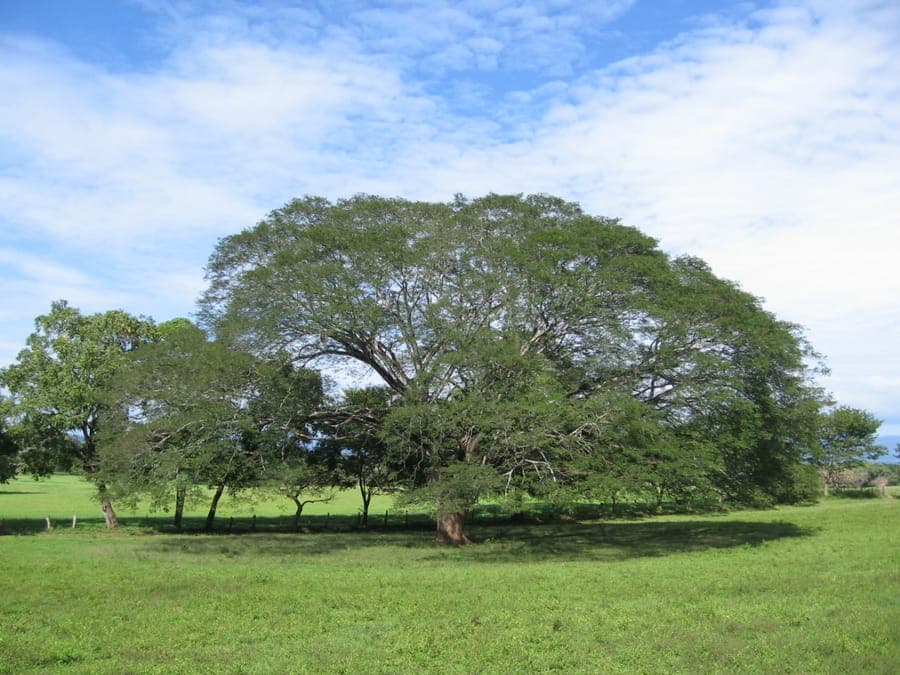
Avancari / CC BY-SA 4.0, via Wikimedia Commons
Earpod tree: complete guide
Enterolobium cyclocarpum
¿Quieres ver Earpod tree: complete guide en tu jardín?
1 minuto, sin tarjeta de crédito
Overview
Enterolobium cyclocarpum, commonly known as the earpod tree, monkey soap tree, or guanacaste tree, is an impressive shade tree native to Mexico and Central America. This tree belongs to the Fabaceae family and is highly valued for its large, spreading crown, interesting fruits, and nitrogen-fixing abilities.
The tree grows very large, reaching heights exceeding 25 meters with an extensive, umbrella-like crown. It produces abundant shade and forms a perfect retreat in warm climates. The tree is ecologically important, offering food and shelter for wildlife.
Appearance and bloom
The earpod tree is a large, impressive specimen with a dense, spreading crown creating an extensive shade zone. The leaves are twice-compound, meaning each large leaf comprises numerous small leaflets. The foliage imparts a delicate, fern-like appearance.
Flowering of the earpod tree is subtle and pleasant. Tiny yellow flowers emerge in dense, brush-like clusters. These flowers are followed by very interesting fruits: kidney-shaped, rippled pods distinctly thick and characteristically formed, hence the name "earpod tree" because they resemble elephant ears.
Ideal location
The earpod tree thrives in locations with direct sunlight. The tree grows faster and develops a denser crown with full sun, though it tolerates partial shade. The tree is extremely popular as a street and park tree because it provides abundant shade with minimal maintenance.
The tree is excellent for warm, tropical, and subtropical climates. In temperate regions, the tree grows but reaches smaller proportions. The tree is highly adaptable and succeeds even in urban environments.
Soil
The earpod tree is very tolerant of diverse soil types and thrives in poor, dry soils. It prefers well-draining soil with neutral to slightly alkaline pH between 6.0 and 7.5. The tree requires minimal fertilization because it captures atmospheric nitrogen.
The tree grows well in sandy, loamy, or clay soils. Adding compost or organic matter when planting aids rapid establishment, though this is not essential.
Diseño gratis
¿Quieres ver Earpod tree: complete guide en tu jardín? Crea un diseño gratis ahora.
Watering
The earpod tree is extremely drought-tolerant and requires minimal water once established. Young trees need regular watering, especially during the first year after planting. Avoid waterlogged conditions, particularly in winter.
Once established, the tree tolerates extended dry periods. This makes it ideal for arid regions with limited water availability. During very hot periods, the tree may benefit from supplemental water.
Pruning
The earpod tree requires minimal pruning attention. At maturity, the tree may benefit from light pruning to maintain crown form or remove weak branches. Pruning must be done carefully to preserve the tree's natural shape.
All dead or damaged branches can be removed anytime. The tree tolerates pruning well and regenerates quickly.
Maintenance calendar
February-March: Start growing season. Water newly planted trees regularly.
April-June: Continue watering and monitoring. Tree grows rapidly in warm weather.
July-August: Perform light pruning as needed. Monitor for diseases or pests.
September-October: Harvest fruits once ripe. Provide feeding if needed.
November-January: Rest period. Reduce watering in dry climates. Pruning can be done during this period.
Winter hardiness
The earpod tree is not winter hardy and cannot tolerate temperatures below approximately 10 degrees Celsius. In temperate climates, the tree must be protected from frost or cultivated indoors.
In very warm, frost-free climates, the tree can remain outdoors. In containers, the tree can be moved to a warm location during winter if frost threatens.
Companion plants
The earpod tree grows well with other large trees and requires substantial space because of its large, spreading crown. Smaller shrubs and shade-tolerant groundcovers can grow beneath the tree.
The tree is extremely wildlife-friendly and attracts numerous birds and insects. This makes it excellent for promoting biodiversity in the garden.
Conclusion
Enterolobium cyclocarpum, the earpod tree, is a beautiful shade tree capable of lasting many years. With well-drained soil, regular water for young trees, and ample space, you will cultivate an impressive specimen providing abundant shade and producing interesting fruits.
Whether you seek a large shade tree for a warm climate or simply desire an interesting tree with characteristic fruits, the earpod tree is an excellent choice. Discover gardenworld.app for additional tree-growing tips and inspiration for designing your own landscape garden.
¿Quieres ver Earpod tree: complete guide en tu jardín? Crea un diseño gratis ahora.
Sube una foto, elige un estilo y obtén un diseño fotorrealista con lista de plantas en menos de un minuto.
Más de 10.000 jardines diseñados
Sin tarjeta de crédito


Plantas similares
Tall Silky Lupine: complete guide
Lupinus elatus
Tall silky lupine is a fast-growing Californian perennial with silvery foliage and blue-purple flower spikes, ideal for a prairie-style garden.
Garfield Lupine: complete guide
Lupinus garfieldensis
The Garfield lupine is a rare, fast-growing American perennial for alkaline, dry grassland gardens, with striking blue flower spikes.
Lupinus elegans: complete guide
Lupinus elegans
Lupinus elegans, the elegant lupine, is a spectacular blooming plant from Mexico with blue flower spikes. Care, cultivation and garden use.