
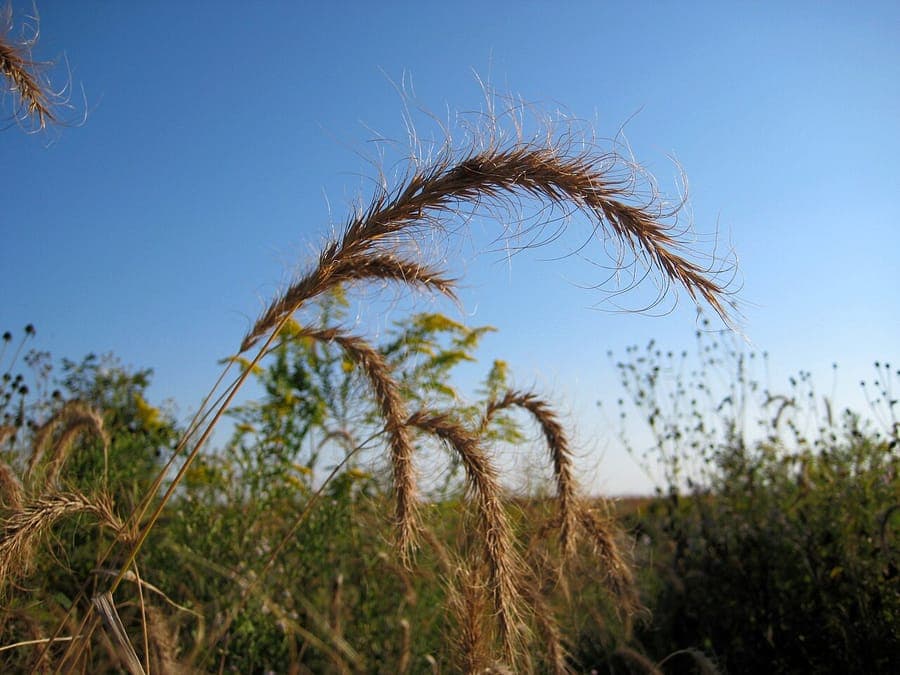
Crazytwoknobs / CC BY 3.0, via Wikimedia Commons
Elymus canadensis: complete guide
Elymus canadensis
¿Quieres ver Elymus canadensis: complete guide en tu jardín?
1 minuto, sin tarjeta de crédito
Overview
Elymus canadensis, commonly known as Canada wild rye or nodding wild rye, is a native North American grass species extending from Yukon to Mexico. This plant is known for its erosion resistance, bird food properties and adaptability to various terrain conditions. It is ideal for natural landscape projects and erosion control.
Appearance & Bloom
This is a bunch grass reaching 60-120 centimeters tall. The stems are upright, sometimes slightly bending. The leaves are blue-green and narrow. The most striking features are the spikelets appearing from July to September, very characteristic for rye with long, thin awns. These spikelets contain nutritious grains that attract birds.
Ideal Location
Elymus canadensis grows best in full sun to light shade. This grass is extremely adaptable and grows in practically all terrain types, from wet soils to dry slopes. It is ideal for slopes because of its erosion control through deep rooting. Perfect for wild landscapes and steppe-like environments.
Soil
This grass is very flexible and grows well in almost all soil types. It grows in clay, sand, loam and even very compacted soils. This is one of the most soil-tolerant grass species. It accepts pH 5-7.9 and even grows in very lean soils. Recommended for difficult locations.
Watering
Once established, Elymus canadensis is very drought-tolerant. In the first growing season water regularly until well established. After that, water only in extreme drought. This grass also grows excellently in wet conditions and can tolerate periodic waterlogging. It adapts very well to different water availability.
Diseño gratis
¿Quieres ver Elymus canadensis: complete guide en tu jardín? Crea un diseño gratis ahora.
Pruning
Pruning is not needed for Elymus canadensis. The plant forms a natural shape. To preserve bird food, leave the spikelets until winter so birds can forage. You can remove old stems later in the season if desired, but this limits bird food.
Maintenance Calendar
April-May: New growth begins. June-July: Growth completed, preparation for blooming. August-September: Blooming period, bird season begins. October-November: Seed ripens, birds forage. December-March: Winter rest, no maintenance required.
Winter Hardiness
Elymus canadensis is extremely winter hardy to about -35 degrees Celsius. It is the hardiest of all grasses and grows in all Dutch climate zones without protection. It also survives in very northern areas and on exposed mountain slopes.
Companion Plants
Combine with other wild grasses and wildflowers for natural meadows. Works well with other bird food grasses. Plant together with other erosion-blocking plants on slopes. Ideal in combination with native shrubs for wildlife habitat.
Closing
Elymus canadensis is a great grass species for those seeking erosion control, bird food and low maintenance requirements. It is practically unkillable under Dutch conditions and offers much value to wildlife restoration.
Learn more on gardenworld.app/en about grass species for erosion control and gardenworld.app/en/plant-blog for more wildlife plants.
¿Quieres ver Elymus canadensis: complete guide en tu jardín? Crea un diseño gratis ahora.
Sube una foto, elige un estilo y obtén un diseño fotorrealista con lista de plantas en menos de un minuto.
Más de 10.000 jardines diseñados
Sin tarjeta de crédito


Plantas similares
Sporobolus pungens: complete guide
Sporobolus pungens
Sporobolus pungens is a stoloniferous Mediterranean coastal grass with outstanding salt and drought tolerance, perfect for seaside and dry gardens.
Mediterranean aegilops: complete guide
Aegilops biuncialis
Everything about Aegilops biuncialis, a Mediterranean annual grass with ornamental spikes and outstanding drought tolerance for dry gardens.
Silver bluestem: complete guide
Bothriochloa saccharoides
Full guide to Bothriochloa saccharoides (silver bluestem): site, soil, watering, winter hardiness, pruning, and garden companions.