
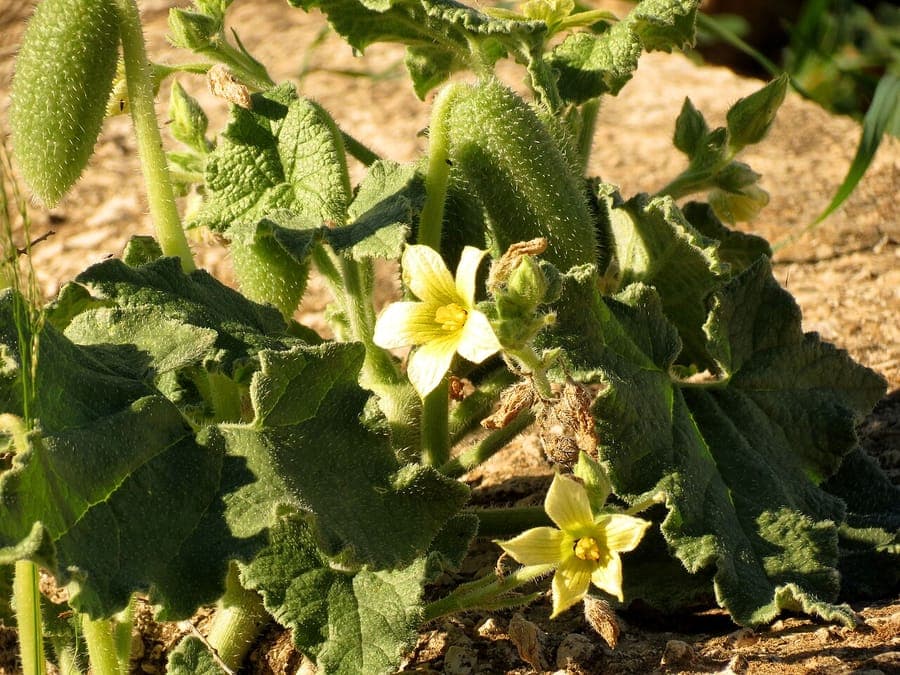
Katja Schulz from Washington, D. C., USA / CC BY 2.0, via Wikimedia Commons
Ecballium elaterium: complete guide
Ecballium elaterium
¿Quieres ver Ecballium elaterium: complete guide en tu jardín?
1 minuto, sin tarjeta de crédito
Overview
Ecballium elaterium, known as the squirting or explosive cucumber, is one of the most fascinating plants you can grow. This hairy-stemmed trailing plant from the Mediterranean region is famous for its explosive seed dispersal - when fruits ripen, they catapult seeds several meters away under pressure.
Appearance & Bloom
The squirting cucumber grows as a creeping or climbing vine reaching 1 meter in height. The leaves are heart-shaped, coarsely hairy, and 8-15 cm long. Small yellow flowers (2 cm diameter) appear from May to September. The most distinctive feature is the oval 3-4 cm fruits covered in soft spines. These fruits change from green to yellow-green at ripeness and finally explode.
Ideal Location
This plant thrives in full sun requiring at least 8 hours of direct sunlight daily. Position against a warm, sheltered south-facing wall or climbing support. In cool climates, grow in a greenhouse or against a warm wall. Protect from strong winds. The warmer and sunnier the location, the more dramatic the fruit production.
Soil
The squirting cucumber prefers sandy, well-draining soil with pH 7-8. Work in humus for water retention. Excellent drainage is critical - waterlogging causes root rot. For containers use a 1:1:1 mix of garden soil, sand, and compost.
Watering
Water regularly, especially during growth and flowering. Soil should be moist but not waterlogged. Daily checks required during dry July-August periods. Water in early morning at the base of the plant. Excessive moisture promotes root rot; containerized plants need more consistent moisture than ground-planted ones.
Diseño gratis
¿Quieres ver Ecballium elaterium: complete guide en tu jardín? Crea un diseño gratis ahora.
Pruning
Pruning isn't necessary but you can maintain shape by shortening lateral shoots. Remove dead leaves regularly. If you prefer not to have fruits explode, pick ripe fruits before they discharge. This also extends the blooming season.
Maintenance Calendar
March-April: Sow seeds indoors or plant pre-grown plants after last frost (mid-May in cooler zones). May-June: Regular watering, provide climbing support. July-August: Generous watering, monitor for drought stress. September: First fruits ripen, observe seed explosions. October-November: Plants naturally decline, collect seeds for next year.
Winter Hardiness
Ecballium elaterium is NOT winter hardy in northern climates (USDA zone 6a-7a). It's an annual in temperate regions. However, seeds survive winter. Store ripe seeds collected in October-November in dry, cool conditions (5-10°C). Resow in May.
Companion Plants
Pair the squirting cucumber with other Mediterranean plants: Helichrysum italicum (curry plant), Santolina chamaecyparissus (cotton lavender), Lavandula stoechas (French lavender), Teucrium chamaedrys (germander), and Thymus vulgaris (common thyme). Together they create a full, fragrant Mediterranean corner.
Conclusion
The squirting cucumber is a remarkable plant that guarantees wonder in your garden. The seed-shooting mechanism is pure natural engineering. Visitors will be fascinated by this unique method of seed dispersal. Discover more fascinating plants and design inspiration on gardenworld.app.
¿Quieres ver Ecballium elaterium: complete guide en tu jardín? Crea un diseño gratis ahora.
Sube una foto, elige un estilo y obtén un diseño fotorrealista con lista de plantas en menos de un minuto.
Más de 10.000 jardines diseñados
Sin tarjeta de crédito


Plantas similares
Echium vulgare: complete guide
Echium vulgare
Viper's bugloss with intense blue flowers. Ideal for wildflower meadows and pollinator gardens. Learn how to grow it on gardenworld.app.
Empetrum nigrum: complete guide
Empetrum nigrum
Crowberry, a hardy evergreen groundcover with black berries. Perfect for alpine gardens and moorland landscapes. Learn more on gardenworld.app.