
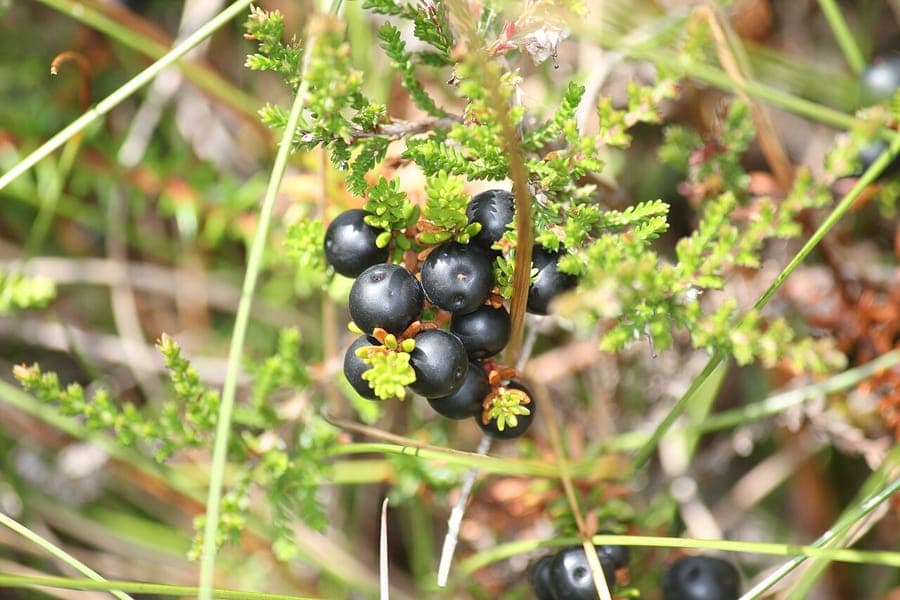
Maseltov / CC BY-SA 3.0 de, via Wikimedia Commons
Empetrum nigrum: complete guide
Empetrum nigrum
¿Quieres ver Empetrum nigrum: complete guide en tu jardín?
1 minuto, sin tarjeta de crédito
Overview
Empetrum nigrum, commonly known as crowberry or cloudberry, is a unique evergreen dwarf shrub native to subarctic and alpine regions. This compact, moss-like plant forms a dense mat and bears small black berries in autumn/winter that provide crucial food for birds. Ideal as groundcover in alpine gardens, heathlands, and dry, challenging spots!
Appearance & Bloom
Crowberry grows as an extremely low, spreading mat just 15-30 cm tall but can spread to 2 meters wide. Leaves are tiny, linear, approximately 4-6 mm long, finely hairy green. Flowers are almost inconspicuous: small reddish-purple florets in May-June, barely visible. The real beauty comes in September-October with countless small black berries (6-8 mm diameter) that densely cover the plant mat.
Ideal Location
Crowberry thrives in full sun to partial shade (at least 4-5 hours sun daily). The plant is extremely wind and frost tolerant. Perfect locations: dry alpine trough gardens, heather gardens, stone gardens, roof gardens, or as filler between larger groundcovers. Plant spacing: 30-40 cm apart.
Soil
Empetrum nigrum requires acidic, well-draining soil with pH 4.5-5.5. This is true heathland culture! Acid sand or peat-rich soil is ideal. Add humus for water retention, but always ensure excellent drainage. Too much nutrition hinders the plant. Dry and nutrient-poor is exactly what it prefers.
Watering
Once established, crowberry is extremely drought-tolerant. Water regularly in the first year. Thereafter only in extreme drought. Avoid water stagnation! The plant will rot in wet winters. In heather or alpine gardens usually no extra watering needed.
Diseño gratis
¿Quieres ver Empetrum nigrum: complete guide en tu jardín? Crea un diseño gratis ahora.
Pruning
Pruning is not really necessary. The plant is naturally compact and forms beautiful dense mats. Remove only dead branches in spring. Prune back when plant becomes overgrown (after 8-10 years possibly).
Maintenance Calendar
April-May: Plant out in well-prepared acidic soil. June-July: Growth period, rarely needs water. August-September: Flowering completes, fruiting phase. October-November: Berries ripen to black, abundant bird food. December-February: Evergreen, winter structure, no maintenance. March: Possibly remove dead branches.
Winter Hardiness
Empetrum nigrum is extremely hardy to USDA zone 2 (-45°C and lower). Excellent for all northern Europe! The plant is evergreen and provides winter structure. It doesn't disappear under snow. Protection unnecessary in northern regions.
Companion Plants
Crowberry combines beautifully with other alpine/heathland elements: Calluna vulgaris (heather), Erica carnea (winter heather), Vaccinium myrtillus (bilberry), Linnaea borealis (twinflower), Arctostaphylos uva-ursi (bearberry), Juniperus communis (juniper), Cornus suecica (dwarf dogwood). Together they form an authentic alpine mountain garden.
Conclusion
Empetrum nigrum is a classic for those seeking evergreen groundcover in dry, frost-prone gardens. The plant demands very little maintenance yet provides year-round structure and winter interest. Birds appreciate the black berries during difficult winter months. A true four-season performer! Discover more alpine garden ideas on gardenworld.app.
¿Quieres ver Empetrum nigrum: complete guide en tu jardín? Crea un diseño gratis ahora.
Sube una foto, elige un estilo y obtén un diseño fotorrealista con lista de plantas en menos de un minuto.
Más de 10.000 jardines diseñados
Sin tarjeta de crédito


Plantas similares
Echium vulgare: complete guide
Echium vulgare
Viper's bugloss with intense blue flowers. Ideal for wildflower meadows and pollinator gardens. Learn how to grow it on gardenworld.app.
Epilobium ciliatum: complete guide
Epilobium ciliatum
American willowherb with delicate pink flowers. Perfect for wet spots and naturalized areas. Learn how to grow it on gardenworld.app.