
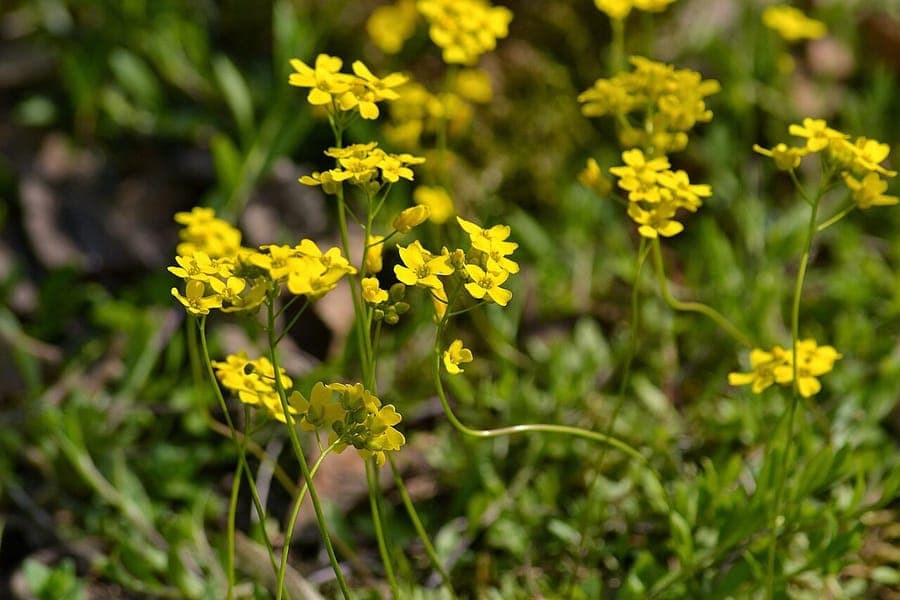
Joanna Boisse / CC BY-SA 4.0, via Wikimedia Commons
Woodland Draba: complete guide
Draba nemorosa
¿Quieres ver Woodland Draba: complete guide en tu jardín?
1 minuto, sin tarjeta de crédito
Overview
Woodland draba (Draba nemorosa) is a charming, compact alpine herb that thrives in cool, partly shaded mountain forests and rocky slopes across the Northern Hemisphere. This diminutive member of the Brassicaceae family rarely exceeds 20-30 centimetres and forms tight rosettes of fine, hairy evergreen foliage. Despite its modest stature, it is highly valued by alpine garden enthusiasts and rock garden specialists. Woodland draba is perfect for alpine troughs, rocky outcrops, dry stone walls, and carefully chosen border positions where its subtle beauty can unfold without competition. On gardenworld.app, you can design alpine gardens or specialist plant combinations where this delicate alpine plays a starring role.
Appearance and bloom
Woodland draba forms compact, dense rosettes of small, lance-shaped leaves with fine, hairy texture. The foliage is bright to grey-green, evergreen, and provides attractive structure throughout winter. In early spring (April-May), slender, hairy stems emerge 10-25 centimetres above the rosettes, crowned with small white flowers densely clustered in pyramidal racemes. The flowers are tiny but prolific, creating a delicate, airy effect. Following pollination, the plant produces small, flattened seedpods characteristic of the Draba genus. The entire plant exudes a delicate, woodland character perfectly suited to natural garden styles and alpine rock gardens.
Ideal location
Woodland draba demands excellent drainage and tolerates sun to part shade. Morning sun with afternoon shade is often ideal, particularly in warm climates. In full deep shade the plant produces weak, etiolated growth. In alpine regions, it naturally grows in dappled shade beneath larger shrubs. In rock gardens, position it on north-facing rocks where moister air provides some drought protection. Also suitable for alpine troughs on a shaded patio. Ensure good air circulation to prevent fungal disease.
Soil requirements
Woodland draba prefers well-draining, slightly acidic to neutral soil. Heavy, moisture-retentive clay is unsuitable. The plant thrives on the gritty, impoverished soils typical of rock gardens. For container cultivation, mix standard compost, coarse sand, and perlite in a 50/30/20 ratio. Top dress with grit to prevent water pooling around the rosettes. Loose, free-draining soil is essential. In borders, improve the planting area with coarse sand and gravel.
Watering
Woodland draba is moderately moisture-loving during the growing season and needs regular water during dry spells (May-October). In containers, water 2-3 times weekly depending on weather and season. After blooming in May, reduce watering - the plant needs only occasional moisture unless drought is severe. Water the soil, not the foliage, to prevent fungal disease. In rock gardens, natural rainfall combined with excellent drainage usually suffices. Alpine troughs with drainage holes are ideal.
Diseño gratis
¿Quieres ver Woodland Draba: complete guide en tu jardín? Crea un diseño gratis ahora.
Pruning
Woodland draba requires no pruning. Remove only spent flowers after blooming to prevent self-seeding (unless you wish to collect seed). Dead rosettes can be gently removed, but take care not to damage living tissue. The plant maintains a naturally compact, attractive shape. If the plant becomes very dense after several years, you may carefully thin the centre to prevent rot at the heart.
Maintenance calendar
February-March: Check for fungal disease (grey mould), ensure good air circulation. Remove dead foliage from previous season.
April-May: Flowering period. Water regularly in dry weather. Keep water off foliage.
June-July: Seed formation. Remove spent flowers to prevent self-seeding. Water only during pronounced drought.
August-September: Plant rests. Minimal watering needed. Watch for aphids.
October-November: Check for fungal problems before winter. Ensure good drainage.
December-January: Dormancy. Minimal maintenance. Protect container plants from excessive rain.
Winter hardiness
Woodland draba is hardy to approximately -20°C (USDA zone 5). It overwinters without difficulty in temperate climates including the British Isles, northern Europe, and the northern USA. The evergreen rosettes provide year-round appeal. In winter, prevent excessive moisture around container plants by positioning them on a sheltered patio - excessive wet combined with frost can cause problems. Ensure water does not collect in the heart of the rosette.
Companion plants
Woodland draba combines beautifully with other alpine rosette plants such as Silene acaulis, Saxifraga cultivars, and compact Festuca species. In rock gardens, Androsace species, Alyssum, and other classic alpines make excellent neighbours. In border settings, pair with Thymus species and other alpine herbs. Combine with grey-foliaged plants such as Cerastium and evergreen ornamental grasses. In containers, woodland draba looks charming alongside Sedum and other succulent plants appreciating the same gritty, well-drained site.
Conclusion
Woodland draba is a subtle, refined plant for those who love miniature alpine flora. It demands little maintenance and rewards patience with many years of garden presence. Perfect for rock gardens, alpine troughs, and specially created border corners. Woodland draba embodies gardenworld.app's vision of garden design respecting plant character and natural growth habit. Plant woodland draba this season and discover the quiet charm of this mountain dweller.
¿Quieres ver Woodland Draba: complete guide en tu jardín? Crea un diseño gratis ahora.
Sube una foto, elige un estilo y obtén un diseño fotorrealista con lista de plantas en menos de un minuto.
Más de 10.000 jardines diseñados
Sin tarjeta de crédito


Plantas similares
Small alison: complete guide
Alyssum alyssoides
Small alison (Alyssum alyssoides) is a compact annual (15–30 cm) with tiny yellow flowers. Ideal for dry spots and rock gardens. Easy care, sun-loving.
Rosy Cress: complete guide
Arabis collina
Discover Arabis collina, the Rosy Cress, a robust alpine rosette-forming plant with delicate pink flowers. Perfect for rock gardens and dry walls.
Alpine rock-jasmine: complete guide
Androsace alpina
Alpine rock-jasmine (Androsace alpina) is a delicate alpine plant with tiny pink flowers. Learn how to grow this jewel in your garden.