
Wikimedia Commons / CC BY-SA 3.0, via Wikimedia Commons
Small alison: complete guide
Alyssum alyssoides
¿Quieres ver Small alison: complete guide en tu jardín?
1 minuto, sin tarjeta de crédito
Overview
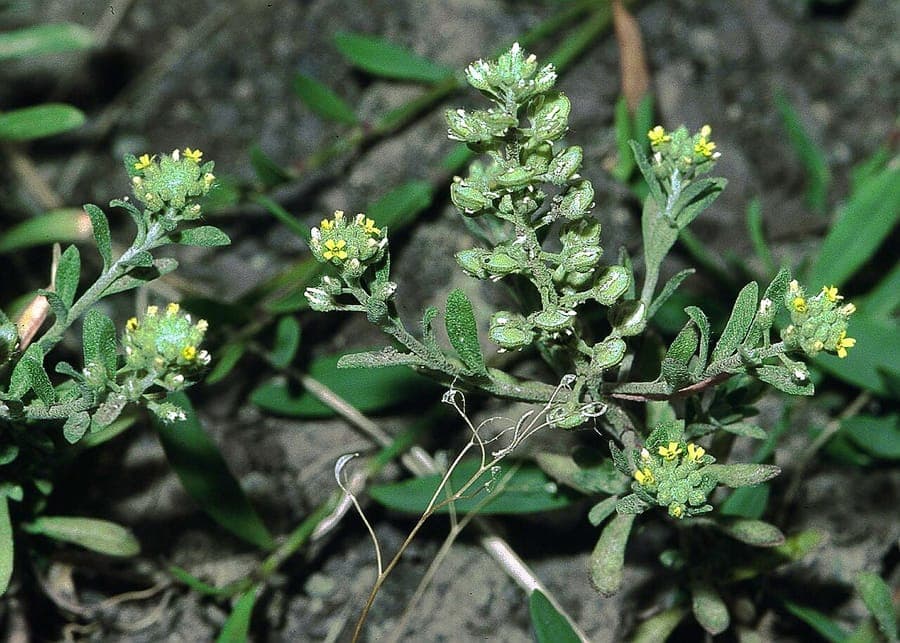
Small alison (Alyssum alyssoides), also called pale madwort or small alyssum, is a compact annual plant from the Brassicaceae (mustard) family. This diminutive, clump-forming plant reaches just 15–30 cm in height and grows wild from Central Europe through the Mediterranean region and Central Asia. It is valued for its abundant small, pale yellow flowers that bloom for extended periods and its remarkable ability to tolerate dry, poor soils.
Appearance and bloom cycle
Small alison grows as a compact, bushy plant with fine, gray-green foliage. Very small, pale yellow flowers appear in tight clusters from May through September, creating airy flowering mounds. The flowers are merely a few millimeters across. Following bloom, round seed pods form with characteristic appearance. The plant grows rapidly from seed and can reach full size in mere weeks.
Ideal location
Small alison thrives best in full sun. It grows well on stony and gravelly sites, in rock gardens, between pavers, and along pathways. The plant is extremely drought-tolerant and suits warm, sunny locations. It also grows well in containers and troughs. The plant dislikes shaded locations.
Soil requirements
Small alison accepts nearly every soil type, including very poor soils. The plant prefers well-draining, light soils. Heavy clay soils can be improved by adding coarse sand or grit. Ideal pH is around neutral to slightly alkaline (6.5–7.5). The plant actually performs better in poor soils than in rich soils.
Watering
Once established, small alison is extremely drought-tolerant and requires minimal watering. Young plants need regular water during their first 2–3 weeks after seeding. Mature plants tolerate dry conditions well and need water only occasionally during very dry periods. Overwatering can lead to disease.
Diseño gratis
¿Quieres ver Small alison: complete guide en tu jardín? Crea un diseño gratis ahora.
Pruning and maintenance
Pruning is not necessary. However, when flowers fade, the plant can be lightly trimmed to encourage side growth and further flowering. This can be done two to three times during the season. Yellowed or damaged plants can be completely removed from the garden.
Maintenance calendar
April–May: Sow seeds; water as needed. May–June: Blooming begins; minimal care. June–September: Continuous flowering; very minimal watering; optionally trim spent inflorescences. September–October: Plant begins to decline; collect seed if desired. October–April: Plant dies back; self-regenerates from seed.
Winter hardiness
Small alison is not winter hardy in cold climates. It is designated as an annual plant and grows in USDA zones 6–9. The plant will not overwinter in zones with temperatures below –5 °C. It will however self-seed naturally for the following season.
Companion planting
Small alison pairs well with other drought-tolerant plants such as carnation, sage, creeping thyme, and other alpine plants. In rock gardens, it grows beautifully between stones. The yellow flowers harmonize nicely with blue or violet blooms of other alpine plants.
Closing remarks
Small alison is an ideal plant for dry, sunny spots and rock gardens. Its tiny yellow flowers and extreme drought tolerance make it perfect for challenging locations. For more advice on drought-tolerant plant recommendations and rock garden design, visit gardenworld.app. For questions about seeding and seed collection, consult gardenworld.app.
¿Quieres ver Small alison: complete guide en tu jardín? Crea un diseño gratis ahora.
Sube una foto, elige un estilo y obtén un diseño fotorrealista con lista de plantas en menos de un minuto.
Más de 10.000 jardines diseñados
Sin tarjeta de crédito


Plantas similares
Brassica cretica: complete guide
Brassica cretica
Brassica cretica, the Cretan cabbage, grows wild on Aegean cliffs. Discover how to grow this drought-tolerant, yellow-flowered Mediterranean perennial.
Corsican cabbage: complete guide
Brassica insularis
Corsican cabbage is a rare Mediterranean rock cabbage with white flowers and blue-green leaves. Location, soil and winter protection.
Prostrate cabbage: complete guide
Brassica procumbens
Prostrate cabbage is a creeping North African cliff plant with yellow flowers. Discover location, soil type and winter protection.