
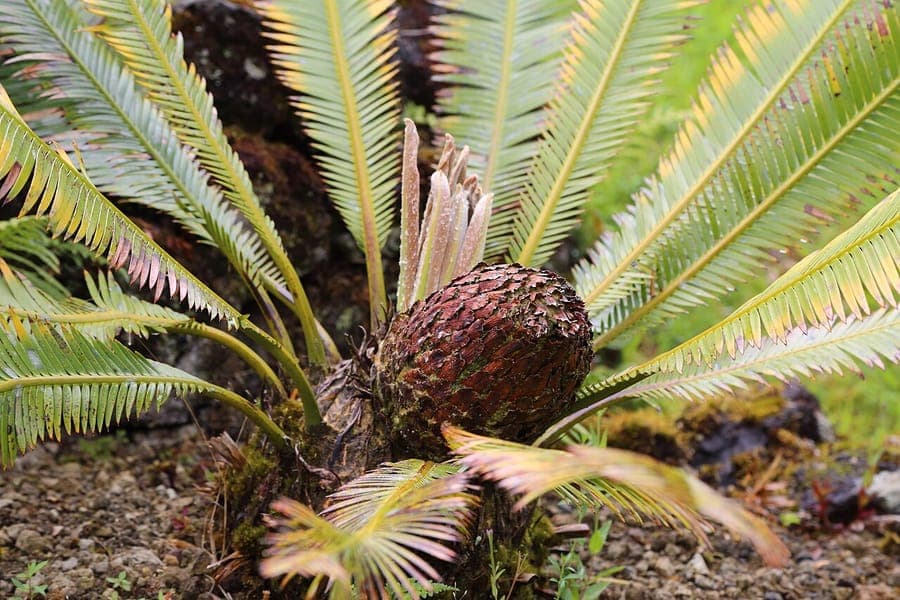
C T Johansson / CC BY-SA 4.0, via Wikimedia Commons
Dioon edule: complete guide
Dioon edule
¿Quieres ver Dioon edule: complete guide en tu jardín?
1 minuto, sin tarjeta de crédito
Overview
Dioon edule, known as Mexican cycad or edible-seed cycas, is an impressive and majestic palm fern originating from northeastern Mexico. This plant is renowned for its long, feathery fronds and slow growth, making it a true investment in home gardening. It is an excellent choice for dramatic interior styles and tropical garden themes.
The plant is valued for its architectural growth pattern and its ability to grow for years with minimal attention. For many plant enthusiasts, the Mexican cycad is a heirloom plant that can outlast generations. With patience and proper care, this plant gradually grows into a truly magnificent specimen.
Appearance and growth
Dioon edule is a slow-growing palm fern with beautiful, long, feathery fronds. These fronds can reach 60-120 centimeters in length and give the plant an elegant, architectural appearance. The leaves grow in rosettes from a central stem, creating the classic cycad look.
The plant can reach up to 200 centimeters tall under optimal conditions, but grows very slowly. It can take years for a young plant to reach mature size. This makes it a perfect plant for patient plant enthusiasts.
Flowers appear only on older plants and are very inconspicuous. They are not the reason this plant is cultivated.
Ideal location
The Mexican cycad grows best in locations with bright, indirect light. Place it near a window where bright light is available, but ensure the plant is not in direct harsh midday sun. This can cause leaf scorching.
Indoors, the plant does well in rooms where the temperature remains stable between 15-25 degrees Celsius. The plant also tolerates slightly lower temperatures, but growth will slow below 15 degrees.
Ensure adequate space around the plant so the fronds can fully unfold. This is a large plant that will eventually take up significant space.
Outdoors in summer, the plant can grow in protected locations in warmer climate zones, but must be moved indoors for winter months.
Potting soil and soil type
The Mexican cycad grows best in well-draining potting soil. Use a mixture of standard houseplant soil with extra perlite, sand, or gravel. This prevents water stagnation which can lead to root rot.
Place the plant in a sturdy, large pot with plenty of drainage holes. As the plant grows, periodic repotting into larger pots will be necessary.
Every three to four years, moving to a larger pot may be needed. This must be done carefully, as cycads are sensitive to root disturbance.
Diseño gratis
¿Quieres ver Dioon edule: complete guide en tu jardín? Crea un diseño gratis ahora.
Watering and feeding
The Mexican cycad tolerates dry conditions better than many other tropical plants. Allow the soil to partially dry out between waterings. Water when the top 2-3 centimeters of soil feel dry.
During summer months, watering will be needed more frequently; in winter, much less. Overwatering is the primary cause of death for this plant.
From April to September, weak liquid fertilizer can be applied once per month. Do not feed in winter months. Use a fertilizer with low nitrogen content, as cycads tolerate this better.
Pruning
Pruning is generally not necessary for Mexican cycad. The plant maintains its natural form and growth pattern best when left untouched. Remove only dead or yellow fronds.
Damaged leaves can be carefully removed, but avoid deliberately pruning the plant.
Maintenance calendar
January-February: Minimal watering. No feeding. Inspect for pests.
March-May: Gradually increase watering. Begin weak feeding once per month.
June-August: Water regularly, continue feeding. Plant can be placed outdoors in warm location.
September-October: Gradually reduce watering. Stop feeding.
November-December: Minimal watering. Bring plant back indoors.
Winter hardiness
The Mexican cycad is not winter hardy in temperate climates. Ensure the plant never experiences temperatures below 10 degrees Celsius. This can cause serious damage.
In southern gardens, the plant may overwinter outdoors under warm shelter in some years, but this is risky.
Companion plants
The Mexican cycad combines beautifully with other tropical plants such as Strelitzia (bird of paradise), Monstera, and tall-growing Philodendrons. This combination creates a jungle-like atmosphere.
The plant can also be used as a solitary specimen due to its impressive growth.
Conclusion
The Mexican cycad is a majestic, slow-growing palm fern that requires patience and attention. With proper care and conditions, this plant gradually grows into a truly magnificent specimen that remains beautiful for years.
The investment in this plant is worthwhile due to its architectural beauty and long lifespan. Young specimens can be purchased from garden centers and specialized plant shops.
Want to give your interior a tropical upgrade with this majestic plant? Visit gardenworld.app for more inspiration. The Mexican cycad is definitely worth trying. Also be sure to check gardenworld.app regularly for other impressive ornamental plants.
The plant is highly suitable for gardeners seeking an air-purifying plant. Studies show that this plant effectively filters harmful substances from the air, making it a perfect choice for office or bedroom.
Propagation is possible through seedlings or by dividing rootstocks. This can be done in spring with guaranteed success.
¿Quieres ver Dioon edule: complete guide en tu jardín? Crea un diseño gratis ahora.
Sube una foto, elige un estilo y obtén un diseño fotorrealista con lista de plantas en menos de un minuto.
Más de 10.000 jardines diseñados
Sin tarjeta de crédito


Plantas similares
Encephalartos senticosus: complete guide
Encephalartos senticosus
Jozini cycad: a primitive, striking seed plant from South Africa with architectural leaves. For dry, sunny gardens. Slow-growing and extremely rare.
Ground cycad: complete guide
Encephalartos villosus
Ground cycad (Encephalartos villosus) is a rare South African cycad. Discover care, growth, and the distinctive appearance of this primeval plant.
Natal grass cycad: complete guide
Stangeria eriopus
Discover the Natal grass cycad (Stangeria eriopus), a rare ornamental plant from South Africa. Learn all about caring for, growing and maintaining it indoors and outdoors.