
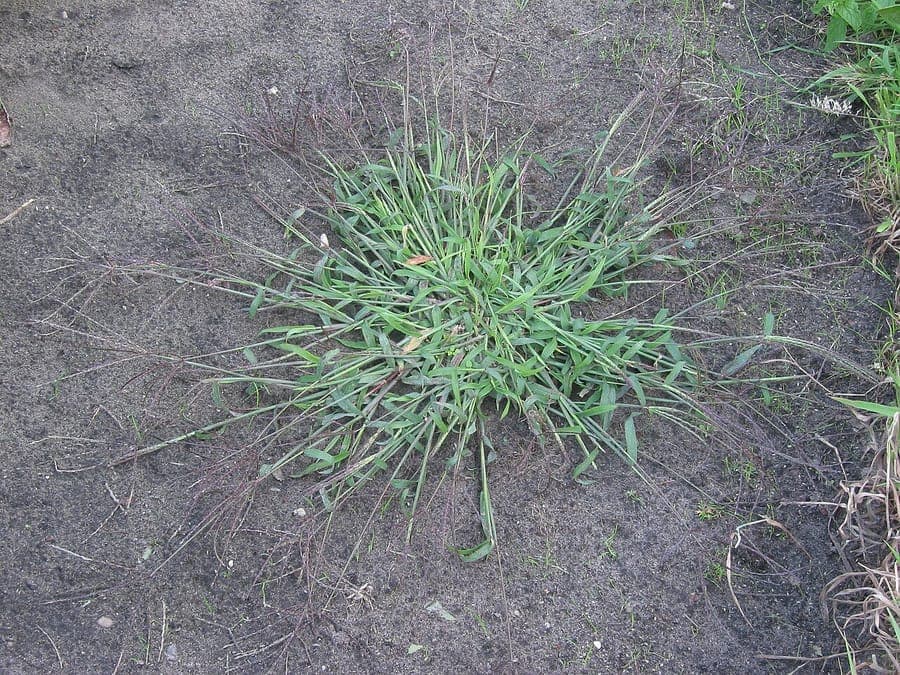
Rasbak / CC BY-SA 3.0, via Wikimedia Commons
Hairy crabgrass: complete guide
Digitaria sanguinalis
¿Quieres ver Hairy crabgrass: complete guide en tu jardín?
1 minuto, sin tarjeta de crédito
Overview
Digitaria sanguinalis, commonly known as Hairy crabgrass or red fingergrass, is a summer annual grass species that thrives in warm climates worldwide. This warm-season annual belongs to the Poaceae family and is notorious for rapid growth and abundant seed production. While naturally occurring in warm regions, it's particularly problematic as an invasive weed in lawns and gardens throughout temperate areas. The plant develops distinctive reddish-purple stems during the growing season and produces characteristic finger-like seed heads. On gardenworld.app, you can discover lawn designs that incorporate native grasses better suited to competitive growth.
Once established, Hairy crabgrass tolerates drought conditions well and spreads rapidly in full sun. For gardeners managing lawns, early identification is critical to prevent this invasive species from dominating turf areas. Implementing preventive measures significantly reduces the likelihood of infestation and ensures a healthier lawn ecosystem.
Appearance & Bloom Cycle
Digitaria sanguinalis forms low to medium-height plants reaching 30 to 60 cm tall. The plant displays striking reddish-purple coloration on its stems, making it easily distinguishable from other grass species. Leaves are long and linear, measuring approximately 3 to 6 mm in width. The flowering structure consists of 3 to 6 thin, elongated spikes radiating from a central point - hence the descriptive name 'crabgrass' referring to its crab-like appearance.
Flooming occurs from June through October depending on regional climate conditions. During this extended period, individual plants produce thousands of small seeds readily dispersed by wind and water, making early intervention crucial for effective control.
Ideal Location
Hairy crabgrass thrives in full sun conditions but also grows acceptably in partial shade. The plant emerges when soil temperatures exceed 10°C, typically in May, making summer months the primary concern for lawn managers. Growth accelerates in well-drained areas with maximum sun exposure. Maintaining a healthy, dense lawn that naturally competes with weeds like crabgrass is the best long-term strategy.
Diseño gratis
¿Quieres ver Hairy crabgrass: complete guide en tu jardín? Crea un diseño gratis ahora.
Soil Requirements
This grass species exhibits minimal soil preferences, growing in sandy, silty, and clay soils equally well. It even tolerates poor, nutrient-depleted soils where many desirable plants struggle. This ability to thrive in marginal conditions makes control particularly challenging. For lawn maintenance, emphasis should be placed on soil quality and desirable grass density.
Watering
Once established, Hairy crabgrass tolerates drought reasonably well, extending its problematic presence season. However, consistent moderate moisture accelerates growth. In wet conditions, the plant's reproduction increases significantly. The best approach is withholding water from problem areas while ensuring desired grass species receive adequate irrigation.
Maintenance & Control
Prevention through maintaining dense, healthy turf is most effective. Hand-removal of young plants before seed set works but requires diligence. Selective herbicides targeting broadleaf weeds and crabgrass without harming desirable turf are available. Multiple applications throughout the season may be necessary. In established infestations, professional lawn care may be warranted.
Maintenance Calendar
May-June: Initial emergence signals require preventive action. July-September: Peak growth period demands consistent monitoring. October-November: Seed maturation stage requires removal before dispersal. December-April: Dormant period; winter survival limited to seed only.
Winter Hardiness
Digitaria sanguinalis is not winter-hardy and dies in freezing conditions. Only seeds survive winter in soil. In cold climates, natural winter control occurs, though spring germination from previous season's seed remains problematic. Late-fall cultivation can help disperse surviving seed.
Related Plants
Other problematic grass weeds include Digitaria ischaemum (smooth crabgrass) and Echinochloa crus-galli (barnyard grass), all requiring similar management approaches. Healthy lawns with competitive desirable grass species provide the best defense.
Conclusion
While Digitaria sanguinalis primarily functions as a troublesome weed, understanding its life cycle enables effective management. Early detection, prevention, and consistent lawn care form the foundation of success. On gardenworld.app, you'll find lawn designs optimized for healthy grass growth that naturally resists weed invasion. With proper strategies, maintaining a clean, healthy lawn is entirely achievable.
¿Quieres ver Hairy crabgrass: complete guide en tu jardín? Crea un diseño gratis ahora.
Sube una foto, elige un estilo y obtén un diseño fotorrealista con lista de plantas en menos de un minuto.
Más de 10.000 jardines diseñados
Sin tarjeta de crédito


Plantas similares
Sporobolus pungens: complete guide
Sporobolus pungens
Sporobolus pungens is a stoloniferous Mediterranean coastal grass with outstanding salt and drought tolerance, perfect for seaside and dry gardens.
Mediterranean aegilops: complete guide
Aegilops biuncialis
Everything about Aegilops biuncialis, a Mediterranean annual grass with ornamental spikes and outstanding drought tolerance for dry gardens.
Silver bluestem: complete guide
Bothriochloa saccharoides
Full guide to Bothriochloa saccharoides (silver bluestem): site, soil, watering, winter hardiness, pruning, and garden companions.