
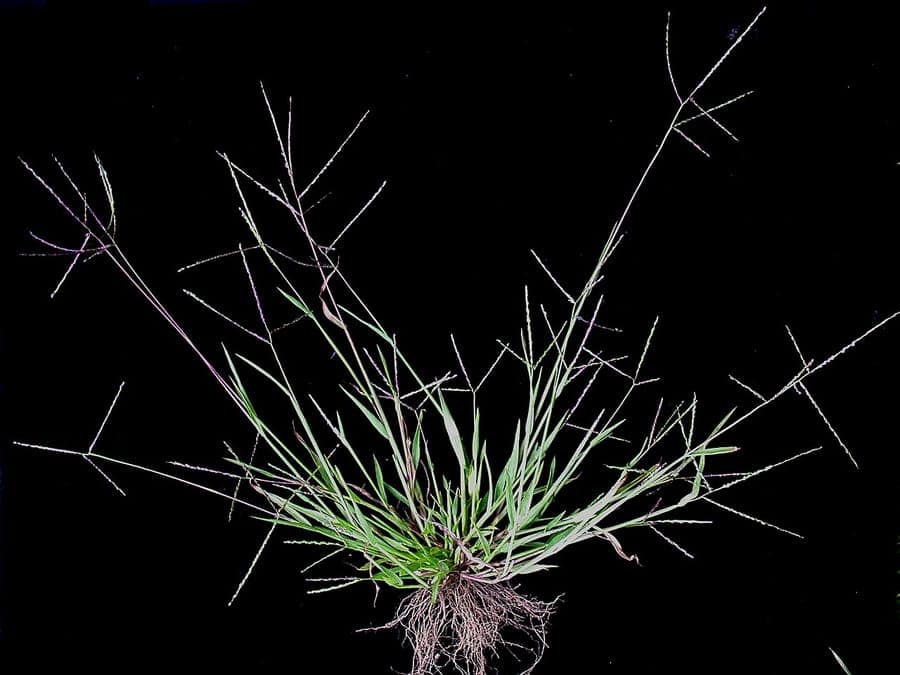
Ayotte, Gilles, 1948- / CC BY-SA 4.0, via Wikimedia Commons
Smooth crabgrass: complete guide
Digitaria ischaemum
¿Quieres ver Smooth crabgrass: complete guide en tu jardín?
1 minuto, sin tarjeta de crédito
Overview
Smooth crabgrass (Digitaria ischaemum), also called smooth finger grass or red millet, is a warm-season annual grass native to Europe and Asia. This fast-growing, compact grass emerges in summer months in full sun on dry soils. Characteristic fine, finger-like flowering spikes appear July–September. Though often considered a weed in cultivated areas, smooth crabgrass can offer textural interest in dry, hot gardens.
Appearance and Bloom Cycle
Smooth crabgrass grows as a low, spreading annual, reaching 25–40 cm. Stems are thin, often decumbent (lying), with short, narrow leaves (3–8 mm wide). Distinctive inflorescences consist of 2–5 finger-like spikes (digitate) radiating from a single point - the source of the common name. Flowering occurs July–September. Seed production is prolific.
Ideal Location
Smooth crabgrass thrives in full sun - minimum 8 hours direct daily light. This is a highly sun-loving grass. In partial shade, growth is weak. The plant loves exposed, warm locations where solar radiation accumulates. Ideal for wild gardens, dry borders, between gravel, or unused paving areas.
Soil Requirements
Smooth crabgrass is soil-flexible but prefers dry, sandy soils. Heavy clay is not ideal. Neutral to slightly acidic pH (6–7.5) is acceptable. Rich soil is unnecessary; the plant prefers infertile ground. It thrives on neglected, well-drained sites.
Watering
Ensure good seed-soil contact on dry substrate. Once seedlings emerge, water minimally. This grass is extremely drought-tolerant and performs better with limited water. In extreme drought, modest watering may boost growth; however, waterlogging must be strictly avoided.
Diseño gratis
¿Quieres ver Smooth crabgrass: complete guide en tu jardín? Crea un diseño gratis ahora.
Pruning
No pruning required. This grass typically remains short by sowing habit or neglect. Dead leaf litter can be removed for neat appearance. Seed plants may be harvested to control self-sowing.
Maintenance Calendar
May: Sow seed directly into full sun on dry, prepared seedbed.
June: Seedlings emerge quickly; minimal watering.
July–August: Growth accelerates; finger-like spikes appear.
September: Seed ripens; allow natural seed drop.
October: Plant dies with first frost; seed disperses naturally.
Winter Hardiness
Smooth crabgrass is not winter-hardy - it is a true warm-season annual. After first frost (typically October–November), plants die completely. Next season, new growth emerges from dropped seed. This is typical warm-season grass behavior in northern climates with long growing seasons.
Companion Plants
Pair with other drought-loving summer grasses or warm-season annuals like Stenotaphrum or Chloris. Mix with heat-loving succulents such as Sedum or Echeveria. Wild drifts of finger grass create informal, naturalistic effect. Allow some plants to set seed for next-season volunteer growth.
Conclusion
Smooth crabgrass is a fast-growing, warm-season annual brightening hot, dry corners with fine-textured green. Use gardenworld.app to design dry-location plantings with summer-loving grasses. Plan natural, low-maintenance, warm-season borders through gardenworld.app.
¿Quieres ver Smooth crabgrass: complete guide en tu jardín? Crea un diseño gratis ahora.
Sube una foto, elige un estilo y obtén un diseño fotorrealista con lista de plantas en menos de un minuto.
Más de 10.000 jardines diseñados
Sin tarjeta de crédito


Plantas similares
Sporobolus pungens: complete guide
Sporobolus pungens
Sporobolus pungens is a stoloniferous Mediterranean coastal grass with outstanding salt and drought tolerance, perfect for seaside and dry gardens.
Mediterranean aegilops: complete guide
Aegilops biuncialis
Everything about Aegilops biuncialis, a Mediterranean annual grass with ornamental spikes and outstanding drought tolerance for dry gardens.
Silver bluestem: complete guide
Bothriochloa saccharoides
Full guide to Bothriochloa saccharoides (silver bluestem): site, soil, watering, winter hardiness, pruning, and garden companions.