
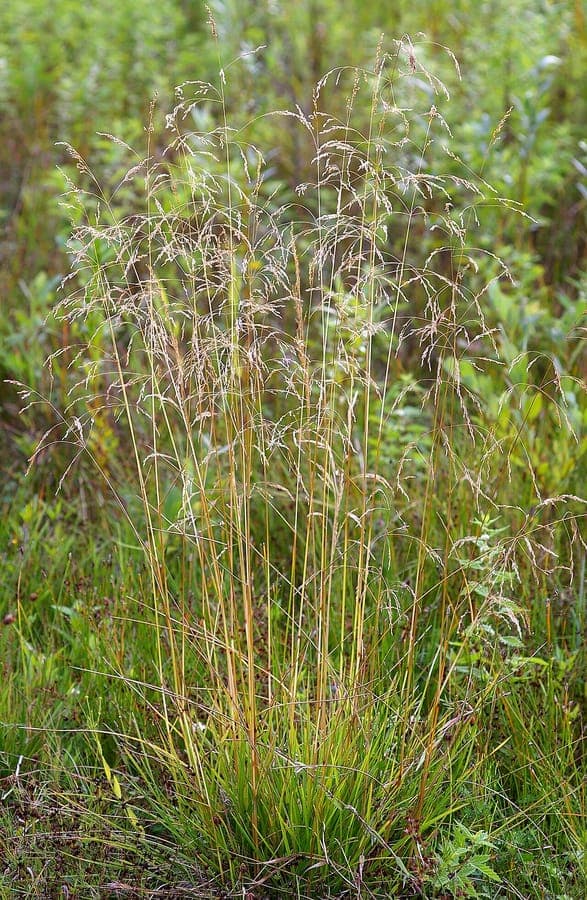
Christian Fischer / CC BY-SA 3.0, via Wikimedia Commons
Tufted hairgrass: complete guide
Deschampsia cespitosa
¿Quieres ver Tufted hairgrass: complete guide en tu jardín?
1 minuto, sin tarjeta de crédito
Overview
Tufted hairgrass (Deschampsia cespitosa), native to northern Europe and alpine regions, is an elegant ornamental grass prized for fine, feathery plumes that dance in wind from May through October. In winter, dried inflorescences create striking architectural interest - beautiful when frosted or silhouetted against low sun. Unlike many ornamental grasses, tufted hairgrass thrives in moisture and even waterlogged soils where most plants struggle.
Appearance and Bloom Cycle
Tufted hairgrass forms dense tufts 60–100 cm tall including plumes. Thin, bright green leaves create dense basal mounds. From May onwards, delicate, highly branched inflorescences emerge in pale yellow-grey tones, moving gracefully in breeze. Plumes persist through winter, turning bronze-tan, until finally shed in late winter. The fine texture offers year-round visual interest, especially when backlit.
Ideal Location
Tufted hairgrass thrives in full sun to light shade. In deeper shade, growth weakens. Choose airy positions with good air circulation. Perfect beside water features, in boggy meadows, or low-lying garden areas prone to moisture. Also suitable for rain gardens and streamside plantings. Avoid hot, drought-prone locations.
Soil Requirements
Tufted hairgrass is a moisture-lover. It flourishes in moist to wet, humus-rich soil with pH 5.5–7 (weakly acidic to neutral). Heavy clay is tolerable if waterlogged conditions persist. Amend sandy soils with compost or leaf mold to increase water retention. The grass tolerates temporary inundation during growth season.
Watering
Provide consistent moisture - critical for Deschampsia cespitosa. In dry summers, water regularly. Ideal conditions mimic boggy meadows or high water table. Once established, the grass tolerates brief dry spells but blooms poorly without adequate moisture. Drip irrigation or soaker lines work well; overhead spray risks fungal issues.
Diseño gratis
¿Quieres ver Tufted hairgrass: complete guide en tu jardín? Crea un diseño gratis ahora.
Pruning
Remove dead leaf litter (thatch) in early spring (March–April) with careful raking or pruning shears. Cut back cautiously, leaving at least 10 cm basal foliage for regrowth. Harvest plumes in December–January once ornamental appeal fades. New leaf growth emerges from base in spring.
Maintenance Calendar
January–February: Clear dead material; prepare for growth season.
March–April: New foliage emerges rapidly; water during drought.
May–June: Plumes appear; enjoy movement and form.
July–August: Bloom peak; water regularly in dry periods.
September–October: Plumes gradually fade; structural appeal remains.
November–December: Winter silhouette; leave standing for visual interest or wildlife shelter.
Winter Hardiness
Tufted hairgrass is extremely hardy, tolerating −30°C and below. This alpine native shrugs off hard frost; frost and snow actually enhance winter beauty. Plants recover quickly after heavy snow.
Companion Plants
Perfect companions: moisture-loving perennials like Astilbe, Liguliria, Iris sibirica, or Trollius. Pair with sedges, rushes, and native wetland plants. Plant drifts of 3–5 specimens for maximum visual impact. Excellent edging for ponds or water features, anchoring compositions with light, moving texture.
Conclusion
Tufted hairgrass is a reliable, four-season ornamental grass transforming wet garden corners into textural interest. Its elegant plumes and winter form make it essential for sustainable, beautiful gardens. Explore more winter-interest plants and moisture-loving specimens through gardenworld.app. Plan rain gardens and bog plantings with design tools on gardenworld.app.
¿Quieres ver Tufted hairgrass: complete guide en tu jardín? Crea un diseño gratis ahora.
Sube una foto, elige un estilo y obtén un diseño fotorrealista con lista de plantas en menos de un minuto.
Más de 10.000 jardines diseñados
Sin tarjeta de crédito


Plantas similares
Sporobolus pungens: complete guide
Sporobolus pungens
Sporobolus pungens is a stoloniferous Mediterranean coastal grass with outstanding salt and drought tolerance, perfect for seaside and dry gardens.
Mediterranean aegilops: complete guide
Aegilops biuncialis
Everything about Aegilops biuncialis, a Mediterranean annual grass with ornamental spikes and outstanding drought tolerance for dry gardens.
Silver bluestem: complete guide
Bothriochloa saccharoides
Full guide to Bothriochloa saccharoides (silver bluestem): site, soil, watering, winter hardiness, pruning, and garden companions.