
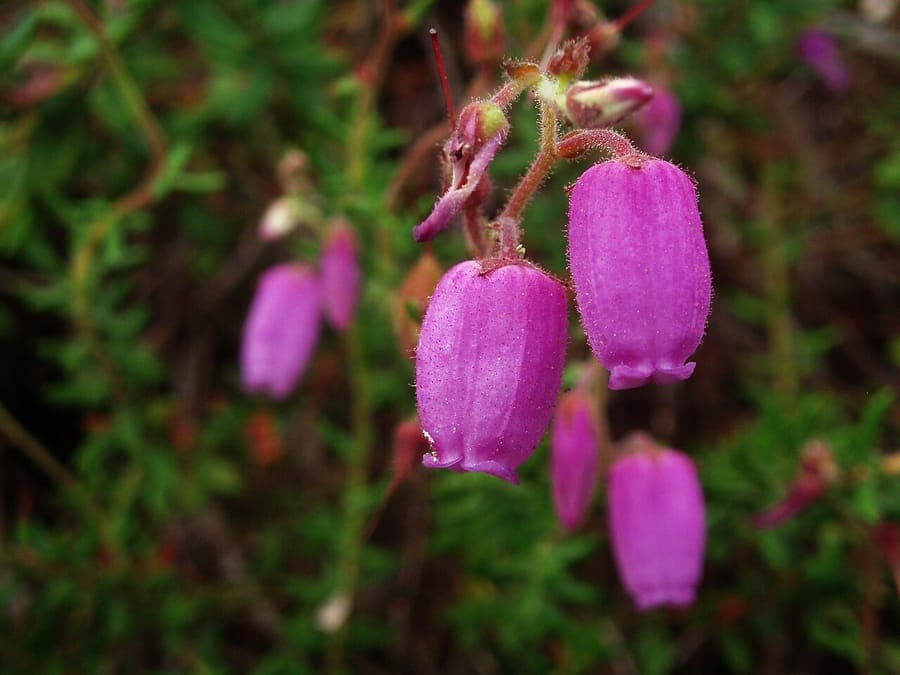
-Merce- from Madrid, España / CC BY-SA 2.0, via Wikimedia Commons
Daboecia cantabrica: complete guide
Daboecia cantabrica
¿Quieres ver Daboecia cantabrica: complete guide en tu jardín?
1 minuto, sin tarjeta de crédito
Overview
Daboecia cantabrica, commonly called St. Dabeoc's-heath or Connemara heath, is an exquisite heather from the Ericaceae family. Native to western Ireland, western France, and northwestern Portugal, this plant embodies Atlantic coastal beauty and remarkable hardiness.
The plant's Irish name derives from its wild presence in the heathlands of Connemara and other western Irish regions. With purple-pink bell-shaped flowers blooming from June through October, it delivers an exceptionally extended flowering season compared to most heather species. This remarkable longevity makes it invaluable for contemporary gardens demanding season extension and sustained color.
Appearance and Bloom
St. Dabeoc's-heath develops into an attractive, neat heather reaching 30-50 centimeters in height. Foliage consists of small, linear, dark green and glossy leaves. The plant forms a tidy, naturally compact silhouette.
The primary attraction is undoubtedly the flowering display: from June through October, countless small purple-pink to magenta bell-shaped flowers appear in dense whorls along the stems. This extraordinary extended blooming period distinguishes it from nearly all other heather species, making it a seasonal powerhouse.
Flowers attract bees and other pollinators enthusiastically. Seed production is minimal, focusing plant energy into sustained flowering rather than reproduction.
Ideal Location
St. Dabeoc's-heath performs best in full sun to lightly dappled shade positions. Minimum 4-6 hours direct sunlight daily maximizes flowering. In extremely hot regions, light afternoon shade proves beneficial.
This heather excels in modern heath gardens, alpine borders, rock gardens, and gravel gardens. Its neat form suits container cultivation on sun-exposed terraces. Ensure excellent air circulation to prevent fungal disease.
Soil
Daboecia cantabrica specifically demands acidic soil. This is absolutely non-negotiable for healthy growth. Optimal conditions exist in pH 4.5-5.5 range. In neutral to alkaline soils, growth deteriorates dramatically and foliage yellows dramatically (chlorosis develops).
The species prefers humus-rich, well-draining soil. Use garden loam mixed with peat moss or heather compost. In regions with naturally alkaline soils, construct raised beds using specialized acidic heather soil mixes.
Diseño gratis
¿Quieres ver Daboecia cantabrica: complete guide en tu jardín? Crea un diseño gratis ahora.
Watering
Daboecia cantabrica appreciates moist, well-drained soil. This is a unique combination: abundant moisture without waterlogging. Water regularly throughout growing and flowering seasons.
During dry spells, provide supplemental irrigation. The species accepts higher precipitation than many other heathers. In winter, provide moderate watering; avoid complete desiccation.
Pruning
Light pruning in spring (March-April) promotes compact form. Trim approximately 1-2 centimeters from growing tips. This stimulates bushier growth and more abundant flowering.
After flowering, while deadheading isn't essential, removing faded flowers improves appearance.
Maintenance Calendar
Winter (November-February): Dormant period. Light pruning March-April. Minimal watering. Spring (March-May): Active growth commences. Regular watering begins. Tip pruning for bushiness. Summer (June-August): Flowering reaches peak intensity. Regular watering essential during dry weather. Continuous color display. Fall (September-October): Flowering continues until first hard frost. Gradually reduce watering.
Winter Hardiness
Daboecia cantabrica is winter-hardy to approximately -15 degrees Celsius, making it suitable for virtually all UK and northern European gardens. The species demonstrates remarkable frost tolerance, provided drainage is excellent.
In extremely wet winters where drainage becomes problematic, protection of young plants may prove beneficial. Generally, it exhibits excellent winter hardiness.
Companion Plants
Combine St. Dabeoc's-heath with complementary acid-soil species:
- Calluna (ling heather), for structure and winter interest
- Erica species (true heathers), for flowering period extension
- Vaccinium species (bilberry, cranberry), for fruit production and autumn color
- Taxus (yew), for evergreen structure
- Molinia (purple moor-grass), for grassy textural contrast
Closing
Daboecia cantabrica is an extraordinary heather perfectly suited to contemporary gardens with acidic soils. Its purple-pink bell-shaped flowers blooming June through October create an unusually extended seasonal display.
St. Dabeoc's-heath brings authentic Atlantic coastal character to gardens and is essential for successful heathland composition. With proper acidic soil preparation and regular spring pruning, expect years of magnificent sustained flowering.
Available from specialty heather nurseries and alpine garden suppliers worldwide.
Want more heather-gardening inspiration? Visit gardenworld.app/en for expert heath garden design guidance. Also check gardenworld.app/nl for Dutch language heather cultivation expertise.
¿Quieres ver Daboecia cantabrica: complete guide en tu jardín? Crea un diseño gratis ahora.
Sube una foto, elige un estilo y obtén un diseño fotorrealista con lista de plantas en menos de un minuto.
Más de 10.000 jardines diseñados
Sin tarjeta de crédito


Plantas similares
Zenobia pulverulenta: complete guide
Zenobia pulverulenta
Everything about Zenobia pulverulenta (honeycup): siting, acid soil, pruning and the fragrant white bells, in this complete care guide.
Dwarf huckleberry: complete guide
Gaylussacia dumosa
Everything about dwarf huckleberry (Gaylussacia dumosa): acidic soil, partial shade, pruning and care for this compact North American berry shrub.
Drooping leucothoe: complete guide
Leucothoe fontanesiana
Everything about drooping leucothoe (Leucothoe fontanesiana): shade tolerance, soil, watering, pruning, hardiness and companion plants.