
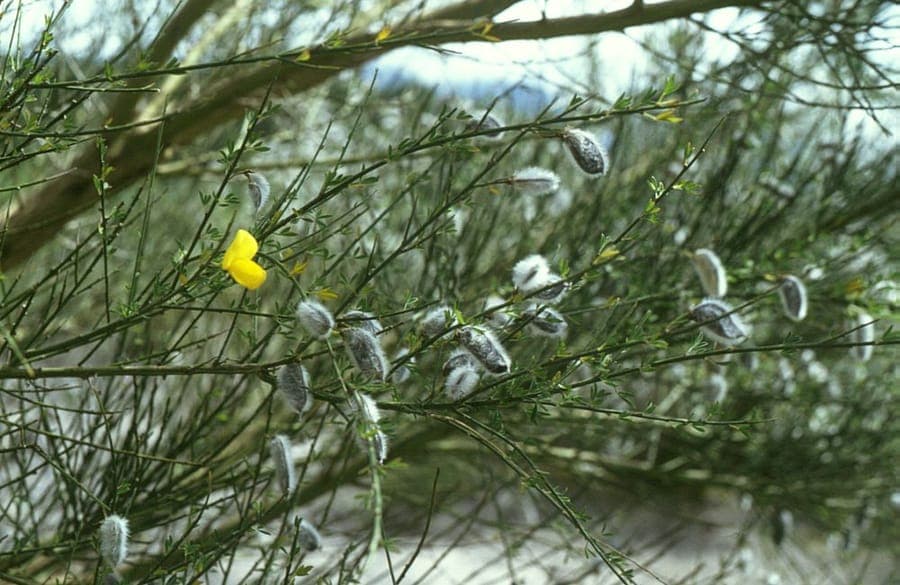
Franz Xaver / CC BY-SA 3.0, via Wikimedia Commons
Portuguese Broom: complete guide
Cytisus striatus
¿Quieres ver Portuguese Broom: complete guide en tu jardín?
1 minuto, sin tarjeta de crédito
Overview
The Portuguese Broom (Cytisus striatus) is a bird-like, scrambling shrub from the Fabaceae family, native to the Iberian Peninsula and northern Morocco. This slender, elegant shrub is valued for its numerous yellow to golden-yellow flowers in May-June and its fine foliage. Mature plants reach a height of 0.6 to 1.2 meters with a width up to 1.0 meter.
Appearance & bloom
The Portuguese Broom is a densely branched, needle-like shrub with slender, hairy branches and small, three-leaflet-shaped leaves. The leaves are green and lightly hairy. The flowers are yellow to golden-yellow, pea-like in shape, and grow densely along the branches in great quantities. Flowering period runs from May to June. After blooming, hairy pods form.
Ideal location
This plant grows optimally in full sun and is very light-tolerant. Locations with at least 6-8 hours of sunlight per day are ideal. Very suitable for dry slopes, rock gardens and Mediterranean gardens. The plant tolerates windy locations well. Also ideal for roofs and green walls (green roofs).
Soil
The Portuguese Broom prefers well-draining, sandy to gritty soil with an acidic to neutral pH of 5.0 to 7.0. Heavy clay material should be lightened with sand or gravel. The plant tolerates nutrient-poor soils well and actually prefers poor soils. Add compost to planting holes, but use no fertilizer after installation.
Watering
Once established, the plant tolerates drought excellently. In the first growing year, water regularly during dry periods. After establishment, water only in extremely dry summers. Too much moisture can lead to rot. The plant is very suitable for water-conserving gardens.
Diseño gratis
¿Quieres ver Portuguese Broom: complete guide en tu jardín? Crea un diseño gratis ahora.
Pruning
Minimal pruning is required. The plant forms a natural, elegant shape naturally. After blooming, it can be lightly pruned to encourage density. Remove dead or damaged branches carefully. The plant tolerates severe pruning poorly, so only light shaping is recommended.
Maintenance calendar
March-April: Inspect for winter damage; carefully resume watering. May-June: Full bloom; enjoy yellow flowers with minimal care. July-August: Post-blooming maintenance; gentle form pruning if needed. September-October: Prepare for winter; limited watering. November-February: Winter dormancy; minimal care needed.
Winter hardiness
The Portuguese Broom is hardy to about -10 degrees Celsius. In southern European gardens no winter protection is needed. In northern climates a sheltered location should be chosen. Protect against wet winters by elevating the planting site.
Companion plants
Combine with other drought-tolerant shrubs such as lavender, rosemary and sun rose. Also beautiful with saxifrage, sedum and other succulents. Low-growing grasses such as Festuca glauca form beautiful backgrounds. Combine with Santolina and Helichrysum for Mediterranean effects.
Closing
The Portuguese Broom is an elegant, drought-tolerant shrub for Mediterranean and dry gardens. Available from specialized Mediterranean plant nurseries in southern Europe and online suppliers throughout Europe. Retailers in the Netherlands: Intratuin/Gamma. In Germany: OBI/Hornbach. In France: Truffaut/Jardiland.
¿Quieres ver Portuguese Broom: complete guide en tu jardín? Crea un diseño gratis ahora.
Sube una foto, elige un estilo y obtén un diseño fotorrealista con lista de plantas en menos de un minuto.
Más de 10.000 jardines diseñados
Sin tarjeta de crédito


Plantas similares
Tall Silky Lupine: complete guide
Lupinus elatus
Tall silky lupine is a fast-growing Californian perennial with silvery foliage and blue-purple flower spikes, ideal for a prairie-style garden.
Garfield Lupine: complete guide
Lupinus garfieldensis
The Garfield lupine is a rare, fast-growing American perennial for alkaline, dry grassland gardens, with striking blue flower spikes.
Lupinus elegans: complete guide
Lupinus elegans
Lupinus elegans, the elegant lupine, is a spectacular blooming plant from Mexico with blue flower spikes. Care, cultivation and garden use.