
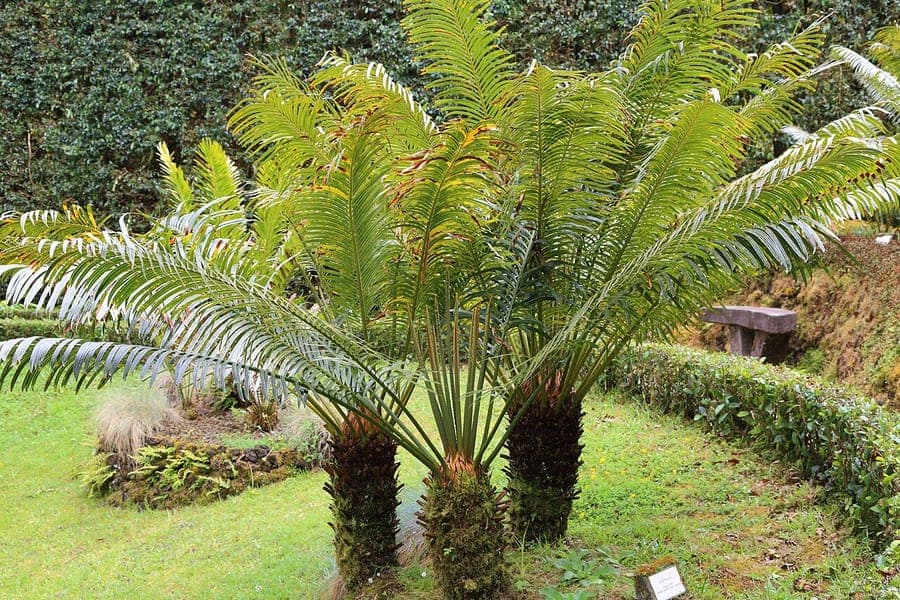
C T Johansson / CC BY-SA 4.0, via Wikimedia Commons
Cycas rumphii: complete guide
Cycas rumphii
¿Quieres ver Cycas rumphii: complete guide en tu jardín?
1 minuto, sin tarjeta de crédito
Overview
Cycas rumphii, commonly known as queen sago, Ceylon sago or sago palm fern, is an incredibly beautiful palm-like plant from the Cycadaceae family. Originating from the islands of South Borneo, Java and New Guinea, this plant grows slowly but builds an impressive, sculptural form.
Although it looks like a palm, the cycad is actually not a true palm but a very ancient plant group dating back to dinosaur times. This plant can live for centuries and grows in diameter equal to its height. With its beautiful, delicately green feathered leaves, it forms a spectacular accent in any tropical garden.
Appearance and bloom
Cycas rumphii presents itself as a slow-growing tree with a thick, scaly trunk and a beautiful crown of gray-green feathered leaves. The leaves are very long (up to 1.5 to 2 meters) and composed of small leaflets. The plant grows to approximately 3-5 meters tall in its native habitat.
Flowers appear as sex-specific cones - males produce elongated pollen cones while females develop larger, ball-shaped reproductive cones. The flowers are not spectacular but serve the reproductive purpose. After pollination, large orange-red fruits form. The plant usually blooms only once per year.
Ideal location
Cycas rumphii thrives best in a very warm, full sunny location. The plant needs at least 6-8 hours of direct sunlight daily. In tropical climates, the plant can handle full sun, but in temperate climates some afternoon shade can be valuable.
The plant prefers warm temperatures of 20-30 degrees Celsius. Cooler temperatures below 15 degrees Celsius seriously hinder growth. In winter regions, the plant must be placed indoors in a warm, sunny window.
Soil
Cycas rumphii prefers well-draining, sandy soil with plenty of organic matter. An ideal soil mixture consists of garden soil, sand and leaf compost in equal proportions. Add perlite for better drainage. The plant does not tolerate waterlogging and feels better in drier than wet conditions.
The pH should be neutral to slightly acidic (6.5 to 7.5). Ensure pots have excellent drainage holes. A thick layer of mulch around the trunk helps reduce moisture loss and buffer temperature variations.
Diseño gratis
¿Quieres ver Cycas rumphii: complete guide en tu jardín? Crea un diseño gratis ahora.
Watering
Cycas rumphii likes to receive regular water during the growing season (spring and summer), but should receive much less water in fall and winter. The soil should dry out between waterings. Always test if the top 5 centimeters are dry before watering again.
The plant is drought-tolerant and feels better underwatered than overwatered. Waterlogging can quickly lead to root rot. In containers, water when the top layer feels dry. In any case, ensure good drainage.
Pruning
Cycas rumphii requires minimal pruning work. However, remove dead or damaged leaves as soon as you notice them. The plant can become very old and maintain an interesting shape without pruning.
Do not remove healthy leaves as this will weaken the plant. Let old leaves gradually die and drop. This process helps the plant save energy for growth.
Maintenance calendar
APRIL-MAY: New growth cycle begins. Ensure regular watering and feeding every two weeks. Monitor for insects.
JUNE-AUGUST: Peak growing season. Increase watering and feed regularly. Provide plenty of sunlight.
SEPTEMBER-OCTOBER: Growth begins to decline. Reduce feeding and adjust watering.
NOVEMBER-MARCH: Rest period. Minimal watering and no feeding. Ensure warm temperatures of at least 15 degrees.
Winter hardiness
Cycas rumphii is not winter-hardy in temperate climates. The plant can only grow outdoors in warm regions (USDA zones 10-11). At temperatures below 5 degrees Celsius, the plant can be seriously damaged.
In cold regions, the plant must be grown indoors all year on a sunny windowsill or under lights. Protect from drafts. The plant can be placed in a cooler room in winter (15-18 degrees) but not colder.
Companion plants
Cycas rumphii grows well with other tropical foliage plants and sun and heat lovers. Good companions include:
Areca palm (Dypsis lutescens) - tropical palm Caladiums - fine structure Scaevola - abundant blooms Plumbago - blue flowers Crotons - colorful leaves
Closing
Cycas rumphii is a beautiful, slow-growing plant that adds sculptural beauty to warm gardens and indoor environments. Although slow-growing, patience ultimately rewards you with one of the most spectacular plants you can ever grow.
This ancient plant group connects us with the deepest history of the plant kingdom. With proper warmth, sunlight and watering, you can enjoy this enchanting plant for years.
Availability: Cycad seeds and young plants can be purchased from specialized growers or online plant retailers. For more information about tropical gardens and plant care, visit gardenworld.app. Explore tropical garden designs at gardenworld.app.
¿Quieres ver Cycas rumphii: complete guide en tu jardín? Crea un diseño gratis ahora.
Sube una foto, elige un estilo y obtén un diseño fotorrealista con lista de plantas en menos de un minuto.
Más de 10.000 jardines diseñados
Sin tarjeta de crédito


Plantas similares
Cycas pectinata: complete guide
Cycas pectinata
The pectinate cycad from the Himalayas. Complete guide for growing this rare palm-like plant. Information about care, maintenance and ideal growing conditions.
Cycas revoluta: complete guide
Cycas revoluta
The Sago cycad: a classic ornamental plant for indoors and out. Complete cultivation guide for this Japanese palm-like plant. Information about care, maintenance and ideal growing conditions.
Cycas circinalis: complete guide
Cycas circinalis
The queen sago is a spectacular palm-like plant with elegantly unfurling fronds. Learn how to cultivate this exotic cycad successfully in temperate climates.