
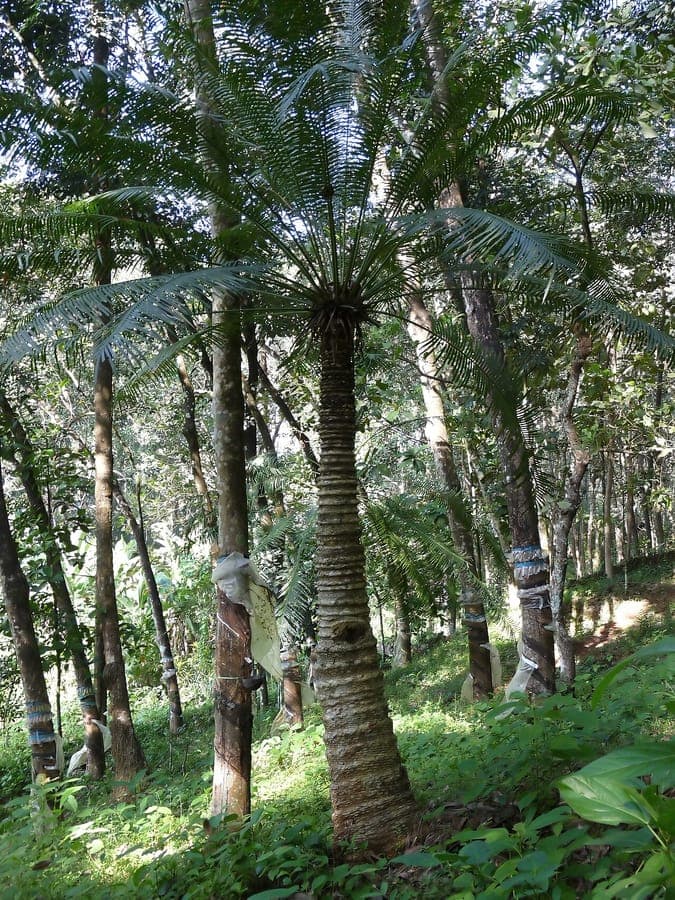
Jeevan Jose, Kerala, India / CC BY-SA 4.0, via Wikimedia Commons
Cycas circinalis: complete guide
Cycas circinalis
¿Quieres ver Cycas circinalis: complete guide en tu jardín?
1 minuto, sin tarjeta de crédito
Overview
The queen sago (Cycas circinalis) is a remarkable cycad from South India standing as a living fossil. This tropical plant grows slowly but steadily, reaching 4-6 meters tall under ideal conditions, rewarding patient cultivators. Elegant feathery fronds reach 1.5 meters long, creating spectacular silhouettes. This ancient plant lineage (over 200 million years old) makes Cycas circinalis a treasure for serious plant collectors.
Appearance and Bloom
Queen sago grows in distinctive palm-like form. Young fronds curl tightly and slowly unfurl into full feathery patterns. Trunk becomes thick and woody. Female plants bear soft yellow fruits. Male plants produce imposing male cones reaching 40cm long. Both release characteristic pleasant fragrance at ripeness, a biological spectacle.
Ideal Location
Requires warm, well-lit position avoiding strong midday sun. Minimum temperature: 13-15 degrees Celsius. Higher than 25 degrees ideal. Avoid drafts and humidity below 40%. Summer outdoors, winter indoors or in greenhouse. Gradually acclimate to increased ventilation. Regular air circulation prevents diseases and strengthens fronds.
Soil
Good-draining potting mix essential: 50% coco-peat, 30% perlite, 20% pumice. Acidic to neutral pH (6.0-7.0) leads to best growth. Heavy clay avoided completely. Annual top-dressing of mature compost aids nutrient cycle. Multiple drainage holes prevent root rot, the greatest enemy of cycads.
Watering
Keep soil moderately moist during growth period (May-October), never waterlogged. Winter-keep wetter than many palm types. Moisture needs increase with warmth. Soft water preferred; hard water causes yellow fronds. Mist vertically to promote healthy fronds. Equal drainage crucial throughout year.
Diseño gratis
¿Quieres ver Cycas circinalis: complete guide en tu jardín? Crea un diseño gratis ahora.
Pruning
Minimal pruning needed. Remove only dead or yellowed pinnules gently. Clear fallen fronds. Lower fronds drop naturally as plant grows. Never cut main trunk - this causes fatal damage. Safe pruning occurs in spring when growth restarts.
Maintenance Calendar
January-March: Bright indirect light, minimal watering, cool temperature (14-18 degrees). April-May: Top-dress, raise temperature, increase water. June-September: Warm, humid, regular feeding (NPK 3-1-2 formula monthly). October-December: Gradually reduce water, cool to 15-18 degrees. Repot every 3-4 years into larger containers.
Winter Hardiness
Absolutely not winter-hardy outdoors. Minimum -2 degrees Celsius causes permanent damage. Recommended minimum 13 degrees. Tropical growth stops below 15 degrees. Freezing means plant death. Dutch gardens: summer outdoors only after May. Heavy stone pots aid thermal stability.
Plant Companions
Cycas circinalis shines as solo specimen in large pots. Suits Mediterranean garden style. Commands attention in classical atriums. Ideal for collectors. Combines beautifully with other cycads. Grow in full potting soil, minimum 30L containers. Annual feeding: slow-release organic fertilizer works best.
Closing Thoughts
Although slow-growing, the queen sago proves incredibly rewarding for patient cultivators. It distinguishes itself as a living sculpture. Available at major retailers. Discover complete plant profiles at gardenworld.app/en. Master this guide at gardenworld.app/en for comprehensive care insights.
¿Quieres ver Cycas circinalis: complete guide en tu jardín? Crea un diseño gratis ahora.
Sube una foto, elige un estilo y obtén un diseño fotorrealista con lista de plantas en menos de un minuto.
Más de 10.000 jardines diseñados
Sin tarjeta de crédito


Plantas similares
Cycas pectinata: complete guide
Cycas pectinata
The pectinate cycad from the Himalayas. Complete guide for growing this rare palm-like plant. Information about care, maintenance and ideal growing conditions.
Cycas revoluta: complete guide
Cycas revoluta
The Sago cycad: a classic ornamental plant for indoors and out. Complete cultivation guide for this Japanese palm-like plant. Information about care, maintenance and ideal growing conditions.
Cycas rumphii: complete guide
Cycas rumphii
Discover the queen sago or queen sago palm fern. Learn all about care, location, growth and cultivating this tropical ornamental plant.