
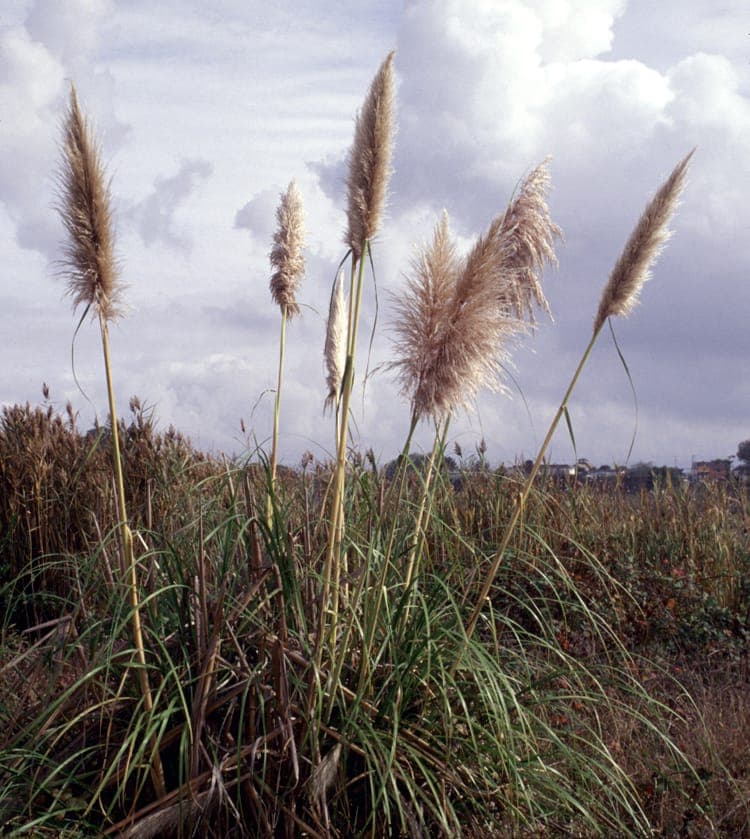
Gordon Leppig & Andrea J. Pickart / Public domain, via Wikimedia Commons
Cortaderia jubata: complete guide
Cortaderia jubata
¿Quieres ver Cortaderia jubata: complete guide en tu jardín?
1 minuto, sin tarjeta de crédito
Overview
Cortaderia jubata, better known as Pink pampas grass or Andean pampas grass, is a spectacular ornamental grass from the Poaceae family (Grass family). With its imposing growth and stunning pink to purple flowering plumes, this grass brings dramatic flair to any garden design. The plant grows to 1.5-2 meters tall and forms a compact clump with fine-feathered, grey-green foliage.
Appearance and Bloom
Cortaderia jubata creates a distinctive architectural form with elegant, fountain-like growth. The plant reaches 1.5-2 meters in height with equal width. From August to October, long stems bear spectacular pink to violet flower plumes (inflorescences) that can be 30-40 cm long. Depending on cultivar, plumes may be more pink or distinctly purple. The plumes remain attractive nearly all winter, adding visual texture to the landscape.
Ideal Location
Cortaderia jubata thrives in full sun - at least 6 hours of direct sun daily is essential for good growth and flowering. The plant thrives in windy environments and tolerates strong winds well due to its flexible grass structure. Ensure sufficient space around the plant, as it grows vigorously and needs substantial room.
Soil Composition
This grass is not finicky about soil. It grows well in both poor and fertile soils, as long as drainage is excellent. Heavy clay soils can be improved with sand or compost. Ideal are light sandy to loamy soils with good structure. Saturated soils must be avoided absolutely; this leads to root problems.
Watering
Once established, Cortaderia jubata is very drought-tolerant. After the first growing season, it rarely needs additional water. During very dry summers, you can occasionally water, but it's usually unnecessary. Young plants in their first year need more moisture care; ensure they receive regular water.
Diseño gratis
¿Quieres ver Cortaderia jubata: complete guide en tu jardín? Crea un diseño gratis ahora.
Pruning and Maintenance
Cortaderia jubata maintenance is minimal. All that's needed is removal of dead or damaged leaves in spring (March-April). Avoid cutting foliage too short; this damages the plant. Leave dead leaves and plumes standing through winter - they provide structure and protection. Remove these only in April when the plant starts to regrow.
Maintenance Calendar
March-April: carefully remove dead leaves, check new shoots. May-June: monitor growth, rarely water. July-October: enjoy blooming, no maintenance needed. October-November-January: leave dead plumes and leaves for winter effect.
Winter Hardiness
Cortaderia jubata is less winter-hardy than related Cortaderia selloana. In milder maritime climates (Netherlands, Belgium, coastal Germany) plants usually overwinter well once established. In continental climates with severe winters (-15 degrees C and colder) young plants may die. Protect young plants in their first years with mulch or jute wrapping during winter.
Companion Plants
Cortaderia jubata combines wonderfully with other drought-tolerant plants: sedums, lavender, red Japanese maple, hardy agapanthus, and purple-leaved Phormium. Combined with small groundcovers and stone accents, it creates softer compositions.
Conclusion
Cortaderia jubata is for everyone willing to try something different in the garden. This spectacular grass provides immediate impact and brings movement and volume to the landscape. Buy your plant from a larger garden center like OBI or Hornbach. Place it in full sun with space to grow. You'll get annual returns of beautiful pink plumes with minimal maintenance. Visit gardenworld.app for more inspiration designing a structure-rich front yard with ornamental grasses.
¿Quieres ver Cortaderia jubata: complete guide en tu jardín? Crea un diseño gratis ahora.
Sube una foto, elige un estilo y obtén un diseño fotorrealista con lista de plantas en menos de un minuto.
Más de 10.000 jardines diseñados
Sin tarjeta de crédito


Plantas similares
Sporobolus pungens: complete guide
Sporobolus pungens
Sporobolus pungens is a stoloniferous Mediterranean coastal grass with outstanding salt and drought tolerance, perfect for seaside and dry gardens.
Mediterranean aegilops: complete guide
Aegilops biuncialis
Everything about Aegilops biuncialis, a Mediterranean annual grass with ornamental spikes and outstanding drought tolerance for dry gardens.
Silver bluestem: complete guide
Bothriochloa saccharoides
Full guide to Bothriochloa saccharoides (silver bluestem): site, soil, watering, winter hardiness, pruning, and garden companions.