
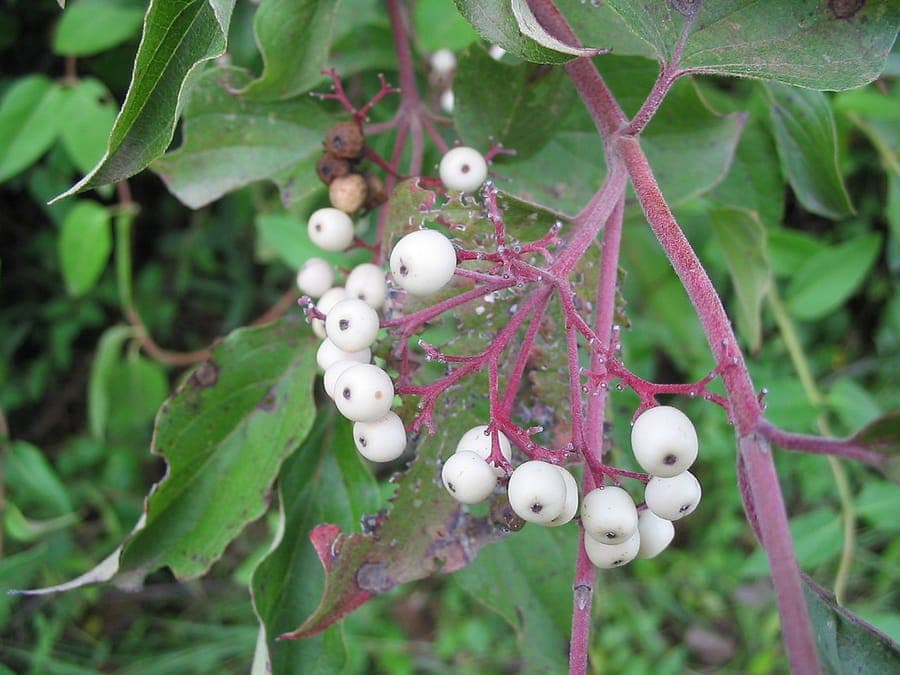
Mitternacht90 at English Wikipedia / Public domain, via Wikimedia Commons
Cornus racemosa: complete guide
Cornus racemosa
¿Quieres ver Cornus racemosa: complete guide en tu jardín?
1 minuto, sin tarjeta de crédito
Overview
Cornus racemosa, commonly known as Gray Dogwood, Panicled Dogwood, or Northern Swamp Dogwood, is a beautiful native North American shrub from the Cornaceae family. Naturally occurring from central and eastern Canada through the eastern United States, this distinctive plant brings native charm and wildlife value to gardens.
Appearance & Bloom
Gray Dogwood grows as a deciduous, multi-stemmed shrub with a rhizomatous growth pattern. The medium-green leaves display a coarse texture and turn reddish in autumn. In late spring, delicate white flowers appear in loose panicles, attracting bees and other pollinators. These are followed by distinctive blue-white drupes that mature in late summer to early autumn, providing essential food for migrating birds.
Ideal Location
Gray Dogwood thrives in full sun to partial shade, with at least 4-5 hours of direct sunlight for optimal flowering and fruit production. Choose a location with some wind protection. This hardy shrub is well-suited to temperate zones and requires no special protection.
Soil
Gray Dogwood is relatively unfussy about soil conditions. It adapts well to pH ranges from 4.8 to 7.4. Incorporate organic matter to improve moisture retention in sandy soils. The plant tolerates wet conditions reasonably well, making it suitable for low-lying or poorly drained areas.
Diseño gratis
¿Quieres ver Cornus racemosa: complete guide en tu jardín? Crea un diseño gratis ahora.
Watering
Water regularly during the first growing season to establish a strong root system. Once established, the plant demonstrates good drought tolerance. Water when the top inch of soil becomes dry. Regular watering during dry spells promotes stronger growth and better fruit production.
Pruning
Gray Dogwood responds well to pruning. Remove dead or diseased wood annually. Thin out old stems to encourage new growth and maintain an open form. Prune immediately after flowering to avoid removing next year's flower buds.
Maintenance Calendar
Spring: Monitor new growth, apply slow-release fertilizer. Summer: Water during dry periods, watch for pests. Autumn: Enjoy fruit and fall color, collect seeds. Winter: Minimal care, observe for winter damage.
Winter Hardiness
Cornus racemosa is extremely hardy, thriving in USDA zones 4b through 9, tolerating temperatures to -25 to -30 degrees Celsius. No special winter protection is necessary in most temperate regions.
Companion Plants
Pair with native wildflowers like Black-eyed Susans or coneflowers. Combine with other native shrubs like serviceberry or viburnum for a layered woodland effect.
Closing Thoughts
Gray Dogwood is an exceptional native plant that brings ecological value and seasonal beauty to any garden. Its fruit-bearing capacity makes it invaluable for wildlife support. For design inspiration and to discover similar native species, visit gardenworld.app/en to transform your outdoor space.
¿Quieres ver Cornus racemosa: complete guide en tu jardín? Crea un diseño gratis ahora.
Sube una foto, elige un estilo y obtén un diseño fotorrealista con lista de plantas en menos de un minuto.
Más de 10.000 jardines diseñados
Sin tarjeta de crédito


Plantas similares
Toughleaf Dogwood: complete guide
Cornus asperifolia
Toughleaf dogwood is a suckering, thicket-forming shrub native to the southeastern US, ideal for wildlife hedges on damp, low-lying ground.
Silky dogwood (Cornus obliqua): complete guide
Cornus obliqua
Silky dogwood: cultivation, care tips, and garden uses. White flowers, colorful berries, and stunning fall foliage.
Roughleaf dogwood: complete guide
Cornus drummondii
Everything you need to know about Cornus drummondii: siting, soil, pruning, winter hardiness and companion plants for a naturalistic garden.