
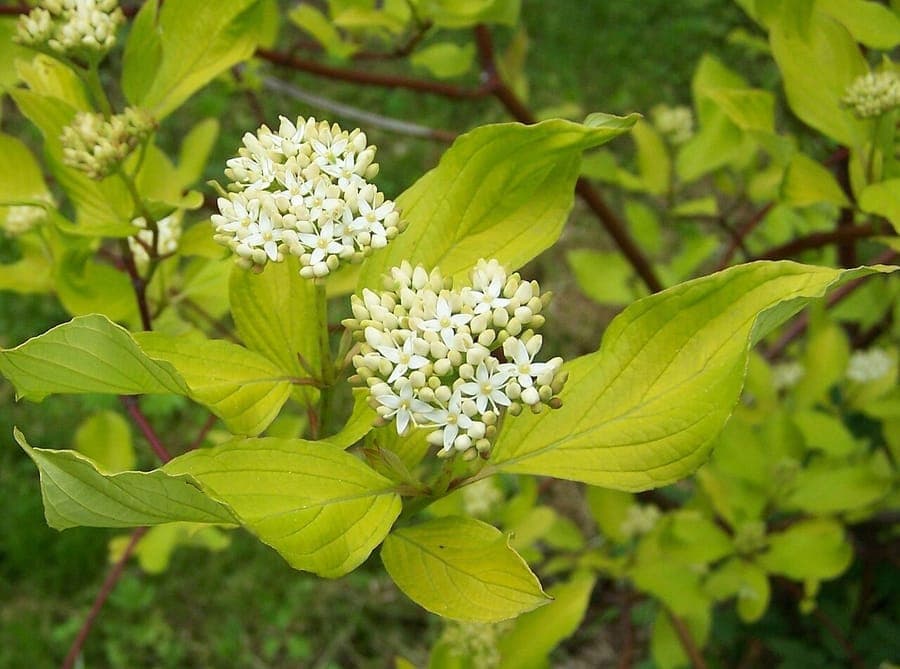
Silky dogwood (Cornus obliqua): complete guide
Cornus obliqua
¿Quieres ver Silky dogwood (Cornus obliqua): complete guide en tu jardín?
1 minuto, sin tarjeta de crédito
Overview
Silky dogwood, scientifically Cornus obliqua, is a native North American shrub celebrated for its elegant growth habit, delicate white flowers, and gorgeous red berries. The name refers to the characteristic red or purple tint of young stems, particularly visible during winter. This plant is invaluable for bird enthusiasts and nature-focused gardeners.
This remarkably tough shrub adapts well to various soil types and moisture conditions. Though native to North America, silky dogwood thrives beautifully in European gardens when properly positioned.
Appearance and Bloom
Silky dogwood grows as a graceful, loosely structured shrub with long, slender branches that develop reddish to purple tones in winter. The foliage is lance-shaped, green, and distinctly elegant.
In May and June, small cream-white flowers appear in delicate clusters above the foliage. These flowers attract numerous butterflies and beneficial insects. Following bloom, blue to purple berries develop, providing valuable bird food.
In autumn, foliage transforms into spectacular orange-red hues, creating a fantastic fall display.
Ideal Location
Silky dogwood performs best in locations receiving at least 4 hours of direct daily sunlight. It tolerates partial shade but flowers most abundantly in sunnier positions.
Position in a location with some protection from strong winds, as slender branches are susceptible to wind damage. Good air circulation prevents fungal problems.
Soil
Silky dogwood is exceptionally flexible regarding soil type, thriving in nearly all soils except very dry ones. It prefers moist soils but tolerates both acidic and neutral pH values.
Amending with compost at planting helps. This shrub tolerates wet soils better than many other shrubs.
Watering
Water regularly after planting until established. Once mature, silky dogwood is remarkably drought-tolerant, though regular watering promotes growth and flowering.
Water deeply during extremely dry summers. The plant tolerates periodic drought better than prolonged waterlogging.
Pruning
Silky dogwood tolerates heavy pruning without damage. Old branches can be removed at ground level to encourage new growth.
The best time to prune is late winter before new growth begins. This also promotes the red coloration development of young stems.
Maintenance Calendar
Spring (March-April): Prune to maintain form. Remove dead branches.
Summer (May-June): Peak flowering and fruiting. Minimal intervention needed.
Autumn (September-October): Enjoy fall colors. Bird food available.
Winter (November-February): Stem colors at peak. Heavy pruning can be performed.
Winter Hardiness
Silky dogwood is exceptionally winter hardy in temperate to cold climates. It tolerates temperatures to approximately minus 20 degrees Celsius and lower. Frost damage is usually minimal.
The plant may sustain minor damage in severe winters but typically recovers well.
Companion Plants
Silky dogwood pairs well with other native shrubs such as viburnum, ilex, and aralia. Combinations with non-native shrubs also work effectively.
Berrying plants and other wildlife-food plants are excellent companions.
Propagation
Silky dogwood propagates readily, making it a favorite among native plant nursery growers. The most common method uses hardwood cuttings 15 to 20 centimeters long, taken in late winter while the plant remains dormant. Cut just below a node, strip the lower leaves, and insert the cutting into a mix of sand and compost. Roots typically form within 6 to 8 weeks, especially when cuttings are kept in a cold frame or under plastic to maintain humidity.
Layering is another widely used technique: bend a low, flexible branch down to the soil, wound it slightly where it touches the ground, and cover with 5 to 10 centimeters of soil. After one growing season, the layered section usually develops enough roots to be separated from the parent plant.
Seed propagation is possible but less predictable, since seeds require a cold stratification period of at least 3 months before germinating. Gardeners wishing to start from seed can collect the berries in autumn, remove the pulp, and store the seeds in a moist medium in the refrigerator until spring.
Diseño gratis
¿Quieres ver Silky dogwood (Cornus obliqua): complete guide en tu jardín? Crea un diseño gratis ahora.
Pests and Diseases
Silky dogwood is generally resistant to serious pests, though a few problems can arise, particularly under drought stress or poor air circulation. Leaf spot disease (caused by fungi such as Septoria) can produce brown to black spots on foliage during humid summers; remove affected leaves and space plants adequately to improve airflow.
Aphids occasionally appear on young shoots in spring. A strong jet of water or an insecticidal soap treatment usually keeps populations in check without chemical intervention; ladybugs and hoverflies also control aphids naturally.
Scale insects can sometimes settle on branches, recognizable as small, brown, shell-like bumps. Treating with horticultural oil in late winter, before buds break, is usually sufficient. Dogwood canker, a fungal disease that mainly affects wounded or stressed plants, can be prevented by sterilizing pruning tools and promptly removing damaged branches.
Garden Design and Cultivars
In garden design, silky dogwood is often used as part of a mixed hedgerow, in bird-friendly borders, or as a standalone accent shrub beside a pond or water feature, where its roots also help stabilize banks. Space plants 100 to 150 centimeters apart from other shrubs to allow room for mature growth; the shrub eventually reaches 1.5 to 3 meters tall and roughly as wide.
Although Cornus obliqua itself is usually sold as the straight species, garden centers also stock related, more ornamental dogwood cultivars with striking named varieties, such as Cornus sericea 'Flaviramea' with bright yellow winter stems or Cornus sericea 'Cardinal' with coral-red twigs. These related cultivars pair beautifully with silky dogwood in the same border for a varied winter color palette.
For a naturalistic, ecologically valuable border, combine silky dogwood with butterfly bush, holly, and native grasses. In March and April, as new shoots emerge, is a good time to check the border for winter damage and replant where needed.
Frequently Asked Questions
How fast does silky dogwood grow? Under favorable conditions, the shrub grows 30 to 60 centimeters per year and reaches its mature height of 1.5 to 3 meters within 4 to 5 years.
Can silky dogwood be grown in a container? Yes, provided the pot is at least 40 to 50 centimeters deep with good drainage holes. Repot every 2 to 3 years into a larger container with fresh substrate, ideally in March before the new growing season begins.
Is silky dogwood toxic to pets? The berries are not known to be highly toxic to dogs or cats, though excessive consumption can cause mild stomach upset. As with most ornamental plants, it is wise to discourage consumption.
What is the difference from common red-osier dogwood? Cornus sericea (red-osier dogwood) typically has more vividly colored winter stems and grows somewhat more compact, while Cornus obliqua grows looser and taller with subtler purplish-red tones.
Conclusion
Silky dogwood is an excellent choice for those seeking a beautiful, bird-friendly shrub with seasonal interest. With white flowers, red berries, and winter stem color, it offers year-round attractiveness.
Visit local garden centers for quality specimens. For inspiration and garden design, explore gardenworld.app. You can design your perfect garden on gardenworld.app!
¿Quieres ver Silky dogwood (Cornus obliqua): complete guide en tu jardín? Crea un diseño gratis ahora.
Sube una foto, elige un estilo y obtén un diseño fotorrealista con lista de plantas en menos de un minuto.
Más de 10.000 jardines diseñados
Sin tarjeta de crédito


Plantas similares
Toughleaf Dogwood: complete guide
Cornus asperifolia
Toughleaf dogwood is a suckering, thicket-forming shrub native to the southeastern US, ideal for wildlife hedges on damp, low-lying ground.
Roughleaf dogwood: complete guide
Cornus drummondii
Everything you need to know about Cornus drummondii: siting, soil, pruning, winter hardiness and companion plants for a naturalistic garden.
Cornus glabrata: complete guide
Cornus glabrata Benth.
Cornus glabrata, known as brown dogwood, is an attractive native shrub from California and Oregon. With its smooth leaves, delicate flowers, and striking berries, it is an ideal choice for naturalistic gardens and wildlife habitats.