
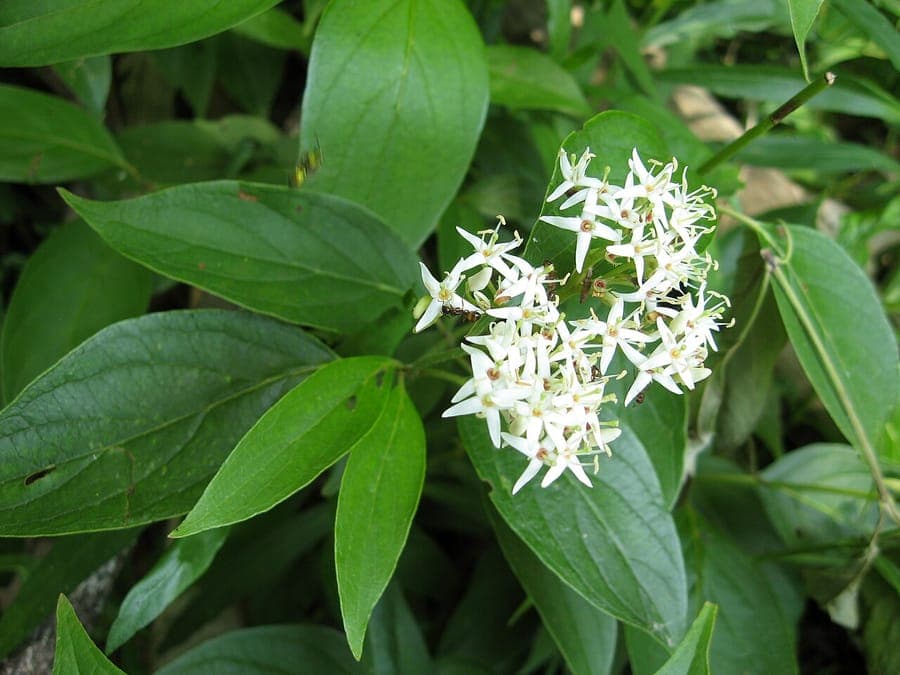
Mason Brock (Masebrock) / Public domain, via Wikimedia Commons
Cornus foemina: complete guide
Cornus foemina
¿Quieres ver Cornus foemina: complete guide en tu jardín?
1 minuto, sin tarjeta de crédito
Overview
The Stiff Dogwood (Cornus foemina) is an elegant North American shrub from the Cornaceae family. This plant is renowned for its upright growth habit, attractive white flowers in spring, and dark blue-black berries in autumn. Growing wild in swamps and along water margins in the southeastern United States, it is becoming increasingly popular in European gardens for its low-maintenance character and value to wildlife.
The Stiff Dogwood is perfect for gardeners seeking a native plant that requires little maintenance while providing significant benefits to birds and insects. With its attractive growth pattern and seasonal appeal, this shrub fits excellently into both modern and classic garden designs.
Appearance and bloom
The Stiff Dogwood grows as a robust, upright shrub with a spreading branch pattern. The plant typically reaches 4-6 meters in height with an equivalent spread. The branches are notably stiff and form an architectural shape that remains attractive even in winter.
The leaves are lanceolate, 5-10 centimeters long, and green in color. In spring, numerous small white flowers appear in flattened clusters. While not individually showy, these flowers contribute significantly to the spring display of the garden. Flowering lasts several weeks from May to June.
Following the flowers, small round fruits develop during summer, initially green in color. By August and September, these berries ripen to a deep dark blue, almost black color. These glossy fruits are highly attractive to birds and form an important food source in autumn.
Autumn foliage is subtle but attractive, with leaves turning yellow to red. The stiff branch structure remains visible in winter, providing the garden with winter interest.
Ideal location
The Stiff Dogwood thrives in full sun locations, though the plant also tolerates partial shade reasonably well. Ensure the shrub receives at least 4-5 hours of direct sunlight daily for optimal flowering and fruit production.
The plant handles moist to wet soil conditions well and grows especially well in locations with regular water supply. It is not waterlogged in the sense of standing water - well-draining, moist soils are ideal.
Use this shrub in wildlife gardens, along garden borders, or as a solitary accent on a lawn. The stiff form also suits hedges and informal windbreaks. In smaller gardens, the plant works excellently in combination with other shrubs.
Soil
The Stiff Dogwood is not particularly fussy about soil type. The plant grows well in both acidic and neutral soils with a pH range of 5.8 to 7.2. This means the shrub can grow in most British gardens without further adjustment.
Ideal is moist, well-draining soil. Add plenty of organic material at planting time in the form of compost or garden manure. This improves water retention and nutrient supply, especially important during dry periods.
The plant tolerates poor soils well and is therefore suitable for less demanding garden locations. Mulch around the plant with 5-7 centimeters of organic material to maintain soil moisture.
Diseño gratis
¿Quieres ver Cornus foemina: complete guide en tu jardín? Crea un diseño gratis ahora.
Watering
During the first year after planting, regular watering is important to establish a strong root system. Water the plant preferably 2-3 times weekly, especially during dry periods.
Once established, watering can be reduced. The Stiff Dogwood is drought-tolerant and can manage in normal weather without supplemental watering. During extremely dry periods, however, additional watering may benefit flowering and fruiting.
In regions with regular rainfall, you likely won't need to water. Monitor soil moisture during the growing season and ensure the soil doesn't dry out completely.
Pruning
The Stiff Dogwood requires minimal pruning. The plant naturally maintains an attractive shape and grows cleanly. Pruning is primarily to remove dead wood, damaged branches, and maintain the form.
Best to prune the plant immediately after flowering in June. Remove approximately one-third of the older wood to encourage renewal growth. This also promotes a denser growth pattern.
Ragged or wild growth can be carefully removed. Heavy shape pruning is unnecessary and can be counterproductive. The natural architecture of this shrub is one of its greatest attractions.
Maintenance calendar
March-April: Check plant for winter damage. Add compost around the base as mulch. May-June: Plant grows vigorously, abundant white flowers. Adjust water as needed. Prune after flowering. July-August: Fruits form and turn green. Hand-remove dead wood. September-October: Fruits ripen to dark blue. Birds visit prolifically. Autumn color appears. November-December: Plant goes dormant. Branch structure becomes visible. Wind protection may be needed. January-February: Rest period. Plant is very hardy. Damaged branches can now be better removed.
Winter hardiness
The Stiff Dogwood is extremely winter hardy and can withstand temperatures down to -25 degrees Celsius. This makes it ideal for British winters and even the coldest regions of northern Europe.
The plant requires no special winter feeding or protection. Only exceptionally young plants may benefit from light shading in their first winter.
Snow breakage can occasionally occur on vigorous specimens. This is rare and no cause for concern.
Companion plants
Combine the Stiff Dogwood well with other wildlife attractors such as Viburnum, Ilex (holly), and Sambucus (elderberry). The stiff form of Cornus creates a nice contrast with more elegantly weeping shapes.
Red-twig dogwood (Cornus alba) makes a beautiful combination for winter stem color. Underplanted with wildflowers such as nettles and native grasses increases ecological value.
In a hedge composition, the Stiff Dogwood combines well with Crataegus (hawthorn), Rosa (rose), and Euonymus (spindle) for diverse wildlife habitat.
Conclusion
The Stiff Dogwood deserves a place in more British gardens. This North American native shrub combines beauty with ecological value. From its white spring flowers to its dark blue autumn berries, the plant offers seasonal beauty without demanding maintenance.
Whether you're creating a wildlife garden or simply seeking a low-maintenance shrub with year-round interest, Cornus foemina is an excellent choice. Plants are available from most garden centers and online plant retailers.
¿Quieres ver Cornus foemina: complete guide en tu jardín? Crea un diseño gratis ahora.
Sube una foto, elige un estilo y obtén un diseño fotorrealista con lista de plantas en menos de un minuto.
Más de 10.000 jardines diseñados
Sin tarjeta de crédito


Plantas similares
Toughleaf Dogwood: complete guide
Cornus asperifolia
Toughleaf dogwood is a suckering, thicket-forming shrub native to the southeastern US, ideal for wildlife hedges on damp, low-lying ground.
Silky dogwood (Cornus obliqua): complete guide
Cornus obliqua
Silky dogwood: cultivation, care tips, and garden uses. White flowers, colorful berries, and stunning fall foliage.
Roughleaf dogwood: complete guide
Cornus drummondii
Everything you need to know about Cornus drummondii: siting, soil, pruning, winter hardiness and companion plants for a naturalistic garden.