
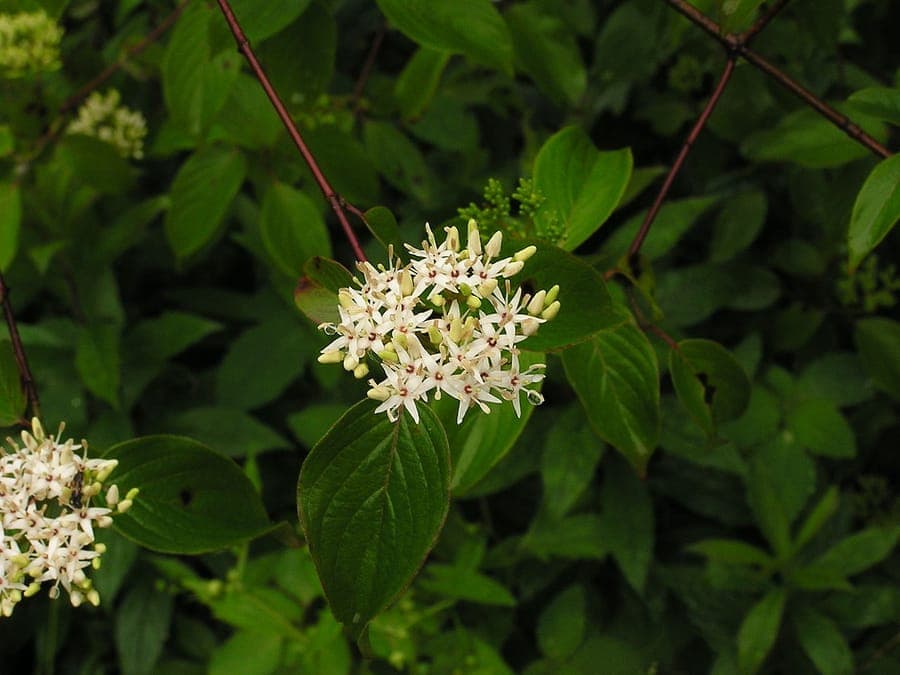
User:SB_Johnny / CC BY-SA 3.0, via Wikimedia Commons
Cornus amomum: complete guide
Cornus amomum
¿Quieres ver Cornus amomum: complete guide en tu jardín?
1 minuto, sin tarjeta de crédito
Overview
Cornus amomum, commonly known as silky dogwood or silky cornel, is a versatile North American shrub in the Cornaceae family. This plant grows naturally throughout the eastern and central United States and thrives in woodland edge environments and moist zones. With white flowers, blue berries, and attractive fall foliage coloration, Cornus amomum is an excellent choice for gardens seeking successive seasonal interest. The plant is also valuable for wildlife-friendly gardens as it provides bird food throughout the seasons.
Appearance and Bloom
Cornus amomum grows as a densely branched, deciduous shrub, typically 2-3 meters tall and equally broad. The leaves are opposite, narrowly oblong-lanceolate, green, and approximately 5-10 cm long, with prominent veining. Most striking are the small white flowers appearing in flat clusters (cymes) from May through June. Although individual flowers are tiny, together they form attractive bloom groups. Later in the season (August through October), blue to blue-white fruits (drupes) appear. These berries attract numerous bird species and provide winter sustenance.
Ideal Location
Cornus amomum thrives in full sun to partial shade (minimum 3-4 hours direct sunlight). The plant is adapted to woodland edge environments, so it accepts various light levels. For best blooming and fruiting, select full sun locations. The shrub suits diverse garden situations: woodland edges, native plantings, waterside plantings, and screening. It grows well in urban gardens and tolerates air pollution.
Soil
Cornus amomum is flexible with soil conditions and thrives in both wet and moderately dry soils. Unlike many shrubs, it accepts moister soil better than average. A pH range of 5.0-7.0 (acidic to neutral) is ideal. Heavy clay and sandy soils are both tolerated. The plant feels at home in nutrient-rich soils, so mild spring fertilization can promote growth, though it's not essential. Mulching with organic material (such as leaf litter) helps retain moisture, which benefits this species.
Watering
Cornus amomum feels comfortable in moist environments and tolerates more moisture than many other shrubs. Newly planted specimens require regular watering (2-3 times weekly) during the first growing season. Mature plants are moisture-tolerant and less dependent on supplemental watering, especially in regions with normal rainfall. However, during extended dry spells, water to prevent soil from drying completely. The plant truly flourishes in moist to wet conditions (like along streambanks), so avoid excessive drainage.
Diseño gratis
¿Quieres ver Cornus amomum: complete guide en tu jardín? Crea un diseño gratis ahora.
Pruning
Cornus amomum responds well to pruning and can be maintained in shape by regularly removing dead wood. Prune after flowering or in late winter before new growth emerges. The plant can tolerate heavy pruning and will recover well. For more natural forms, perform selective pruning rather than cutting all branches equally. If using the plant as a screen, regular pruning maintains desired height and width.
Maintenance Calendar
Spring: Plant in early spring. Light pruning; water as needed. Summer: Enjoy blooming and growth. Autumn: Enjoy blue fruits and fall coloration; observe gathering birds. Winter: Minimal watering; remove dead wood. This plant is particularly attractive in autumn due to berries and leaf color.
Winter Hardiness
Cornus amomum is fully hardy and tolerates temperatures to -30°C (USDA Zones 3-9). It is one of the most cold-tolerant Cornus species and grows without protection in snowy regions. In fact, it prefers temperate climates to very warm areas. This makes it an ideal choice for North American gardens.
Companion Plants
Cornus amomum pairs well with other native North American shrubs: Ilex verticillata (winterberry), Viburnum species, Sambucus nigra (common elderberry), and other wildlife food providers. In woodland edge effects, combine with native trees like oak, maple, and birch. For waterside plantings, associate with Salix (willow) and other water-tolerant plants. These combinations create ecological landscapes that attract abundant bird life.
Closing Thoughts
Cornus amomum is a versatile, native shrub for gardeners seeking beauty and wildlife-friendliness. With acceptance for diverse soil conditions, moist environments, and seasonal interest, this plant delivers value for years. Blue berries attract birds, transforming gardens into bird-watching sanctuaries. Available at leading nurseries for those contributing native wildlife food sources.
Visit gardenworld.app for comprehensive native plant advice and ecological garden design. Gardenworld.app delivers photorealistic gardens emphasizing biodiversity and wildlife support.
¿Quieres ver Cornus amomum: complete guide en tu jardín? Crea un diseño gratis ahora.
Sube una foto, elige un estilo y obtén un diseño fotorrealista con lista de plantas en menos de un minuto.
Más de 10.000 jardines diseñados
Sin tarjeta de crédito


Plantas similares
Toughleaf Dogwood: complete guide
Cornus asperifolia
Toughleaf dogwood is a suckering, thicket-forming shrub native to the southeastern US, ideal for wildlife hedges on damp, low-lying ground.
Silky dogwood (Cornus obliqua): complete guide
Cornus obliqua
Silky dogwood: cultivation, care tips, and garden uses. White flowers, colorful berries, and stunning fall foliage.
Roughleaf dogwood: complete guide
Cornus drummondii
Everything you need to know about Cornus drummondii: siting, soil, pruning, winter hardiness and companion plants for a naturalistic garden.