
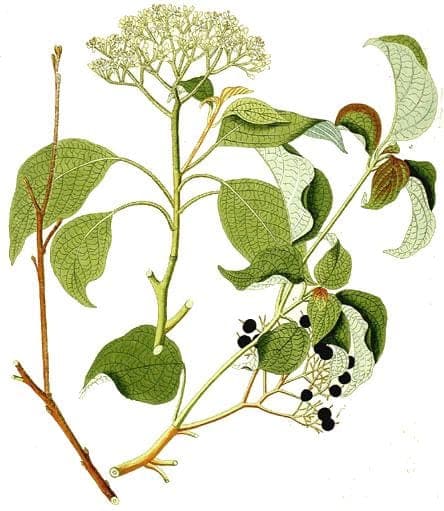
Wikimedia Commons / Public domain, via Wikimedia Commons
Cornus alternifolia: complete guide
Cornus alternifolia
¿Quieres ver Cornus alternifolia: complete guide en tu jardín?
1 minuto, sin tarjeta de crédito
Overview
Alternate-leaf Dogwood (Cornus alternifolia), also known as Pagoda Dogwood or Green Osier, is a striking deciduous shrub from eastern North America. Distinguished by its unique horizontally-tiered branch architecture creating an elegant pagoda silhouette, this woody plant offers white spring flowers and blue-black autumn fruits.
Appearance and Bloom
Cornus alternifolia develops as an open, spreading shrub reaching 5-8 meters in height. Leaves are alternately arranged (unique among Cornus species) and measure 5-10 cm long. Small white flowers appear in May-June arranged in flat clusters, followed by distinctive dark blue to black berries that attract birds. Autumn foliage turns yellow-orange.
Ideal Location
This species thrives in light shade to dappled sunlight (3-4 hours direct daily sun). Though frost-hardy, protection from harsh afternoon sun prevents leaf scorch. Woodland understory placement is ideal. Avoid completely dark locations where flowering and fruiting diminish.
Soil
Cornus alternifolia performs optimally in moist to moderately dry, humus-rich soils with good drainage. The plant accepts both acidic and neutral soils. Heavy, compacted soils improve with compost and peat addition. Fertile soil promotes superior growth and flowering.
Diseño gratis
¿Quieres ver Cornus alternifolia: complete guide en tu jardín? Crea un diseño gratis ahora.
Watering
Once established, this shrub is moderately drought-tolerant, though regular moisture improves growth. Water young plants weekly during dry periods. Mature plants rarely need supplemental watering except during prolonged drought. Avoid waterlogging.
Pruning
Minimal pruning needed. Remove dead branches in early spring. Light shaping in June after flowering. Heavy pruning reduces flowering and fruiting. Natural layered form is most attractive.
Maintenance Calendar
March-April: Remove dead wood. May-June: Flowering and pollination period. July-August: Fruit development. September-October: Berry ripening, autumn color. November-February: Winter dormancy; no maintenance needed.
Winter Hardiness
Fully hardy to -30 degrees Celsius. Performs well in temperate European climates. No special winter protection needed. Heavy snow loads may damage thin branches; gently shake free.
Companion Plants
Pairs beautifully with woodland plants such as Hosta, Heuchera, and Astilbe. Perfect as understory for larger trees. Ideal in shade borders alongside Hydrangea and Sambucus. Works well in mixed shrub borders with Viburnum.
Closing Remarks
Pageoda Dogwood offers elegance, year-round interest, and minimal maintenance requirements. A true jewel for designers seeking architectural structure. Available at specialist nurseries and garden centers. For more design inspiration, visit gardenworld.app/en!
¿Quieres ver Cornus alternifolia: complete guide en tu jardín? Crea un diseño gratis ahora.
Sube una foto, elige un estilo y obtén un diseño fotorrealista con lista de plantas en menos de un minuto.
Más de 10.000 jardines diseñados
Sin tarjeta de crédito


Plantas similares
Toughleaf Dogwood: complete guide
Cornus asperifolia
Toughleaf dogwood is a suckering, thicket-forming shrub native to the southeastern US, ideal for wildlife hedges on damp, low-lying ground.
Silky dogwood (Cornus obliqua): complete guide
Cornus obliqua
Silky dogwood: cultivation, care tips, and garden uses. White flowers, colorful berries, and stunning fall foliage.
Roughleaf dogwood: complete guide
Cornus drummondii
Everything you need to know about Cornus drummondii: siting, soil, pruning, winter hardiness and companion plants for a naturalistic garden.