
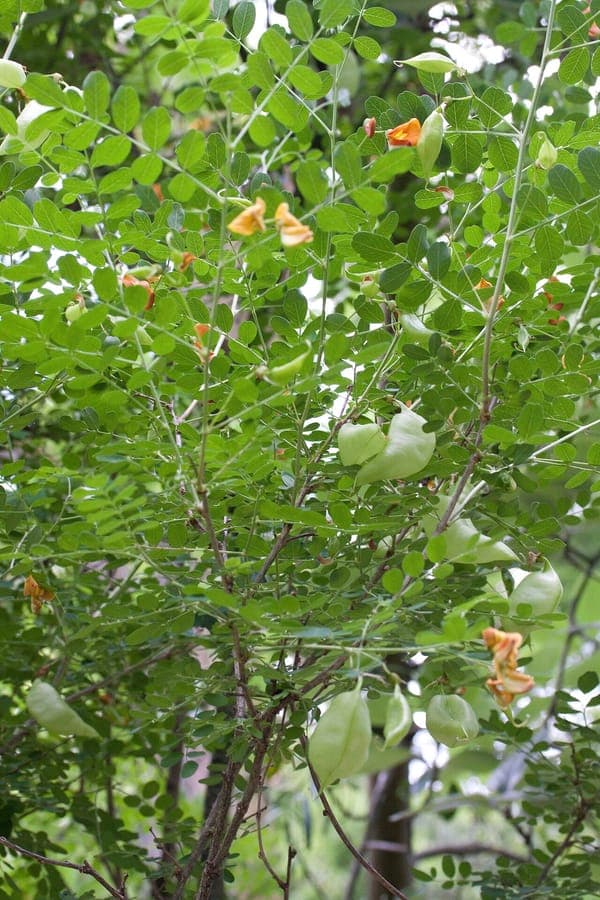
Denis.prévôt / CC BY-SA 3.0, via Wikimedia Commons
Oriental bladder senna: complete guide
Colutea orientalis
¿Quieres ver Oriental bladder senna: complete guide en tu jardín?
1 minuto, sin tarjeta de crédito
Overview
The Oriental bladder senna (Colutea orientalis) is a stately shrub from the mountain meadows of the Caucasus. This botanical rarity belongs to the pea family (Fabaceae) and is celebrated for its vivid yellow flowers and striking, inflated seed capsules. In the garden it creates a Mediterranean atmosphere with added benefits for bird feeding.
The plant naturally grows in rough landscapes between 500-2000 meters elevation in the Caucasus and northern Persia. In temperate European climates it thrives in open, sunny positions. The shrub reaches 2-3 meters high and equally wide, making it suitable for border and boundary plantings.
Appearance & bloom cycle
Oriental bladder senna is recognizable by its slender branches with finely feathered leaves. The foliage is green and elegant, often 8-15 cm long. Flowers appear from May through August in loose hanging trusses of five to ten yellow, butterfly-shaped blooms.
After flowering, characteristic inflated seed capsules develop, initially green, gradually turning reddish-brown. These bladder fruits remain on the plant for months, providing texture to the winter silhouette. Birds appreciate them as food in fall and early winter.
Ideal location
Oriental bladder senna requires full sun and good drainage. Plant it in windy positions; it tolerates strong wind well. In northern Europe it grows best against south- or west-facing walls, protected from north winds.
The plant also thrives in partial shade, but flowers less abundantly there. For best results position in open gardens where air circulates freely. Prefer dry to wet; choose elevated ground.
Soil requirements
Oriental bladder senna grows on stony, well-draining soil. In gardens add potting soil to heavy clay with extra sand and gravel (ratio 1 part plant: 2 parts sand/gravel).
Neutral to slightly alkaline pH is ideal (pH 6.5-8.0). The plant tolerates poor soil thanks to root nodules with nitrogen-fixing bacteria. No organic material needed, no regular feeding required. Good water drainage is essential.
Diseño gratis
¿Quieres ver Oriental bladder senna: complete guide en tu jardín? Crea un diseño gratis ahora.
Watering
Oriental bladder senna hates wet roots. Water sparingly during growing season (May-September). Only water when soil is visibly dry, especially during periods of little rain.
Drainage from summer rains is ideal. In container cultivation check drainage regularly; no standing water. In fall and winter almost no watering. Established plants are largely self-sufficient.
Pruning
Oriental bladder senna requires minimal pruning. Remove only dead branches in early spring (March). Pruning after flowering (September) can be light, especially for form maintenance.
On younger plants you can pinch growth tips in May for bushier growth. After 5-6 years you can remove weak branches. Don't prune aggressively; the shrub maintains its natural form.
Maintenance calendar
Spring (March): Check frost damage; remove damaged branches. Late spring (April-May): Await growth, no feeding needed. Summer (June-Sept): Water only during drought. August-September: Enjoy flowering and fruit set. Fall: Leave bladder fruits for bird food. Winter: No maintenance.
Annually check for whitefly or spider mites; rare but possible in warm seasons.
Winter hardiness
Oriental bladder senna is hardy to -20°C. In northern Europe it grows outdoors without protection. In cold mountain regions it thrives best against warm walls.
Heavy wet winters are the only threat. Ensure drainage around the base; mulching is unnecessary. In container cultivation place in unheated frame or shed.
Companion plants
Oriental bladder senna combines beautifully with other drought-tolerant plants: Lavender, Cistus, wildflowers. Also in gravel gardens with Salvia nemorosa, Achillea, and Santolina.
In hedge plantings it works alongside Berberis and Euonymus. For contrast flower effect, plant alongside blue-flowering Veronicas or Delphiniums. They support each other in windy places.
Closing
Oriental bladder senna is a special shrub for the natural gardener. With minimal care it delivers years of blooms and bird food. The striking seed pods provide ornamental value in cold seasons. Source plant material from garden centers; availability varies. A true gem for garden owners brave enough to experiment with South European shrubs in temperate climates.
¿Quieres ver Oriental bladder senna: complete guide en tu jardín? Crea un diseño gratis ahora.
Sube una foto, elige un estilo y obtén un diseño fotorrealista con lista de plantas en menos de un minuto.
Más de 10.000 jardines diseñados
Sin tarjeta de crédito


Plantas similares
Tall Silky Lupine: complete guide
Lupinus elatus
Tall silky lupine is a fast-growing Californian perennial with silvery foliage and blue-purple flower spikes, ideal for a prairie-style garden.
Garfield Lupine: complete guide
Lupinus garfieldensis
The Garfield lupine is a rare, fast-growing American perennial for alkaline, dry grassland gardens, with striking blue flower spikes.
Lupinus elegans: complete guide
Lupinus elegans
Lupinus elegans, the elegant lupine, is a spectacular blooming plant from Mexico with blue flower spikes. Care, cultivation and garden use.