
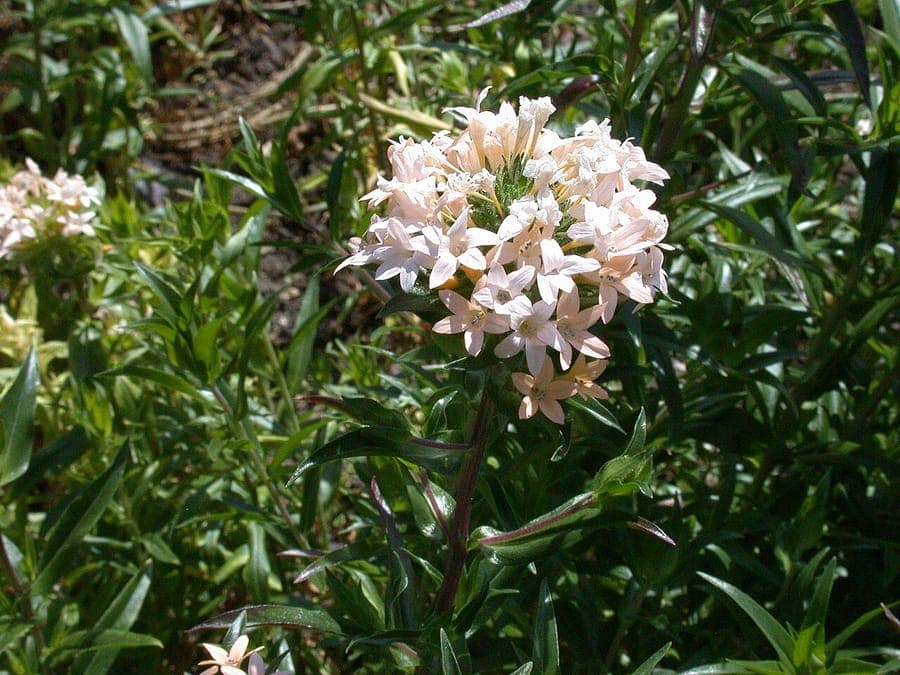
Keith Edkins / CC BY 2.5, via Wikimedia Commons
Large-flower collomia: complete guide
Collomia grandiflora
¿Quieres ver Large-flower collomia: complete guide en tu jardín?
1 minuto, sin tarjeta de crédito
Overview
Large-flower collomia, scientifically Collomia grandiflora, is an annual herb from the Polemoniaceae family. Native to western North America from California to British Columbia, this ornamental plant is prized for its showy clustered orange-pink flowers. It represents an underappreciated gem from Pacific Northwest flora.
Appearance and Bloom Cycle
Large-flower collomia develops as a compact, upright plant typically 30-60 cm tall. Linear-lanceolate leaves arranged alternately along stems are dark green, with stems often displaying purplish-red tinting. The plant exhibits bushy, branching architecture natural to annual growth patterns.
Flowers are gathered in dense clusters terminating stems, each 1-1.5 cm diameter, tubular form, ranging from salmon-orange to pink coloration. Flowering extends from June through August. Fragrance is lightly sweet and pleasant, attracting pollinators and beneficial insects.
Ideal Location
Large-flower collomia thrives in sunny positions with minimum six hours direct sunlight daily. The plant tolerates light partial shade but blooms most abundantly in full sun. It suits rocky ground, dry meadow plantings, and wildflower schemes.
Soil Requirements
Large-flower collomia is flexible with soil types. It grows on well-drained, moderately fertile to fertile soils. pH can range from 7.0 to 7.5, though somewhat more acidic soils are tolerated. The plant performs well on light, sandy soils and accepts clay mixtures.
Watering
Once established, large-flower collomia exhibits moderate drought tolerance. Regular watering during the first growing season enhances flowering. Established plants require minimal supplemental irrigation. Avoid overwatering, particularly in heavy soils.
Diseño gratis
¿Quieres ver Large-flower collomia: complete guide en tu jardín? Crea un diseño gratis ahora.
Pruning and Maintenance
Minimal pruning is required. Deadheading spent flowers stimulates extended flowering. No formal pruning necessary - the plant develops attractive shape naturally. In late fall, spent plant material can be removed or seeds collected.
Maintenance Calendar
Spring: Seed sowing or seedling transplanting. May-June: Stem and leaf growth, initial flowering. June-August: Peak flowering period. Summer: Deadhead flowers, maintain watering. Late season: Seed formation; minimal care required.
Winter Hardiness
Large-flower collomia is annual and cannot tolerate frost. It suits warm-season growing only. In cool regions, sow seeds after all frost danger passes in late spring.
Companion Plants
Large-flower collomia pairs beautifully with other warm-season flowers including Zinnia, Cosmos, and Chrysanthemum varieties. Low-growing grasses like Setaria provide textural contrast. For sophisticated wildflower borders, combine with Clarkia, Godetia, and other Pacific Northwest natives.
Closing Thoughts
Large-flower collomia represents an underappreciated annual valuable for summer garden displays. With minimal care requirements, showy clustered flowers, and nectar value for pollinators, it represents a delightful choice for gardeners seeking something distinctive. The plant embodies the rich floral heritage of the Pacific Northwest.
For more information on North American plant species and garden design, visit gardenworld.app for expert advice and design inspiration. Explore more wildflowers and garden varieties at gardenworld.app and begin creating your colorful garden.
¿Quieres ver Large-flower collomia: complete guide en tu jardín? Crea un diseño gratis ahora.
Sube una foto, elige un estilo y obtén un diseño fotorrealista con lista de plantas en menos de un minuto.
Más de 10.000 jardines diseñados
Sin tarjeta de crédito


Plantas similares
Polemonium foliosissimum: complete guide
Polemonium foliosissimum
Polemonium foliosissimum is a vigorous Rocky Mountain perennial with blue-purple summer flowers that attract pollinators and thrive in borders.
Skunkweed: complete guide
Navarretia squarrosa
Everything about Navarretia squarrosa, California stinkweed - a pungent annual wildflower from the Pacific coast with small purple blooms.
Prickly phlox: complete guide
Linanthus pungens
Everything about Linanthus pungens (prickly phlox): location, soil, watering and maintenance. A spiny western mountain plant for rock gardens and dry landscapes.