
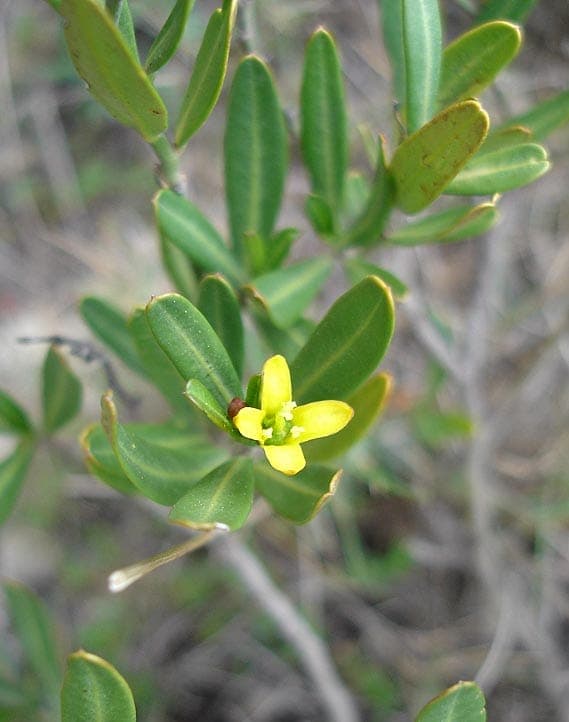
Wikimedia Commons / CC BY-SA 3.0, via Wikimedia Commons
Spurge olive: complete guide
Cneorum tricoccon
¿Quieres ver Spurge olive: complete guide en tu jardín?
1 minuto, sin tarjeta de crédito
Overview
Cneorum tricoccon, commonly known as Spurge olive or Camélée, is a small Mediterranean shrub from southern Europe. This plant grows naturally on dry, calcareous slopes across the Mediterranean from Spain to Italy. In these habitats, the plant forms low, dense mats with fine leaves and yellow flowers in spring. This is a highly characterful, rare plant for gardeners seeking authentic Mediterranean.
Appearance & Bloom
Spurge olive reaches only 30-60 centimeters tall and forms very dense, branched shrublets. The leaves are very small, approximately 1-2 centimeters long, linear and green with silvery coating beneath. Flowers appear April through June in clusters of only several blooms; they are small, yellow, and very fragrant. After flowering, very distinctive three-chambered red to orange-yellow berries form and are highly decorative.
Ideal Location
Spurge olive demands absolute full sun with at least eight hours direct daily sunlight. This plant cannot grow in shade and dies without sufficient light. Place this plant in the hottest, sunniest corner. Protection from strong cold north winds is helpful but not essential. The plant thrives on southeast-facing slopes.
Soil
Spurge olive grows on very dry, calcareous ground naturally. This plant tolerates only very well-drained, poor soil. For garden planting, a very well-draining mixture is essential: 50% gravel, 25% peat, and 25% sand. Add extra sand for additional drainage. A pH of 7.0 to 8.5 is ideal. Heavy clay soils are completely unsuitable without complete conversion.
Watering
Spurge olive is very drought-tolerant once established. Watering is only needed for germination and first few months of growth. Once established, this plant tolerates prolonged drought without growth reduction. Over-watering causes rapid root rot and plant death. This is a less-is-better plant.
Diseño gratis
¿Quieres ver Spurge olive: complete guide en tu jardín? Crea un diseño gratis ahora.
Pruning
Pruning is practically unnecessary. Remove only very dead branches once yearly in spring. This plant naturally forms attractive, compact forms. Heavy pruning kills this plant quickly. Avoid pruning dark green old wood.
Maintenance Calendar
April-May: Check growth and remove dead branches. June: Enjoy flowers and later berries. July-September: Water only in extremely dry periods. October-November: No special care. January-March: Winter inspection for frost damage.
Winter Hardiness
Spurge olive is hardy to approximately -8 degrees Celsius in drier conditions but more tender in wetter climates. The plant grows naturally in the Mediterranean and tolerates mild winters well. In Netherlands, it grows only in very protected, southern locations, especially near the sea. In most of Netherlands, the plant will freeze back severely in harsh winters. Protection from wet winters is crucial.
Companion Plants
Spurge olive combines beautifully with other Mediterranean, drought-tolerant plants. Grow together with Cistus species, Helianthemum, and Rosmarinus officinalis. Also beautiful beside gray deciduous plants like Santolina and Artemisia. Yellow flowers combine well with purple-flowering Salvia lavandulifolia.
Closing Thoughts
Spurge olive is a very rare, highly characterful plant for southern, dry gardens. With yellow flowers and distinctive red berries, this is an absolute treasure for plant collectors. The plant grows excellently in containers in less favorable climates. Available from very specialized nurseries with Mediterranean focus.
Wish to learn more about Mediterranean gardens? Visit gardenworld.app for inspiration and discover more at gardenworld.app/en.
¿Quieres ver Spurge olive: complete guide en tu jardín? Crea un diseño gratis ahora.
Sube una foto, elige un estilo y obtén un diseño fotorrealista con lista de plantas en menos de un minuto.
Más de 10.000 jardines diseñados
Sin tarjeta de crédito


Plantas similares
Thamnosma montana: complete guide
Thamnosma montana
Everything about Thamnosma montana, the aromatic turpentine broom from the Mojave Desert. Location, soil, care and companion planting explained.
Narrow-leaved fringed rue: complete guide
Ruta angustifolia
Everything about Ruta angustifolia: location, soil, watering, pruning and winter care for this Mediterranean subshrub.
Mountain rue: complete guide
Ruta montana
A complete guide to Ruta montana: best location, soil, watering, pruning and overwintering of this aromatic Mediterranean subshrub.