
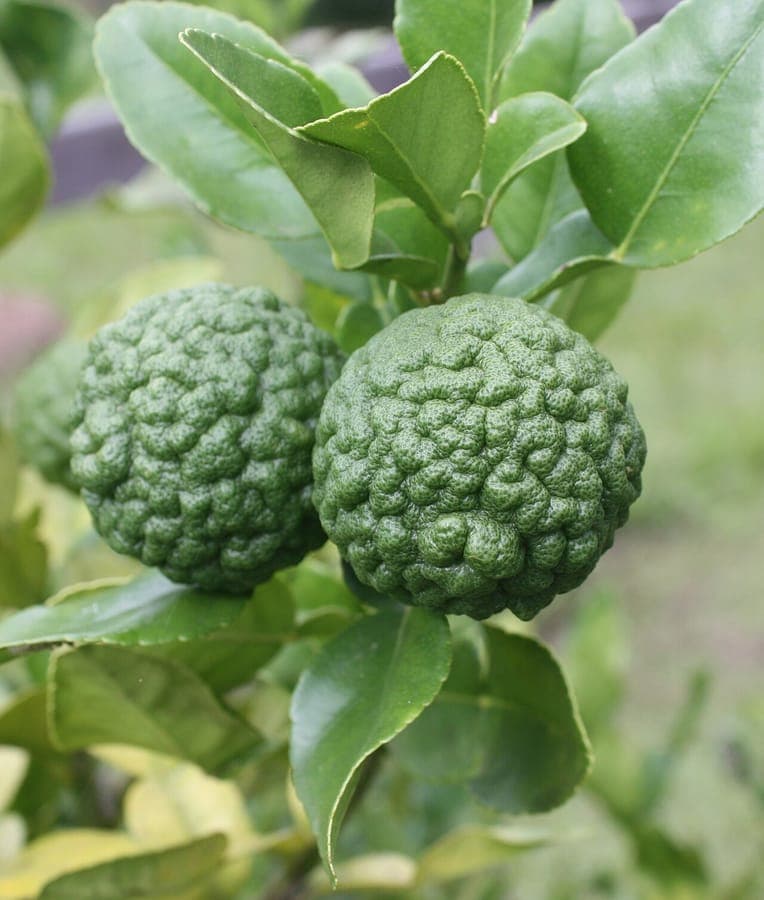
Robyn Jay from Sydney, Australia / CC BY-SA 2.0, via Wikimedia Commons
Citrus hystrix: complete guide
Citrus hystrix
¿Quieres ver Citrus hystrix: complete guide en tu jardín?
1 minuto, sin tarjeta de crédito
Overview
Citrus hystrix, commonly known as Kaffir lime or Makrut lime, is a unique citrus species from Southeast Asia. This is not your typical citrus plant - it's primarily grown not for the fruits, but for the exceptionally aromatic leaves. In Thai and Indonesian cuisine, the leaves are indispensable for their intense, complex citrus flavor and aroma.
The tree grows as a small tree or large shrub (3-6 meters in natural habitat) and produces small, bumpy fruits that are extremely sour. For home gardeners in temperate climates, Citrus hystrix is a fascinating specimen that becomes significantly larger than standard citrus houseplants.
Appearance and Bloom
Citrus hystrix features characteristic winged leaves (petioles with broad wings) that are intensely fragrant. The foliage is glossy green and reaches about 10-15 cm long. When crushed, they release a strong, citrusy aroma far more complex than ordinary lemon leaves.
The growth habit is dense and shrubby. Small white flowers appear in spring and summer with a pleasant fragrance. The fruits are small (3-5 cm), round to irregularly bumpy, green or yellow. They're extremely sour and unsuitable for direct eating, but the juice is used in dishes.
Ideal Location
Citrus hystrix thrives in a very sunny location with at least 6-8 hours of direct sunlight daily. South-facing orientation is ideal. The plant tolerates full sun well and grows stronger with increased light exposure.
The tree is frost-sensitive and cannot overwinter outdoors in temperatures below 5 degrees Celsius. In cold climates, it's best to keep the plant in a container and move it indoors in winter. Indoors, it can thrive under grow lights.
Soil Requirements
Citrus hystrix prefers well-draining, slightly acidic soil (pH 6.0-6.5). Use citrus potting mix or a blend of potting soil, orchid bark, and perlite. The plant tolerates dry soil better than waterlogging. Ensure the pot has excellent drainage - citrus is very susceptible to root rot.
If planting in ground (in warm climate), add organic matter but ensure good drainage. Citrus plants can grow in poor soil but thrive much better with regular feeding.
Diseño gratis
¿Quieres ver Citrus hystrix: complete guide en tu jardín? Crea un diseño gratis ahora.
Watering
Water thoroughly between waterings. Ensure the soil dries out partially between waterings, especially in winter. Overwatering is the leading cause of problems in citrus plants.
During the growing season (spring to fall), water when the top 2-3 cm of soil feels dry. In winter, water less. Use rainwater or filtered water if possible, as citrus can be sensitive to certain chemicals.
Pruning
Citrus hystrix can reach fairly large sizes, so regular pruning helps keep the plant compact and productive. Prune in early spring before new growth begins. Remove dead, diseased, or weak branches. You can also cut back to shape the plant.
Citrus is tolerant of pruning and will respond well by producing denser growth.
Maintenance Calendar
February to April: Start feeding as growth begins. Monitor regularly for pests. May to September: Peak growing season. Feed weekly with citrus fertilizer. Water regularly. Maximum sunlight. October to December: Growth slows. Reduce feeding. Avoid wet soil. January to February: Minimal activity. Rarely water. Protect from frost.
Winter Hardiness
Citrus hystrix is not winter hardy and cannot overwinter outdoors in temperate climates. The plant cannot tolerate frost. In warm areas (USDA zones 9-11), it can remain outside if protected.
In colder regions, keep the plant in a container and bring it indoors when temperatures drop below 5 degrees Celsius. A bright indoor location (windowsill, greenhouse) is essential. Even with protection, the plant may drop leaves if too cold.
Companion Plants
Citrus hystrix grows well alongside other citrus species like Fortunella (kumquats), Poncirus, and standard citrus trees. They share the same light and feeding requirements. The advantage of growing together is treating all citrus plants with the same feeding and watering schedule.
Other possible companions are evergreen shrubs with similar heat requirements.
Closing
Citrus hystrix is a special choice for gardeners wanting something different from standard citrus. The intensely aromatic leaves make this worthwhile for anyone who loves Thai or Indonesian cuisine. With plenty of sunlight, well-draining soil, and careful watering, you'll grow successfully. Combined with harvesting leaves for kitchen use, this is an exceptionally practical and productive plant.
Available at garden centres worldwide. Find more inspiration at gardenworld.app and gardenworld.app for additional plant collections.
¿Quieres ver Citrus hystrix: complete guide en tu jardín? Crea un diseño gratis ahora.
Sube una foto, elige un estilo y obtén un diseño fotorrealista con lista de plantas en menos de un minuto.
Más de 10.000 jardines diseñados
Sin tarjeta de crédito


Plantas similares
Thamnosma montana: complete guide
Thamnosma montana
Everything about Thamnosma montana, the aromatic turpentine broom from the Mojave Desert. Location, soil, care and companion planting explained.
Narrow-leaved fringed rue: complete guide
Ruta angustifolia
Everything about Ruta angustifolia: location, soil, watering, pruning and winter care for this Mediterranean subshrub.
Mountain rue: complete guide
Ruta montana
A complete guide to Ruta montana: best location, soil, watering, pruning and overwintering of this aromatic Mediterranean subshrub.