
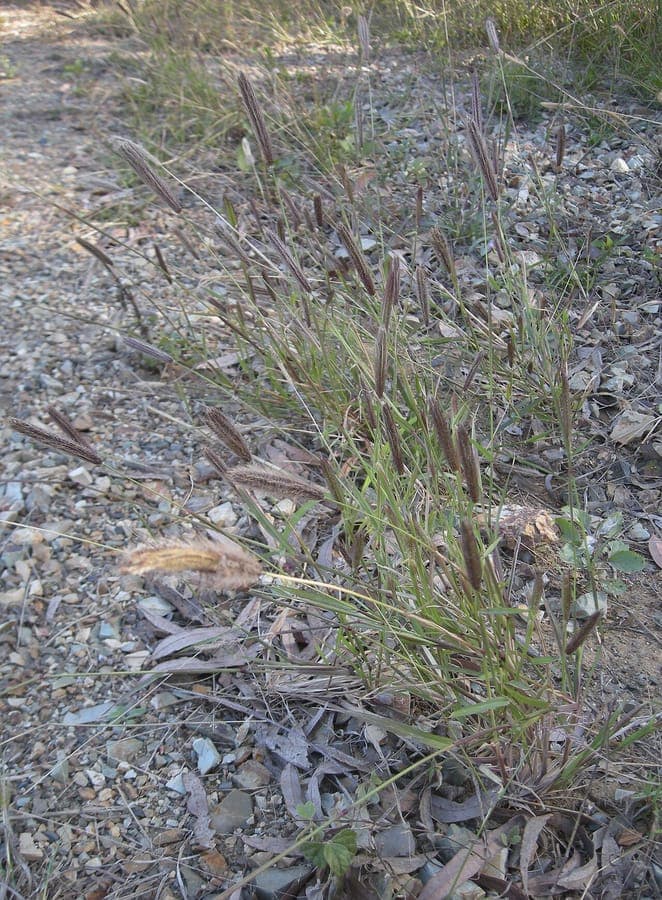
Mark Marathon / CC BY-SA 3.0, via Wikimedia Commons
Chloris virgata: complete guide
Chloris virgata
¿Quieres ver Chloris virgata: complete guide en tu jardín?
1 minuto, sin tarjeta de crédito
Overview
Chloris virgata, commonly known as feather finger grass, is a stunning ornamental grass native to North America and Australia. This elegant grass is renowned for its delicate, feather-like flower spikes that create a graceful, airy appearance in the garden. The plant adapts remarkably well to various climatic conditions and soil types.
The plant forms dense, luminous foliage clumps from which numerous ornamental flowering spikes emerge throughout the summer season. Chloris virgata offers years of garden interest and is particularly suited to contemporary and naturalistic garden designs.
Appearance and Blooms
Chloris virgata reaches heights of 60 to 120 centimeters, depending on growing conditions. The plant creates thick clumps with narrow, blue-green leaves that provide fine texture to the garden design. The blooms are truly spectacular: numerous delicate, feathery branched flower spikes emerge from June through September, creating a remarkable visual effect.
The flowers display silvery-white to pinkish tones and sway gracefully with even gentle breezes. After flowering, the seed heads retain their decorative value well into autumn and winter, providing visual interest when many other plants have faded.
Ideal Location
Chloris virgata thrives in full sun positions. The plant requires a minimum of six hours of direct sunlight daily for optimal growth and flowering. Position this grass where it has room to develop without competition from adjacent plants.
The plant is exceptionally wind-tolerant and can even endure exposed, harsh locations. This makes Chloris virgata perfect for windswept gardens, green roofs, and challenging sites. Avoid dark, wet locations where the plant will quickly deteriorate.
Soil Requirements
Chloris virgata is not fussy about soil composition. The plant grows successfully in sandy, loamy, and even poor soils, provided drainage is excellent. Waterlogging is absolutely detrimental and causes root rot.
Ideal conditions include slightly acidic to neutral soil with excellent permeability. Incorporate sand or small gravel when planting to enhance drainage further. This plant requires no regular feeding and thrives on nutrient-poor soils, which significantly simplifies garden maintenance.
Watering
Chloris virgata is remarkably drought-tolerant once established. Regular watering is necessary during the first season to help roots develop properly. After about two seasons, supplemental irrigation can virtually cease.
The plant tolerates drought far better than excessive moisture. Water only when the soil feels dry and during extended dry periods. Ensure water never pools around the plant base. During rainy seasons, supplemental watering is rarely necessary.
Diseño gratis
¿Quieres ver Chloris virgata: complete guide en tu jardín? Crea un diseño gratis ahora.
Pruning
Pruning Chloris virgata is straightforward and essential. In early spring (March-April), cut back all dead material to approximately 10 centimeters above ground. Use sharp pruning shears or a string trimmer.
During the growing season, normally no pruning is required. Simply remove dead or damaged leaves manually. After flowering, leave the plant standing for winter interest, or clean it up in spring for maximum fresh growth.
Maintenance Calendar
FEBRUARY-MARCH: Pruning and cleanup, seasonal restart APRIL-MAY: Initial growth, plant establishment JUNE-AUGUST: Peak flowering, watering during dry spells SEPTEMBER-OCTOBER: Flowering culminates, seed production NOVEMBER-JANUARY: Dormancy, no maintenance needed
Winter Hardiness
Chloris virgata exhibits moderate winter hardiness. In warmer climates (USDA zones 8-11), the plant survives winter outdoors without protection. In colder regions, the plant may require winter protection against extreme frost.
In northern Europe, winter protection is advisable. Cover the plant in November with a thick layer of dry leaves or straw, approximately 15-20 centimeters deep. Remove this covering carefully in early spring to avoid damaging new growth.
Companion Plants
Chloris virgata combines beautifully with other Mediterranean plants. Lavender, Santolina, and other silver-foliaged herbs create harmonious combinations. Other ornamental grasses like Stipa and Festuca also work well together.
Plant Chloris virgata alongside Sedum species and other succulents for a drought-tolerant planting scheme. The grass also works excellently with grey-green foliage shrubs such as Artemisia and Salvia. These combinations create resilient, low-maintenance garden scenes.
Closing Remarks
Chloris virgata is an ideal choice for gardeners seeking a low-maintenance, elegant ornamental grass that provides years of garden pleasure. The plant is robust, water-efficient, and offers visual interest from summer through winter. With minimal effort, this grass develops into a true garden treasure.
Available from major retailers including garden centers and specialty nurseries. Consult gardenworld.app for additional plant guidance and garden designs. gardenworld.app also offers comprehensive guides for successful garden cultivation.
¿Quieres ver Chloris virgata: complete guide en tu jardín? Crea un diseño gratis ahora.
Sube una foto, elige un estilo y obtén un diseño fotorrealista con lista de plantas en menos de un minuto.
Más de 10.000 jardines diseñados
Sin tarjeta de crédito


Plantas similares
Sporobolus pungens: complete guide
Sporobolus pungens
Sporobolus pungens is a stoloniferous Mediterranean coastal grass with outstanding salt and drought tolerance, perfect for seaside and dry gardens.
Mediterranean aegilops: complete guide
Aegilops biuncialis
Everything about Aegilops biuncialis, a Mediterranean annual grass with ornamental spikes and outstanding drought tolerance for dry gardens.
Silver bluestem: complete guide
Bothriochloa saccharoides
Full guide to Bothriochloa saccharoides (silver bluestem): site, soil, watering, winter hardiness, pruning, and garden companions.