
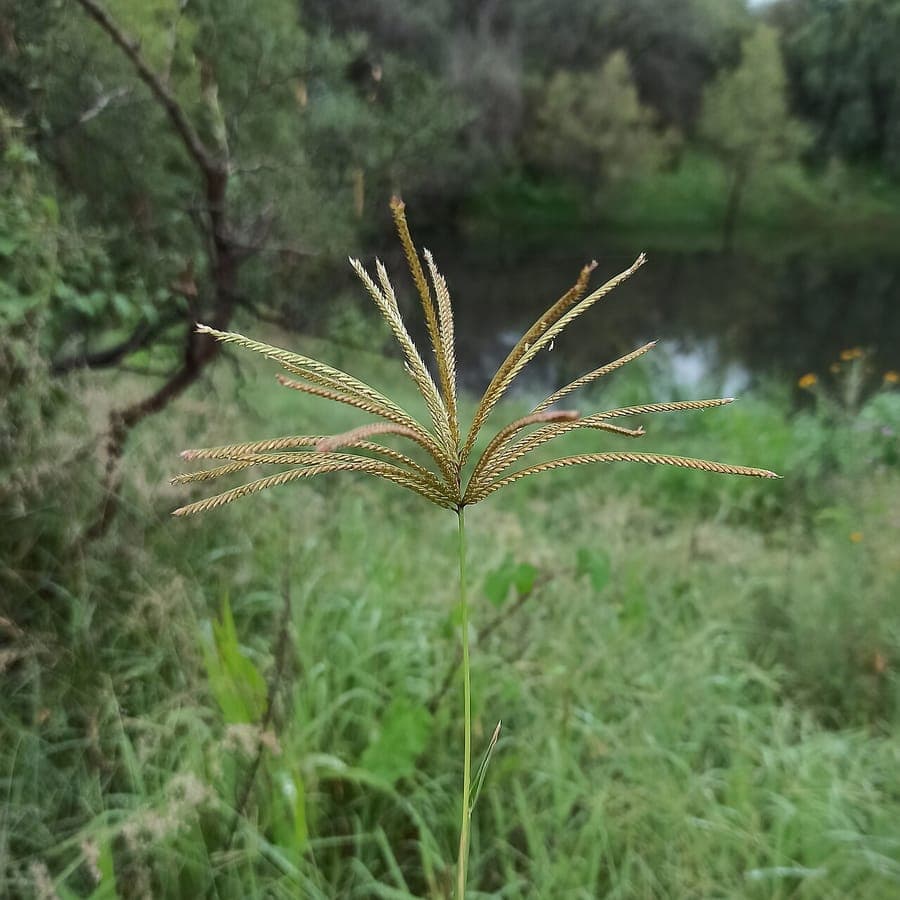
Juan Carlos Fonseca Mata / CC BY-SA 4.0, via Wikimedia Commons
Abyssinian rhodes grass: complete guide
Chloris gayana
¿Quieres ver Abyssinian rhodes grass: complete guide en tu jardín?
1 minuto, sin tarjeta de crédito
Overview
Chloris gayana, commonly known as Abyssinian rhodes grass or grass rhodes grass, is a strong, decorative grass plant from the family Poaceae. This plant is native to tropical and subtropical Africa and is now widely exported for its value as a fodder grass and ornamental plant.
The plant is valued for its strength, drought tolerance, and attractive grass-like plumes. For gardeners wanting structure and movement in dry gardens, this is a perfect choice.
Appearance and bloom
Chloris gayana is an upright, robust growing grass plant that typically reaches 60 to 120 cm in height. The grass forms dense tufts of green foliage that create a pleasing texture.
In summer and early autumn, the plant produces characteristic plumes that are 4 to 6 (sometimes more), radiating from the top of each flowering stem. These plumes have a delicate, comb-like structure and are very attractive in the landscape, especially when seen against the light.
The plumes start greenish but turn golden-brown or reddish-brown as they mature, adding extra interest to autumn and winter gardens.
Ideal location
Chloris gayana demands full sunlight. The plant thrives in full-sun locations and becomes thin or sparse in shade. Provide a spot with at least 6-8 hours of direct sunlight per day.
The plant thrives in warm climates and is grown in temperate and even cooler regions, although growth is slower.
Wind is not a problem; strong wind can even be beneficial for movement of the plumes.
Soil
Chloris gayana is very tolerant of soils and grows on virtually all soil types, especially dry, nutrient-poor soils. This is actually where it shines.
The plant prefers well-draining soil and does not grow well on waterlogged soil. On normal, nutrient-rich soil it grows faster but remains healthy.
The plant grows well on acidic to neutral soils and can even tolerate somewhat alkaline conditions.
Watering
Once established, Chloris gayana is very drought-tolerant. Young plants, however, should receive regular water until full rooting (first 6-12 months).
In normal rainfall areas, no supplemental water is needed once established. In dry areas or dry years, supplemental water can promote growth, but the plant will survive without it.
Excessive watering can lead to root rot; let the medium dry between waterings.
Diseño gratis
¿Quieres ver Abyssinian rhodes grass: complete guide en tu jardín? Crea un diseño gratis ahora.
Pruning
Chloris gayana requires minimal pruning. The grass grows naturally into an attractive shape and does not need trimming.
Cut back withered plumes in late autumn (October-November) for neatness. Cut the plant back hard in late winter (February-March) for new foliage in spring.
Remove dead foliage and stems from the previous season.
Maintenance calendar
- Spring (March-April): Hard cutback, water if dry, optional first feeding
- Summer (May-August): Monitor growth, water during dry periods
- Autumn (September-October): Enjoy plumes, remove dead parts
- Winter (November-February): Minimal maintenance, preparation for spring pruning
Winter hardiness
Chloris gayana grows outdoors in temperate climates to zone 9 (to approximately -7 degrees Celsius). In cooler climates (zones 3-7), it may die outdoors or grow poorly.
In cooler regions, the plant can be grown in containers and brought indoors for winter. In warm climates it grows as a permanent perennial.
The plant is drought- and heat-tolerant and does not thrive in wet, cold winters.
Companion plants
Chloris gayana combines well with:
- Stipa (feather grass) - for similar structure
- Miscanthus - for larger grass design
- Yucca - for contrasting form
- Artemisia (mugwort) - silver-coloured companion
- Salvia (sage) - flower contrast
- Santolina (cotton-lavender) - for delicate foliage texture
Closing thoughts
Chloris gayana is an excellent choice for gardeners seeking structure, movement, and drought tolerance. With minimal care and attractive plumes, it is a valuable addition to dry, sunny gardens.
For gardenworld.app users: this grass is ideal for modern, low-maintenance gardens with warm orientation. The moving plumes add dynamism to static gardens.
Gardenworld.app offers more information about ornamental grasses. Discover how to integrate Chloris gayana into your garden design.
Available from major garden retailers and specialized grass centers across Europe.
¿Quieres ver Abyssinian rhodes grass: complete guide en tu jardín? Crea un diseño gratis ahora.
Sube una foto, elige un estilo y obtén un diseño fotorrealista con lista de plantas en menos de un minuto.
Más de 10.000 jardines diseñados
Sin tarjeta de crédito


Plantas similares
Sporobolus pungens: complete guide
Sporobolus pungens
Sporobolus pungens is a stoloniferous Mediterranean coastal grass with outstanding salt and drought tolerance, perfect for seaside and dry gardens.
Mediterranean aegilops: complete guide
Aegilops biuncialis
Everything about Aegilops biuncialis, a Mediterranean annual grass with ornamental spikes and outstanding drought tolerance for dry gardens.
Silver bluestem: complete guide
Bothriochloa saccharoides
Full guide to Bothriochloa saccharoides (silver bluestem): site, soil, watering, winter hardiness, pruning, and garden companions.