
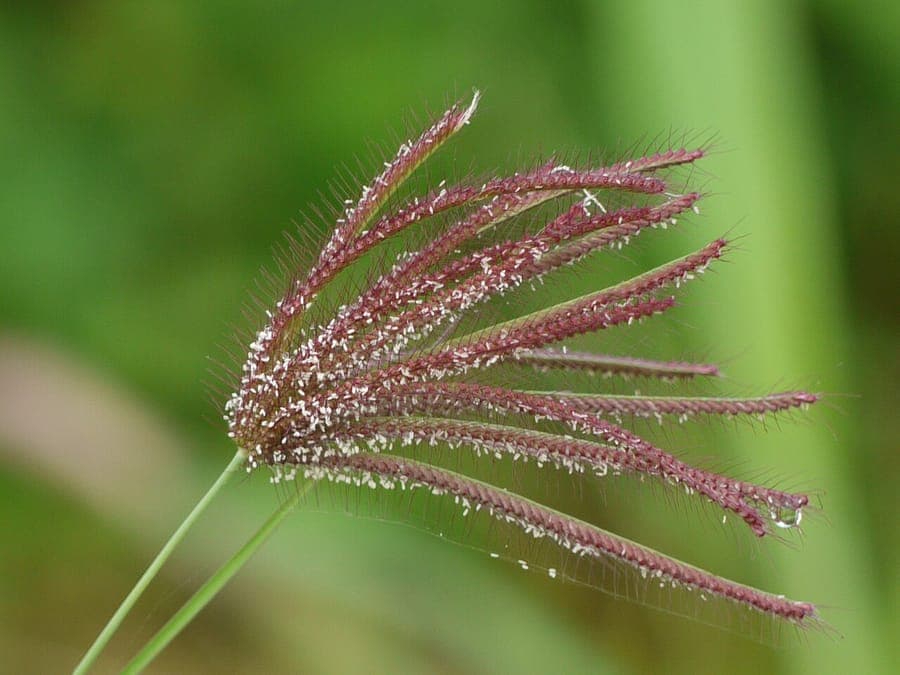
Dinesh Valke from Thane, India / CC BY-SA 2.0, via Wikimedia Commons
Chloris barbata: complete guide
Chloris barbata
¿Quieres ver Chloris barbata: complete guide en tu jardín?
1 minuto, sin tarjeta de crédito
Overview
Chloris barbata, commonly known as giant finger grass or swollen fingergrass, is a remarkable ornamental grass native to warm and subtropical regions of the Old World. This fast-growing grass is celebrated for its unique finger-like flower spikes and full, arching growth habit. With its graceful foliage and spectacular blooms, it adds an exotic dimension to any garden design. This remarkable grass is prized by garden designers for its ability to fill garden spaces quickly while maintaining visual interest throughout the growing season.
This grass thrives best in Mediterranean and warmer climates, where it can be grown as an annual or in milder zones as a tender perennial. Plants are easily propagated from seed and grow rapidly under optimal conditions, making them ideal for quick garden transformations. In tropical regions, the grass can produce multiple growth cycles per year.
Appearance and Bloom
Chloris barbata reaches heights of 40 to 80 centimeters, forming dense, mounded clumps that fill flower borders beautifully. The stems are upright to arching, bearing long, narrow, deep green leaves that can grow to 30 centimeters in length. The foliage has a characteristic hairy texture and a subtle gray-green sheen that catches light beautifully.
The flower spikes are the true highlight of this plant. They consist of 8 to 16 slender, finger-like spikelets that radiate from the top of the stem like an umbrella. These inflorescences appear from June through October in warm climates, creating a continuous display. The spikelets display purplish to reddish coloring, with hairy lemmas that give the grass its distinctive appearance. As seeds mature, the flower heads transition to golden-yellow and russet-brown hues, providing autumn interest.
Ideal Location
Chloris barbata flourishes in full sun. Ensure your plant receives at least 6 to 8 hours of direct sunlight daily. This promotes vigorous growth and delivers the most vivid coloring of the flower spikes. Air circulation is important for healthy growth. The plant tolerates wind well and can withstand regular air movement, making it ideal for windy gardens or as an accent plant along pathways. Avoid shaded locations, as the grass will struggle to grow properly.
Diseño gratis
¿Quieres ver Chloris barbata: complete guide en tu jardín? Crea un diseño gratis ahora.
Soil
Chloris barbata is highly adaptable regarding soil requirements. The plant grows well in sandy, clay, and loamy soils. The essential factor is good drainage, as water-logged soils can cause root problems. If your garden has heavy clay soil, incorporate peat moss or sand to improve drainage significantly.
The ideal pH range is between 5.5 and 7.5. The plant tolerates moderately acidic to neutral soils without difficulty. Organic matter such as compost can be worked in to improve soil structure and provide nutrients for healthy growth. This grass also grows well in poor soils, so extensive fertilizing is unnecessary.
Watering
Once established, Chloris barbata is quite drought-tolerant and can handle extended dry periods. However, young plants require regular watering, especially during the first four weeks after planting. Ensure the soil remains evenly moist but not waterlogged, as excess moisture can cause problems.
Established plants need moderate moisture during the growing season. Water when the top 2-3 centimeters of soil feel dry. During hot summers, more frequent watering may be necessary in arid climates to maintain appearance. In winter, water cautiously, as excessive moisture can lead to root rot and fungal diseases.
Pruning
Chloris barbata requires minimal pruning maintenance. Dead or damaged foliage can be removed year-round. In late winter or early spring, you can cut the plant back to about 10 centimeters from the ground to encourage a compact, full-bodied growth habit.
Flower heads can be harvested in autumn for dried flower arrangements. This occurs when they reach their golden-yellow color. Deadheading spent blooms can stimulate the plant to produce additional lateral stems and extended blooming periods.
Companion Plants
Chloris barbata creates beautiful combinations with ornamental plants including Salvia, Coreopsis, Rudbeckia, Lagurus ovatus, Panicum virgatum, Heliopsis, Liatris, Zinnias, Coleus, and Iresine. These combinations create layered garden compositions.
Closing Thoughts
Chloris barbata is a fantastic choice for gardens seeking exotic vibes. With its striking finger-like flower spikes and fine foliage, this grass adds texture and movement. Visit gardenworld.app for more inspiration and order your seeds today from major retailers.
¿Quieres ver Chloris barbata: complete guide en tu jardín? Crea un diseño gratis ahora.
Sube una foto, elige un estilo y obtén un diseño fotorrealista con lista de plantas en menos de un minuto.
Más de 10.000 jardines diseñados
Sin tarjeta de crédito


Plantas similares
Sporobolus pungens: complete guide
Sporobolus pungens
Sporobolus pungens is a stoloniferous Mediterranean coastal grass with outstanding salt and drought tolerance, perfect for seaside and dry gardens.
Mediterranean aegilops: complete guide
Aegilops biuncialis
Everything about Aegilops biuncialis, a Mediterranean annual grass with ornamental spikes and outstanding drought tolerance for dry gardens.
Silver bluestem: complete guide
Bothriochloa saccharoides
Full guide to Bothriochloa saccharoides (silver bluestem): site, soil, watering, winter hardiness, pruning, and garden companions.