
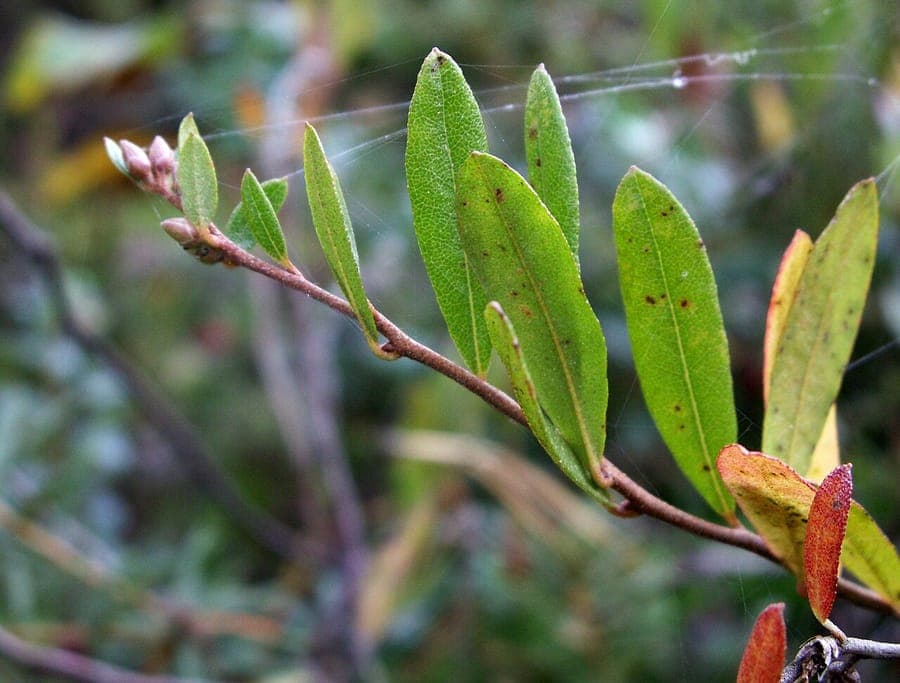
bernd gliwa / CC BY-SA 2.5, via Wikimedia Commons
Chamaedaphne calyculata: complete guide
Chamaedaphne calyculata
¿Quieres ver Chamaedaphne calyculata: complete guide en tu jardín?
1 minuto, sin tarjeta de crédito
Overview
Chamaedaphne calyculata, commonly known as Leatherleaf, is a unique cold-hardy heath shrub found in subarctic to temperate regions of North America, Europe, and Asia. This shrub belongs to the Ericaceae family (the same family as azaleas and rhododendrons) and is recognized for its glossy leathery foliage, fine delicate white flowers, and low-maintenance characteristics.
It is an elevated choice for garden and landscape designers seeking evergreen heath shrubs with year-round interest, especially in cold climates where many other plants struggle. Leatherleaf delivers structure, texture, and biological diversity without fuss.
Appearance and Bloom
Leatherleaf grows as a compact, typically 60-90 cm tall shrub with a broad, slightly cascading form. The characteristic major feature is the foliage: small, leathery, glossy, and dark green, with a subtle red-tinged new growth that is particularly decorative against snow in winter.
Flowers appear early in the growing season (April-May in most regions), with small, delicate white bell-shaped flowers in drooping racemes. This flowering is modest but highly elegant and attracts bees and other pollinators. After bloom, the shrub retains modest fruit that becomes more visually interesting with age.
Ideal Location
Leatherleaf should be positioned in full sun to light part shade for optimal growth and flowering. A minimum of 3-4 hours of direct sunlight is ideal. In very hot regions (southeastern), part shade can prevent foliage from becoming stressed in full sun.
This shrub is highly tolerant of wind exposure and can thrive in open, bird-rich gardens, heath situations, and even in sandy coastal areas. The dense, low growth provides bird shelter and nesting habitat.
Soil
Leatherleaf is a soil specialist: this plant thrives in acidic, moisture-retentive, well-draining peaty or heathland soil. The pH must be between 5.0-6.0 for optimal growth and health. In neutral or alkaline soils, the plant will underperform.
If your soil is not naturally acidic (dense clay or chalky sand), amend with sphagnum peat (or coir) and sandy perlite in the planting hole. Do not use limestone mulch: use oak leaves, pine needles, or acidic wood chips.
Watering
This shrub loves constantly moist (not waterlogged) soil. Water regularly during the growing season, especially for established plants during dry periods. In high-rainfall regions, add extra drainage through mulch application. In dry climates or containers, water carefully: this shrub cannot tolerate prolonged drought.
In winter settings (especially exposed locations), windburn water loss can occur. Water in early morning in all seasons.
Diseño gratis
¿Quieres ver Chamaedaphne calyculata: complete guide en tu jardín? Crea un diseño gratis ahora.
Pruning
Leatherleaf needs very little pruning thanks to its naturally compact form. Perform light pruning immediately after flowering (May-June) to maintain shape. Remove dead or winter-damaged branches in spring.
Avoid heavy pruning: this shrub recovers slowly from severe cutting. Deadhead spent flower clusters if you desire more bloom production, though the natural fruiting is also decorative.
Maintenance Calendar
Spring (March-April): Water if no natural moisture sources. Remove winter-dead branches. Add fertilizer for acid-loving plants.\nSummer (May-July): Enjoy bloom. Prune after flowering. Continue watering.\nFall (August-October): Continue moisture management. Monitor moisture status. Add leaf mulch.\nWinter (November-February): No pruning. Monitor for wind damage. Consider windbreak protection in exposed locations.
Winter Hardiness
Leatherleaf is extremely cold-hardy, suitable for climate zones 2 to 8 (down to approximately -45 degrees Celsius). This is actually a boreal plant well-adapted to long, harsh winters. In temperate climates, no winter protection is needed.
In very exposed, windy locations, young plants can benefit from temporary stakes or wooden screens against windburn in the first year.
Companion Plants
Create a natural heath garden or moorland arrangement with complementary plants:
- Calluna (Heather): Classic heath companion with similar soil requirements
- Erica: Ericas share preference for acidic soils
- Vaccinium: Blueberries, lingonberries, and cranberries are natural associations
- Sphagnum moss: Add naturalistic ecosystem feel in retention areas
- Carex: Ornamental grasses for contrasting texture
- Empetrum (Crowberry): Low, creeping heath companion
Closing Thoughts
Leatherleaf is a rewarding choice for gardeners seeking true boreal or moorland aesthetics. With its glossy evergreen foliage, delicate flowers, and bird attraction, it is ideal for naturalistic garden design. Perfect for larger gardens, heathland situations, and especially valuable in cold climates where temperate gardens struggle.
Searching for this plant? Check specialized tree society nurseries that focus on moorland and heath plants, or importers of boreal plant material.
¿Quieres ver Chamaedaphne calyculata: complete guide en tu jardín? Crea un diseño gratis ahora.
Sube una foto, elige un estilo y obtén un diseño fotorrealista con lista de plantas en menos de un minuto.
Más de 10.000 jardines diseñados
Sin tarjeta de crédito


Plantas similares
Zenobia pulverulenta: complete guide
Zenobia pulverulenta
Everything about Zenobia pulverulenta (honeycup): siting, acid soil, pruning and the fragrant white bells, in this complete care guide.
Dwarf huckleberry: complete guide
Gaylussacia dumosa
Everything about dwarf huckleberry (Gaylussacia dumosa): acidic soil, partial shade, pruning and care for this compact North American berry shrub.
Drooping leucothoe: complete guide
Leucothoe fontanesiana
Everything about drooping leucothoe (Leucothoe fontanesiana): shade tolerance, soil, watering, pruning, hardiness and companion plants.