
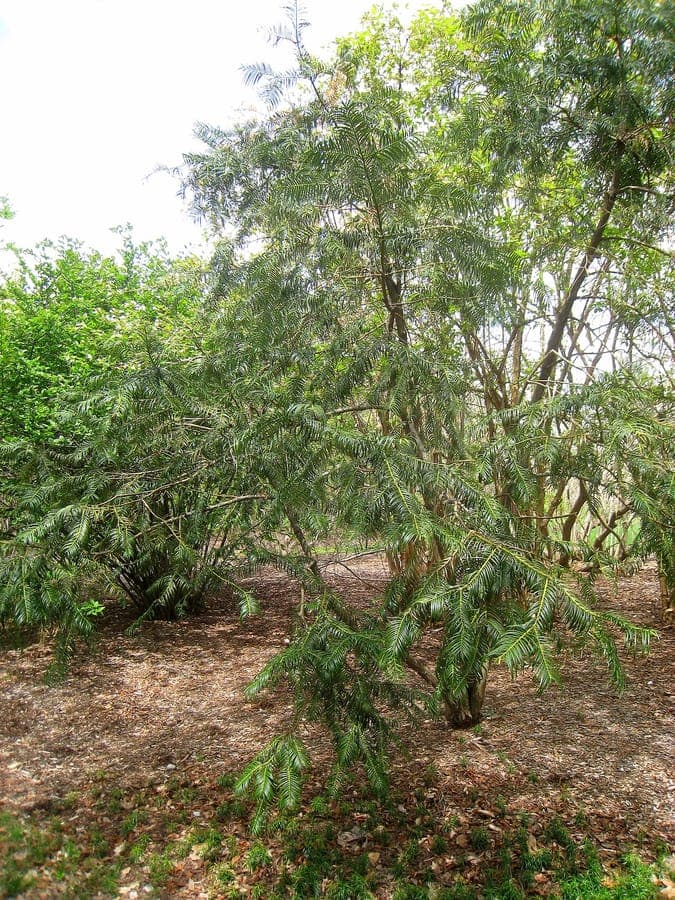
Daderot / Public domain, via Wikimedia Commons
Cephalotaxus fortunei: complete guide
Cephalotaxus fortunei
¿Quieres ver Cephalotaxus fortunei: complete guide en tu jardín?
1 minuto, sin tarjeta de crédito
Overview
Cephalotaxus fortunei, known as Fortune's Plum-yew or Chinese Plum-yew, is a low to medium-sized frost-hardy conifer native to central and southern China. This tree is related to torreya trees and distinguishes itself through its unique fruits and elegant needlework. The tree typically grows 3 to 6 meters tall (sometimes up to 8 meters) and forms a compact, broadly pyramidal shape. It is an excellent choice for gardens where deciduous trees are less suitable.
Appearance and Foliage
Cephalotaxus fortunei has dark green, long needles (up to 6 centimeters) that grow in two rows on opposite sides of the twigs. This gives the tree a very decorative, elegant appearance. The needles are soft to the touch and remain green throughout the year. In spring, inconspicuous flowers appear that, after fertilization, form unique fruits: flask-shaped, red to reddish-brown fruits approximately 2-3 centimeters long. These fruits hang attractively on the branches and provide food for birds.
Ideal Location
Cephalotaxus fortunei grows best in light shade to partial shade, although it can also grow in full sun. The tree thrives better if protected from intense summer sun and strong winds. 6 to 8 hours of light daily is optimal. The tree is very suitable for woodland gardens or beneath larger trees. The tree is frost-hardy to about -15 to -20 degrees Celsius.
Soil Requirements
Cephalotaxus fortunei prefers loose, well-draining, acid-loving soil with pH between 5.0 and 6.5. The tree can, however, also grow in neutral sand and loamy soils. The tree does not tolerate waterlogging and poor drainage can lead to root rot. Ensure good drainage by adding sand or organic matter to heavy clay soils.
Diseño gratis
¿Quieres ver Cephalotaxus fortunei: complete guide en tu jardín? Crea un diseño gratis ahora.
Watering
In the first year after planting, the tree needs regular water. Keep the soil moist but not waterlogged. Once established (after 2-3 years), the tree is quite drought-tolerant and normally needs water only during prolonged dry periods. In warm, dry years, supplemental water can be beneficial, especially in August.
Pruning
Pruning is normally not necessary, as Cephalotaxus fortunei naturally forms a beautiful shape. You can carefully remove dead or damaged branches. The tree heals slowly from heavy pruning wounds, so avoid aggressive pruning. Light shape pruning can be done in spring.
Maintenance Calendar
Spring: Check the tree for winter damage. Light shape pruning can be done. Summer: Ensure sufficient water during dry periods. Autumn: The fruits ripen. Great for bird feeding. Winter: The tree rests. No special maintenance needed.
Winter Hardiness
Cephalotaxus fortunei is frost-hardy to about -15 to -20 degrees Celsius. In the Netherlands and Belgium, the tree grows well in protected locations. The tree is robust and rarely affected by diseases or pests. In many European countries, the tree can grow outdoors.
Companion Plants
The Chinese Plum-yew grows well with other shade lovers such as yew, holly, and other frost-hardy conifers. Underneath, evergreen groundcovers can grow. The tree provides a beautiful background for colorful shrubs.
Closing Remarks
Cephalotaxus fortunei is a frost-hardy, elegant choice for larger gardens. With its decorative needles and attractive fruits, this tree provides year-round interest. This tree is less known than many other conifers, but certainly worth exploring. Its frost-hardy nature and beauty make it suitable for many European gardens.
Gardenworld.app helps you with all the details of plant care. Gardenworld.app is your guide to more beautiful gardens.
¿Quieres ver Cephalotaxus fortunei: complete guide en tu jardín? Crea un diseño gratis ahora.
Sube una foto, elige un estilo y obtén un diseño fotorrealista con lista de plantas en menos de un minuto.
Más de 10.000 jardines diseñados
Sin tarjeta de crédito


Plantas similares
Taxus chinensis: complete guide
Taxus chinensis
The Chinese yew is an elegant evergreen conifer with dense dark foliage. Discover cultivation tips, hardiness, and how it differs from other yew species for your garden.
Florida Torreya: Complete Guide to This Endangered Evergreen
Torreya taxifolia
Discover the Florida torreya (Torreya taxifolia), an endangered, elegant evergreen. Learn about care, habitat, and conservation importance.
Chinese Nutmeg Tree: complete guide
Torreya grandis
Learn everything about Torreya grandis, the Chinese nutmeg tree. Discover cultivation methods, care, and special characteristics of this rare tree.