
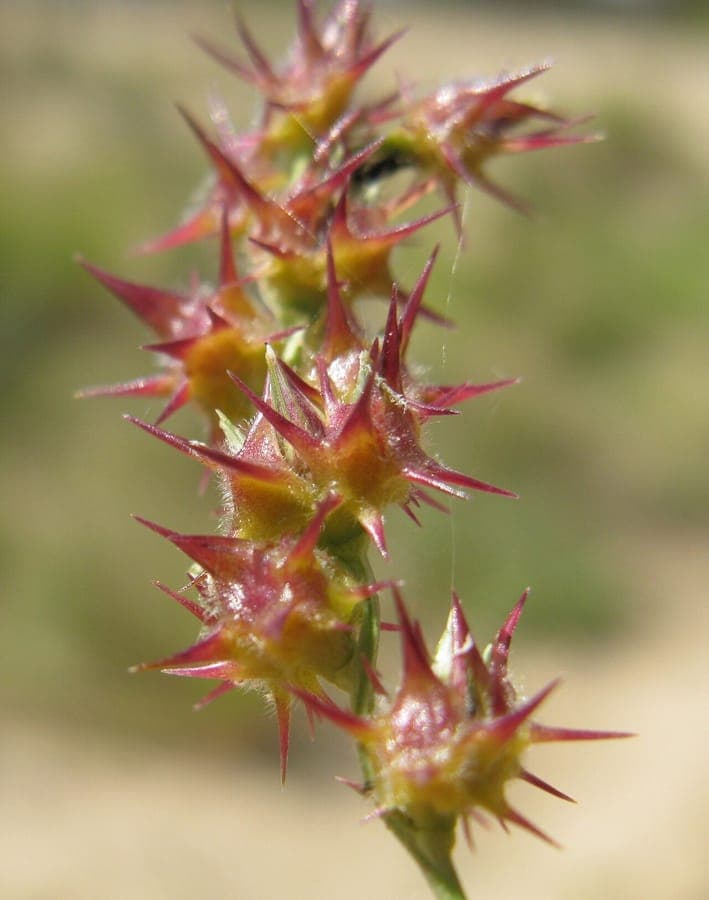
Macleay Grass Man / CC BY 2.0, via Wikimedia Commons
Field Sandbur: complete guide
Cenchrus spinifex
¿Quieres ver Field Sandbur: complete guide en tu jardín?
1 minuto, sin tarjeta de crédito
Overview
Field Sandbur (Cenchrus spinifex), also known as coastal sandbur or mat sandbur, is an invasive grass species from Central and South America and Africa. With its adapted flower structures and distinctive barbed seed heads, it grows well in very dry, sandy environments. The plant is cautiously invasive in warm regions outside its native range.
Appearance and Bloom
Field Sandbur grows to 30-60 centimeters tall in clumps. Leaves are narrow, linear, quite stiff. The most characteristic feature is the seed heads: these are extremely spiny and have sharp barbed spines that attach to clothing and animal fur. This feature aids dispersal. Seed heads appear from summer through fall, initially greenish to purplish-tinged, becoming brownish as they ripen.
Ideal Location
Field Sandbur grows best in full sun. Plant in a location with at least 6-8 hours of direct sunlight daily. This promotes robust growth and seed production. The plant tolerates slight shade but grows less densely.
Soil
The plant grows best in very well-draining, sandy soils. It can grow in poor, lean soils where many other plants would fail. pH flexibility: from acidic to alkaline (pH 5-8). The plant tolerates very low nutrient levels and actually grows better in lean soils.
Watering
Once established, Field Sandbur is highly drought-tolerant. Water moderately after planting, approximately 1-2 centimeters per week during the first growing season. Once established, it needs minimal supplemental watering. It grows well in very dry climates and can actually be harmed by overwatering.
Diseño gratis
¿Quieres ver Field Sandbur: complete guide en tu jardín? Crea un diseño gratis ahora.
Pruning
Field Sandbur requires minimal pruning. Dead leaves and seed heads can be removed after ripening. In areas where the plant is invasive, regular pruning is recommended to prevent seed dispersal. Remove ripe seed heads before they can be spread by animals.
Maintenance Calendar
May-June: Early growing season, water minimally July-August: Growth accelerates, no extra watering needed September-October: Seed heads ripen, remove before dispersal November-March: Winter dormancy in cold climates, no maintenance
Winter Hardiness
Field Sandbur is frost-sensitive. In areas with temperatures below -5 degrees Celsius, it may die back in winter. In milder climates, it survives. In very cold regions, it grows better as an annual.
Companion Plants
Field Sandbur can be grown with: Euphorbias (spurge) Yucca (bayonet plant) Opuntia (prickly pear) Rosmarinus (rosemary) Lavandula (lavender) Artemisia (wormwood) Senecio (dusty miller)
Closing Remarks
Field Sandbur is a cautious plant for very dry, sandy locations where little else grows. While it has value for some purposes, it deserves caution due to its invasive tendencies. Always plant in controlled environments and secure seed heads against dispersal. GardenWorld.app helps you choose the right dry spot for this hardy grass. Always consult local regulations before planting, as it may be restricted or prohibited in many regions.
¿Quieres ver Field Sandbur: complete guide en tu jardín? Crea un diseño gratis ahora.
Sube una foto, elige un estilo y obtén un diseño fotorrealista con lista de plantas en menos de un minuto.
Más de 10.000 jardines diseñados
Sin tarjeta de crédito


Plantas similares
Sporobolus pungens: complete guide
Sporobolus pungens
Sporobolus pungens is a stoloniferous Mediterranean coastal grass with outstanding salt and drought tolerance, perfect for seaside and dry gardens.
Mediterranean aegilops: complete guide
Aegilops biuncialis
Everything about Aegilops biuncialis, a Mediterranean annual grass with ornamental spikes and outstanding drought tolerance for dry gardens.
Silver bluestem: complete guide
Bothriochloa saccharoides
Full guide to Bothriochloa saccharoides (silver bluestem): site, soil, watering, winter hardiness, pruning, and garden companions.