
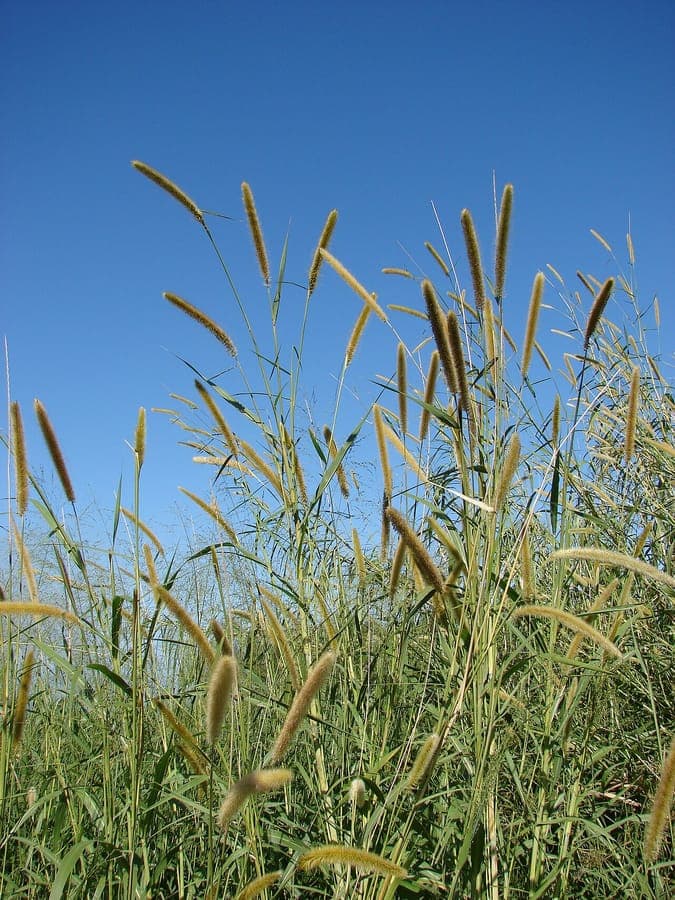
Forest & Kim Starr / CC BY 3.0, via Wikimedia Commons
Napier grass: complete guide
Cenchrus purpureus
¿Quieres ver Napier grass: complete guide en tu jardín?
1 minuto, sin tarjeta de crédito
Overview
Cenchrus purpureus, commonly known as Napier grass or elephant grass, is a striking grass-like plant from the Poaceae family. This powerful grass grows from the Sahara through tropical Africa in warm savanna habitats. The plant is cultivated worldwide as a fodder crop and ornamental plant. Napier grass is prized for its impressive growth, purple flower plumes and productivity. With its energetic growth reaching 2-3 metres, Cenchrus purpureus achieves dramatic scale effects in warm gardens. This grass species suits large, sunny locations in subtropical and tropical climates.
Appearance & Bloom
Napier grass grows as a very large, reed-like grass reaching 1.5-3 metres in favourable conditions. Long, narrow leaves display greyish-green tinting and are highly decorative. Flowering occurs in summer with characteristic purple to violet flower plumes rising above the foliage. These striking, elongated spikes make Cenchrus purpureus a spectacular ornamental plant. The plant grows rapidly and forms dense, imposing specimens.
Ideal Location
Napier grass thrives in full sun in warm, sheltered locations. This grass requires at least 6-8 hours of direct sunlight daily. Position this plant where thermal mass is available, such as against heat-retaining walls. The plant tolerates windy conditions moderately, so shelter helps. In subtropical climates, Napier grass thrives better with protection from cold winter winds. This plant suits large containers, border backgrounds or as a statement plant.
Soil
Napier grass requires well-drained, nutrient-rich soils for optimal growth. The plant grows naturally in rich, possibly somewhat moisture-bound savanna soils. Add generous organic material during planting preparation. Soils with good nutrient levels (score 5/10+) promote maximum growth. The plant tolerates moderately acidic to neutral soils. Add compost or other organic material annually around the crown.
Watering
Napier grass requires regular, generous watering during growing periods. In natural environments, this grass inhabits areas with seasonal rainfall and warm temperatures. In gardens, provide regular watering during spring and summer, especially during dry periods. Keep soil moisture-retentive but not waterlogged. In warm climates, this plant tolerates periodic drought once established. Remove water excess in autumn and winter.
Diseño gratis
¿Quieres ver Napier grass: complete guide en tu jardín? Crea un diseño gratis ahora.
Pruning
Napier grass requires regular pruning for size and form management. In spring, after frost periods, cut back to 30-50 cm high. This grass breaks out again and forms new, dense growth. During the growing season, you may selectively remove old or damaged leaves. In warm climates, Napier grass grows aggressively and requires frequent pruning. Remove dead plumes after flowering if preferred.
Maintenance Calendar
Spring: Cut back to desired height, add organic material. Summer: Regular watering, monitor growth. Autumn: Reduce watering, remove dead plumes. Winter: In cold areas, protect against frost with mulch. In warm climates, monitor moisture availability. Annual heavy pruning or renewal possible in warm areas.
Winter Hardiness
Napier grass has limited frost-hardiness outside tropical and subtropical climates. The plant tolerates temperatures of 0 to 10 degrees Celsius for short periods. In temperate climates, Napier grass usually grows as an annual, though shelter may help overwinter. In cold climates, overwinter the plant by keeping it in large containers indoors. With shelter and mulch, survival is possible in mild subtropical areas. For best results, grow in warmer climates.
Companion Plants
Napier grass combines impressively with other warm-loving grasses and tropical plants. Try combinations with Miscanthus x giganteus and other large grasses. Tropical flowers such as Dahlias and Helianthus form beautiful contrasts. Exotic ferns and Canna species make striking background combinations. This grass may also stand alone as a specimen plant for dramatic effect.
Closing
Napier grass is a spectacular, energetic grass for warm gardens and tropical climates. Ideal for gardeners seeking drama and scale with large grasses. This grass requires regular pruning, watering and sunny locations. Available through specialized horticulture businesses in warm regions. For more tropical plants, visit gardenworld.app/en. With its purple plumes and imposing growth, Cenchrus purpureus brings genuine drama to warm gardens.
Explore more tropical planting schemes at gardenworld.app/en/tropical-gardens.
¿Quieres ver Napier grass: complete guide en tu jardín? Crea un diseño gratis ahora.
Sube una foto, elige un estilo y obtén un diseño fotorrealista con lista de plantas en menos de un minuto.
Más de 10.000 jardines diseñados
Sin tarjeta de crédito


Plantas similares
Lowland sedge: complete guide
Carex demissa
Lowland sedge (Carex demissa) is an elegant grass-like plant thriving in moist, neutral soils across European gardens. Discover cultivation and care techniques for this hardy sedge species.
Stinking sedge: complete guide
Carex foetida
Stinking sedge (Carex foetida) is a distinctive alpine sedge from European mountains, characterized by unique aromatic properties. Master cultivation techniques for this rare, specialized sedge species.
Round-fruited sedge: complete guide
Carex globularis
Round-fruited sedge (Carex globularis) is a northern grass-like plant with distinctive globular fruits. Master cultivation techniques for this hardy, botanically interesting sedge species.