
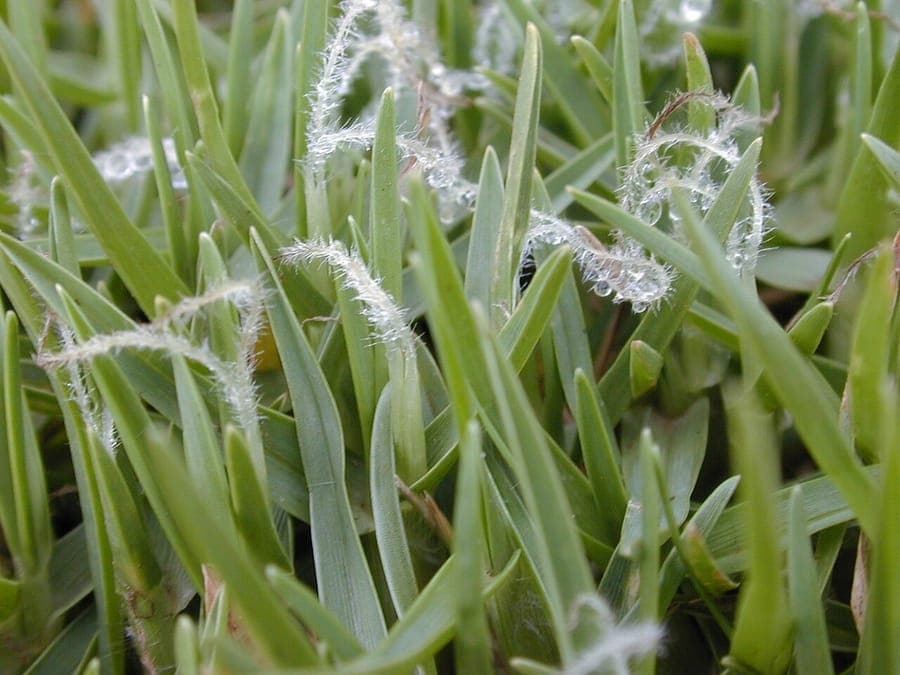
Forest & Kim Starr / CC BY 3.0, via Wikimedia Commons
Cenchrus clandestinus: complete guide
Cenchrus clandestinus
¿Quieres ver Cenchrus clandestinus: complete guide en tu jardín?
1 minuto, sin tarjeta de crédito
Cenchrus clandestinus, better known as Kikuyu grass, is an important grass variety originating from Africa. This sustainable grass is used worldwide for lawns, pastures, and agriculture because of its frost resistance and drought tolerance.
Origin and Family Cenchrus clandestinus belongs to the Poaceae family (grasses) and originates from Eritrea through Tropical Africa. This grass is endemic to Africa and has been introduced to many countries for agriculture and gardens.
Growth Pattern and Appearance Kikuyu grass grows as an aggressive, densely growing grass sod. The plant forms underground runners (rhizomes) that quickly produce new grass. The leaves are green and fine, usually 5-20 cm long. It forms a dense, attractive mat on the ground.
Flowering During the growing season, the grass forms small flowering spikes that are not very conspicuous. The plant typically flowers in summer and early fall. Seed set is limited and the plant spreads mainly vegetatively.
Applications This grass is widely used for:
- Lawns and sports fields
- Pastures for livestock
- Forage crop for animals
- Erosion control on slopes
Ideal Growing Conditions Kikuyu thrives in warm climates with temperatures between 15-30 degrees Celsius. It grows well in full sun to partial shade. The plant needs at least 600-800 mm annual rainfall.
Soil The grass grows well in various soils, from acidic to basic. Well-draining soil is preferred, but it can also tolerate wet conditions better than many other grasses. Standard garden soil is sufficient.
Watering Water regularly during the growing season. The grass responds well to rainfall but can also tolerate drought once established. During warm periods provide extra water for optimal growth.
Maintenance Mow at 3-5 cm height for lawns. Regular mowing promotes denser growth. No fertilization needed, but nitrogen-rich fertilizer stimulates growth. Poorly adapted to cold: dies off under frost.
Maintenance Calendar Spring: Growing period starts, first mowings Summer: Regular mowing, watering Fall: Preparation for cooler months Winter: Dormant or dead in cold zones
Frost Hardiness Not frost-hardy in cold climates. The plant dies at temperatures below 0 degrees Celsius. Limited to warm and subtropical zones.
Advantages Beneficial grass with rapid establishment, dense growth, and good for eroded soil. Excellent forage crop. Spreads quickly and can restore grassland.
Limitations Aggressive growth which can cause problems in well-maintained lawns. Can become weedy. Not suitable for cold zones.
Closing Thoughts Cenchrus clandestinus offers practical, sustainable grass solutions for warm climates. Ideal for agriculture and sports fields. Consult gardenworld.app for more inspiration and plant guides.
¿Quieres ver Cenchrus clandestinus: complete guide en tu jardín? Crea un diseño gratis ahora.
Sube una foto, elige un estilo y obtén un diseño fotorrealista con lista de plantas en menos de un minuto.
Más de 10.000 jardines diseñados
Sin tarjeta de crédito


Plantas similares
Sporobolus pungens: complete guide
Sporobolus pungens
Sporobolus pungens is a stoloniferous Mediterranean coastal grass with outstanding salt and drought tolerance, perfect for seaside and dry gardens.
Mediterranean aegilops: complete guide
Aegilops biuncialis
Everything about Aegilops biuncialis, a Mediterranean annual grass with ornamental spikes and outstanding drought tolerance for dry gardens.
Silver bluestem: complete guide
Bothriochloa saccharoides
Full guide to Bothriochloa saccharoides (silver bluestem): site, soil, watering, winter hardiness, pruning, and garden companions.