
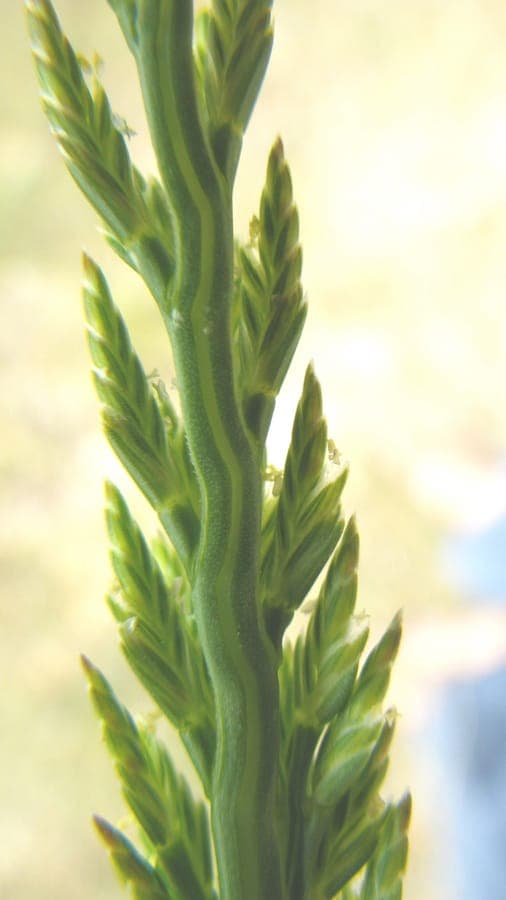
Liliane ROUBAUDI / CC BY-SA 2.0 fr, via Wikimedia Commons
Sea-fern grass: complete guide
Catapodium marinum
¿Quieres ver Sea-fern grass: complete guide en tu jardín?
1 minuto, sin tarjeta de crédito
Overview
Catapodium marinum, commonly known as sea-fern grass or stiff sand grass, is a fascinating ornamental grass from the Poaceae family. This grass naturally occurs along coastal regions from Western Europe to the Mediterranean Sea. Sea-fern grass is a compact species that adapts excellently to coastal environments and slightly saline soils. This distinctive grass is perfect for garden enthusiasts seeking unique plant species not commonly available in nurseries.
Appearance and Bloom
Sea-fern grass forms compact, low mats of fine, green foliage that appears finely textured. The plant typically reaches only 10-25 cm in height, making it ideal for underplanting and groundcover in borders. The growth is dense and forms attractive, symmetrical mats with an elegant, undulating character. The leaves have an elegant, flowing appearance.
Flowers appear from May to July as small, upright spikes approximately 2-3 cm long. These spikes have a characteristic, stiff appearance and are greenish in color, creating a refined visual character. Flowers are very fine and delicate, adding refinement to any border design.
The plant is elegant and fine-textured, making it suitable for decorative applications in modern gardens. The green color remains attractive throughout the season and only slightly changes color in winter.
Ideal Location
Sea-fern grass grows best in full sun with at least 6 hours of direct sunlight daily. The plant is particularly suited to coastal gardens and grows well on sandy, gravelly, and stony sites. It tolerates some shade but flowers better in full sun. Plant it in locations where it can be exposed to salt and sea wind.
This grass is ideal for rock gardens, scree gardens, and Mediterranean plantings. It can also grow in containers and window boxes, making it suitable for balcony and terrace designs. In coastal gardens it is particularly valuable due to its salt-tolerance.
Soil
Sea-fern grass grows in virtually any soil but prefers well-draining soils. Heavy clay soils can be improved by adding sand or gravel. The grass tolerates slightly saline soils better than most grasses, making it exceptionally suitable for coastal gardens. This is a very important advantage in coastal development.
The plant thrives in moderately fertile to poor soils. Slightly acidic to neutral conditions (pH 6-7) are ideal. The plant is not very particular about soils as long as drainage is good.
Diseño gratis
¿Quieres ver Sea-fern grass: complete guide en tu jardín? Crea un diseño gratis ahora.
Watering
Once established, sea-fern grass is very drought-tolerant and requires minimal care. Young plants need regular water until established, normally during the first summer. Mature plants require little supplementary water in normal years.
The plant tolerates salt water better than many other grasses, making it excellent for coastal gardens. It can even tolerate fluctuating salt-water conditions without notable decline.
Pruning
Sea-fern grass requires minimal pruning and very little maintenance. Remove dead material in early spring if winter was harsh. Deadhead spent spikes after flowering to keep the plant neat. Regular cleanup supports full growth form and appearance.
The plant does not self-seed excessively, so invasiveness is not a concern.
Maintenance Calendar
March-April: Cleanup of dead material, preparation for growth May-July: Flowering and growth season, visible flower spikes August-October: Seed formation November-February: Winter rest, minimal care, largely evergreen
Winter Hardiness
Catapodium marinum is winter-hardy throughout most of Western Europe. The plant tolerates temperatures down to -10 to -15 degrees Celsius. Protection is usually unnecessary except in extremely severe winters at the margins of its hardiness range.
Companion Plants
Sea-fern grass forms beautiful combinations with other coastal plants. It pairs well with silvery Artemisia, lavender, and strawberry. In rock gardens, it creates lovely contrast with other grass and herb species. Plant it also with coastal flora and succulents.
The compact growth habit makes it suitable for borders, edges, and terrace plantings. In container gardens it forms an elegant filler.
Conclusion
Catapodium marinum is an excellent choice for coastal and Mediterranean gardens. Its distinctive appearance and salt-tolerant properties make it particularly valuable. Request sea-fern grass from specialized garden centers or seed suppliers specializing in coastal garden material. Gardenworld.app helps you create the perfect design for this plant. Gardenworld.app makes it easy to incorporate valuable coastal plants in your design and create an authentic coastal garden.
¿Quieres ver Sea-fern grass: complete guide en tu jardín? Crea un diseño gratis ahora.
Sube una foto, elige un estilo y obtén un diseño fotorrealista con lista de plantas en menos de un minuto.
Más de 10.000 jardines diseñados
Sin tarjeta de crédito


Plantas similares
Sporobolus pungens: complete guide
Sporobolus pungens
Sporobolus pungens is a stoloniferous Mediterranean coastal grass with outstanding salt and drought tolerance, perfect for seaside and dry gardens.
Mediterranean aegilops: complete guide
Aegilops biuncialis
Everything about Aegilops biuncialis, a Mediterranean annual grass with ornamental spikes and outstanding drought tolerance for dry gardens.
Silver bluestem: complete guide
Bothriochloa saccharoides
Full guide to Bothriochloa saccharoides (silver bluestem): site, soil, watering, winter hardiness, pruning, and garden companions.