
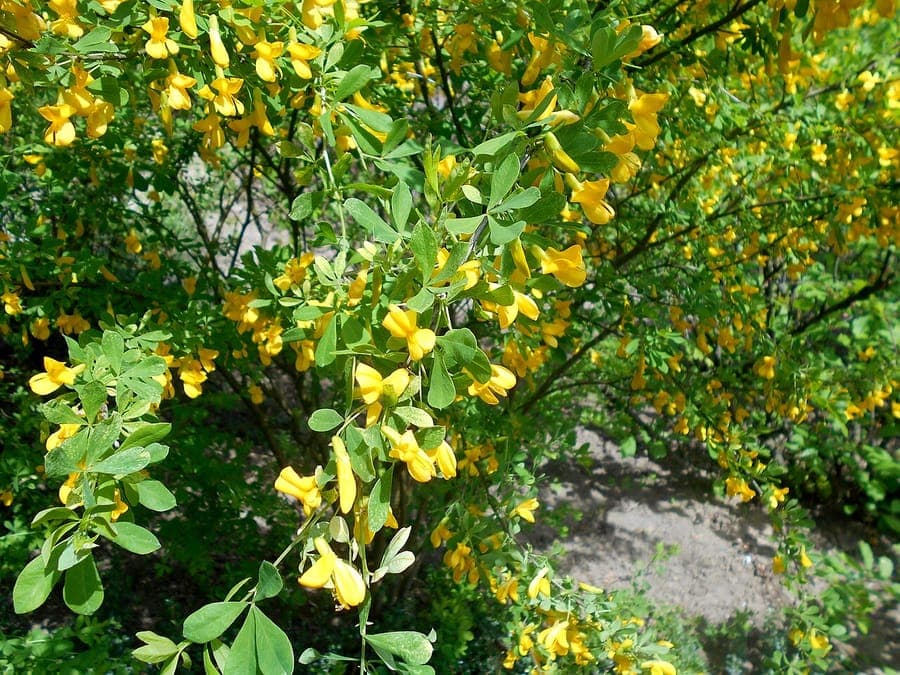
Salicyna / CC BY-SA 4.0, via Wikimedia Commons
Caragana frutex: complete guide
Caragana frutex
¿Quieres ver Caragana frutex: complete guide en tu jardín?
1 minuto, sin tarjeta de crédito
Overview
Caragana frutex, known as Russian peashrub or yellow acacia, is a robust and hardy shrub in the Fabaceae family. This shrub is native to the cold, dry steppes of Russia, Kazakhstan, and from the Altai to Xinjiang. Despite its origin in harsh mountainous regions, it is an ornamental plant offering golden flowers and elegant green foliage.
The plant is renowned for its tolerance of extreme conditions: drought, cold, and poor soils. For gardenworld.app garden designs, this is an excellent choice for those seeking a low-maintenance shrub that remains steadfast for years.
Appearance and Bloom
Caragana frutex grows as a moderately growing shrub with a compact, globular form, usually 1-2 meters tall and wide. The foliage consists of pinnate leaves, where each leaf pair contains small elliptical leaflets. During spring (May-June), small golden-yellow flowers appear in clusters along the branches.
The flowers attract bees and other pollinating insects and are later followed by small seed pods. In autumn, the foliage retains its green and gradually turns yellow, providing additional visual appeal.
Ideal Location
Caragana frutex thrives in completely sunny spots. Ensure at least 6-8 hours of direct sunlight daily for optimal flowering. The shrub accepts partial shade but will produce fewer flowers in such conditions.
Locations without severe wind damage are preferred, though the plant can withstand less than ideal circumstances. Combine on warm south-facing walls, in gravel gardens, or Mediterranean landscapes. The plant is ideal for rock gardens and xeric plantings (dry landscape schemas).
Soil
The plant has minimal soil quality requirements. It accepts sandy, poor, even saline soils. Well-drained soil is essential, as waterlogging can damage roots. Slightly acidic to weakly alkaline soil (pH 5.5-7.5) is perfect.
In container cultivation, use well-draining potting soil, possibly mixed with some gravel or sand for even better drainage. Nutrient-rich soil is not necessary and can even stimulate excessive growth at the expense of flowering.
Diseño gratis
¿Quieres ver Caragana frutex: complete guide en tu jardín? Crea un diseño gratis ahora.
Watering
Once established, Caragana frutex is highly drought-tolerant thanks to its deep root systems. Water requirements are minimal. Young plants need regular water in their first season until well-rooted.
For adult established plants, water is only needed during prolonged dry periods. In containers, be more careful and water more regularly. Preference is for dry rather than wet - overwatering is the greatest risk.
Pruning and Training
Caragana frutex requires little pruning. Remove only damaged or dead branches. If you want to keep the shrub more compact, prune after flowering (July). This stimulates denser branching. Drastic pruning can reduce flowering for the next season.
The plant naturally forms an ornamental shape without much intervention. With container cultivation, regular light pruning can encourage a more compact growth pattern.
Maintenance Calendar
Early Spring: Check for winter damage, remove broken branches. April: Prepare for bloom. May-June: Enjoy the yellow flowers, welcome insect visitors. July: Optional pruning for more compact form. August-September: Minimal maintenance. October-November: Prepare for winter, limited water. December-January: Dormancy period, no maintenance needed.
Winter Hardiness
Caragana frutex is extremely hardy and can tolerate temperatures as low as -35 to -40 degrees Celsius. This makes it ideal for all regions in the Netherlands, Belgium, and surrounding countries. The plant survives even on very exposed mountain peaks with strong winds.
No special winter protection is needed, not even for container plants. This plant can remain outside year-round without any problems.
Companion Plants
Caragana frutex combines beautifully with other drought-tolerant shrubs and perennials. Try combinations with lavender, santolina, sage, or other gray-leaved plants. The yellow flowers create a beautiful contrast with purple lavender clusters.
For structure: combine with Juniperus species, Cistus, or roses. For textural variety: add grasses such as Festuca glauca or Stipa. The combination of yellow and silver-gray is always elegant.
Closing
Caragana frutex is a reliable and attractive shrub for those wanting to create a low-maintenance garden. With its yellow flowers, elegant leaves, and strong constitution, it is a true gardenworld.app offering for practical yet ornamental garden designs. Contact garden centers in your region or gardenworld.app for the best selection.
¿Quieres ver Caragana frutex: complete guide en tu jardín? Crea un diseño gratis ahora.
Sube una foto, elige un estilo y obtén un diseño fotorrealista con lista de plantas en menos de un minuto.
Más de 10.000 jardines diseñados
Sin tarjeta de crédito


Plantas similares
Tall Silky Lupine: complete guide
Lupinus elatus
Tall silky lupine is a fast-growing Californian perennial with silvery foliage and blue-purple flower spikes, ideal for a prairie-style garden.
Garfield Lupine: complete guide
Lupinus garfieldensis
The Garfield lupine is a rare, fast-growing American perennial for alkaline, dry grassland gardens, with striking blue flower spikes.
Lupinus elegans: complete guide
Lupinus elegans
Lupinus elegans, the elegant lupine, is a spectacular blooming plant from Mexico with blue flower spikes. Care, cultivation and garden use.