
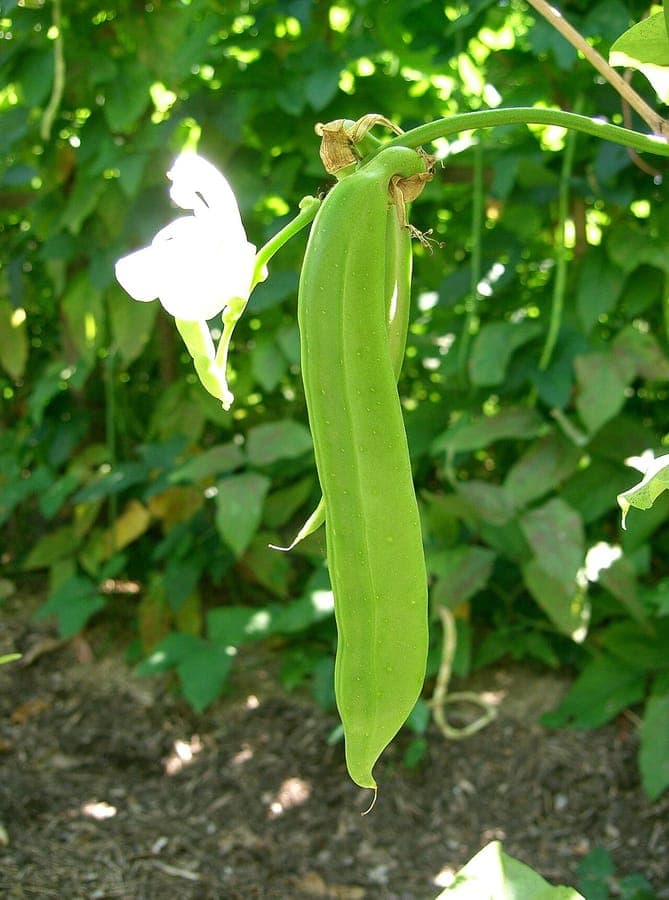
KENPEI / CC BY-SA 3.0, via Wikimedia Commons
Scimitar-bean: complete guide
Canavalia gladiata
¿Quieres ver Scimitar-bean: complete guide en tu jardín?
1 minuto, sin tarjeta de crédito
Overview
Canavalia gladiata, also known as scimitar-bean, sword-bean, or Japanese jack-bean, is a strong tropical climbing plant with decorative green and red seed pods. The plant is naturally native to tropical Asian regions but is now grown in many warm countries as a food crop and green manure. The plant is considerably less massive than C. ensiformis but equally useful. Canavalia gladiata offers an interesting combination of aesthetically attractive fruits and food value.
Appearance and bloom
Canavalia gladiata grows as a strong climbing plant with three-parted leaves (approximately 10 to 15 centimeters long). The stems are less woody than C. ensiformis but equally vigorous. The plant blooms with purple to pink flowers that appear in clusters. After blooming, characteristic flat seed pods form that start green and can turn red to brown as they ripen. The pods can reach up to 30 centimeters long. This gives the plant a very decorative appearance, especially when both green and red pods are present.
Ideal location
Canavalia gladiata thrives best in a sunny location with at least 6 to 8 hours of direct sunlight. The plant also grows in semi-shade but then produces fewer fruits. The plant is a strong climber and needs support. Provide sturdy climbing frame, pole, or pergola. This is essential for optimal growth, flowering, and fruiting.
Soil
Canavalia gladiata grows well in various soils as long as they are well-draining. The plant tolerates poor soils thanks to its nitrogen-fixing ability but grows better in fertile, humus-containing soil. A pH between 5.5 and 7.5 is ideal. For container cultivation, use nutrient-rich potting soil with good drainage. Mulching around the plant helps with water and nutrient retention.
Diseño gratis
¿Quieres ver Scimitar-bean: complete guide en tu jardín? Crea un diseño gratis ahora.
Watering
Canavalia gladiata needs regular watering during the growing season, especially during dry periods. Ensure the soil remains evenly moist without waterlogging. The plant tolerates some drought better than prolonged water stagnation. In container cultivation regularly check moisture content. Once established, the plant is fairly self-sufficient.
Pruning
Canavalia gladiata grows vigorously and can be pruned for shaping and controlling overgrowth. Pruning wounds heal quickly. The plant responds well to pruning back with new bushy growth. Dead or damaged parts can be removed at any time. Regular pruning promotes more flowers and fruits.
Maintenance calendar
May to June: Sowing or transplanting; regular watering. July to September: Blooming begins; moderate watering and feeding. October to November: Full bloom and fruiting; feeding remains important. December to April: Harvesting; plant slowly aging.
Winter hardiness
Canavalia gladiata is not winter-hardy in temperate climates. The plant cannot tolerate temperatures below 10 degrees Celsius. It grows optimally at temperatures of 15 to 30 degrees. Usually this plant is cultivated as an annual crop in warm seasons. In warm climates it can become perennial.
Companion plants
Canavalia gladiata combines well with other nitrogen-fixing legumes such as peas and other Canavalia species. Decorative climbers with contrasting colors, such as Passiflora, form nice combinations. It also works well in green manure mixtures with other legumes.
Closing remarks
Canavalia gladiata is a valuable plant for tropical gardens, both for food and aesthetics. The elegant, colorful pods make it an interesting crop. Seeds are available from seed merchants and online garden shops. Don't let this decorative legume pass you by. Visit gardenworld.app for more tropical vegetable inspiration. Discover more tips at gardenworld.app.
¿Quieres ver Scimitar-bean: complete guide en tu jardín? Crea un diseño gratis ahora.
Sube una foto, elige un estilo y obtén un diseño fotorrealista con lista de plantas en menos de un minuto.
Más de 10.000 jardines diseñados
Sin tarjeta de crédito


Plantas similares
Tall Silky Lupine: complete guide
Lupinus elatus
Tall silky lupine is a fast-growing Californian perennial with silvery foliage and blue-purple flower spikes, ideal for a prairie-style garden.
Garfield Lupine: complete guide
Lupinus garfieldensis
The Garfield lupine is a rare, fast-growing American perennial for alkaline, dry grassland gardens, with striking blue flower spikes.
Lupinus elegans: complete guide
Lupinus elegans
Lupinus elegans, the elegant lupine, is a spectacular blooming plant from Mexico with blue flower spikes. Care, cultivation and garden use.