
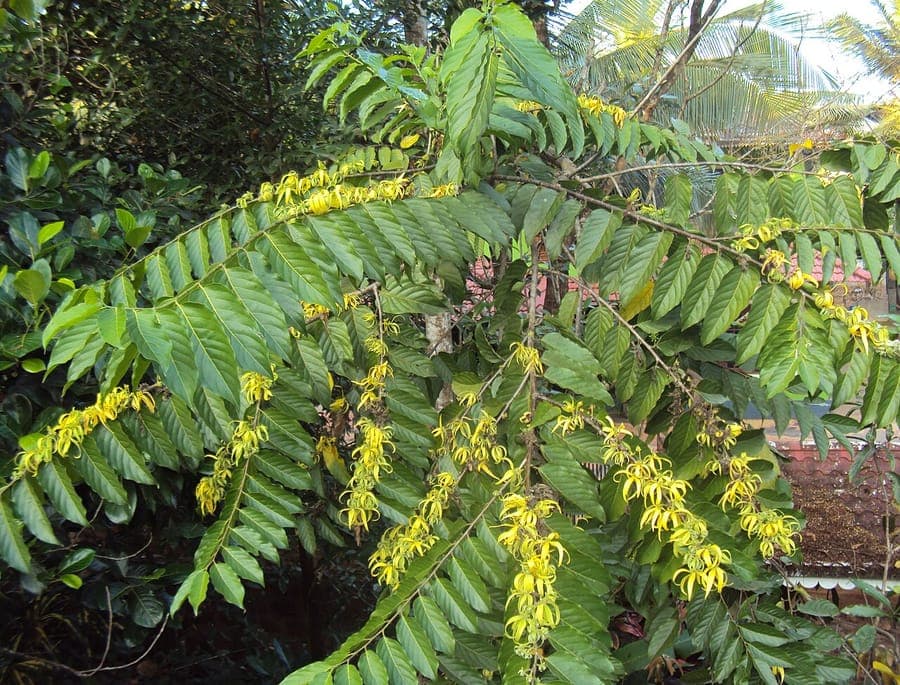
Vinayaraj / CC BY-SA 3.0, via Wikimedia Commons
Ylang-ylang: complete guide
Cananga odorata
¿Quieres ver Ylang-ylang: complete guide en tu jardín?
1 minuto, sin tarjeta de crédito
Overview
Cananga odorata, commonly known as ylang-ylang or ilang-ilang, is an elegant tropical tree native to Southeast Asian regions, particularly Borneo, Java, Sulawesi, and the Philippines. The plant is renowned worldwide for its intensely fragrant, yellow flowers that are widely used in the perfume industry. The essential oil from the flowers is an important ingredient in luxury perfumes and aromatherapy products. This makes the plant economically valuable in warm climates and highly popular with gardeners wanting fragrance in their gardens.
Appearance and bloom
Cananga odorata grows into a small to medium-sized tree, usually 4 to 8 meters tall, with elongated, glossy, dark green leaves. The leaves are approximately 10 to 20 centimeters long and have a very pleasant spicy aroma. The plant produces beautiful, fragrant flowers in bright to pale yellow, which grow in loose, hanging clusters. The flowers have a unique star shape with thin, ribbon-like flower parts that elegantly curve. The fragrance is intense, sweet, and exotic, especially stronger in the evenings. Blooming occurs during many months of the year.
Ideal location
Cananga odorata thrives best in full sun to light shade in very warm locations. The plant needs at least 6 to 8 hours of direct sunlight daily. In tropical and subtropical areas it can also grow in semi-shade, though less flowering occurs. The plant is most suitable for south-facing locations and sheltered, warm places.
Soil
Cananga odorata grows best in well-draining, fertile soil types with sufficient humus. The plant tolerates soils with neutral to acidic pH (between 5.5 and 7.5). Sandy, clayey soil with added compost is ideal. For container cultivation, use rich, well-draining potting soil with compost. The plant appreciates regular nutrient additions during the growing season.
Diseño gratis
¿Quieres ver Ylang-ylang: complete guide en tu jardín? Crea un diseño gratis ahora.
Watering
Cananga odorata requires regular watering during the growing phase, especially during dry periods. Ensure the soil remains evenly moist but not waterlogged. The plant cannot tolerate stagnant water. During the resting phase (winter) water much less. Regular misting of the foliage helps, especially in dry conditions, and promotes extra blooming.
Pruning
Cananga odorata can be pruned to keep the form in check and stimulate bushy growth. The plant tolerates pruning wounds well. After pruning, new shoots will develop. You can remove dead or diseased branches at any time of year. Preventing overgrowth is important as this negatively affects blooming.
Maintenance calendar
January to February: Light pruning; preparation for growing period. March to May: Intensive growth; regular watering and feeding. June to September: Blooming; regular watering. October to December: Decline of flowering; less feeding and watering. This varies depending on climate.
Winter hardiness
Cananga odorata is not winter-hardy in temperate climates. The plant cannot tolerate temperatures below 15 degrees Celsius and grows optimally at temperatures above 20 degrees. In warm greenhouses the plant must be carefully overwintered. The plant can be cultivated as a houseplant on warm, sunny windowsills.
Companion plants
Cananga odorata combines well with other tropical plants with fragrant flowers, such as Plumeria (frangipani), Gardenia jasminoides, and blooming Magnolia. Palms and other foliage plants also form beautiful backgrounds. In container cultivation it can be paired with Jasminum sambac (true jasmine).
Closing remarks
Cananga odorata is a magical plant for those who want fragrance and exoticism in their garden. The beautiful, intensely fragrant flowers make any garden a paradise. You can find young plants at warm greenhouses or specialized online retailers. In Germany they are available at specialist nurseries like OBI and Hornbach. Don't let this tropical beauty pass you by. Visit gardenworld.app for more fragrant plant inspiration. Discover more tips at gardenworld.app.
¿Quieres ver Ylang-ylang: complete guide en tu jardín? Crea un diseño gratis ahora.
Sube una foto, elige un estilo y obtén un diseño fotorrealista con lista de plantas en menos de un minuto.
Más de 10.000 jardines diseñados
Sin tarjeta de crédito


Plantas similares
Corkwood: complete guide
Annona glabra
Grow corkwood (Annona glabra) for tropical fruit. Pond-apple tree for wet gardens, edible fruit, soft tropical flesh.
Wild custard-apple: complete guide
Annona senegalensis
Discover Annona senegalensis - a delicious African fruit tree with creamy, sweet fruit. Read our full guide on growing, harvesting, and cultivating this exotic fruiting plant.
Calabash-nutmeg: complete guide
Monodora myristica
Discover Monodora myristica, a tropical fruit tree with striking blooms and aromatic seeds. Learn cultivation techniques for warm and subtropical climates.