
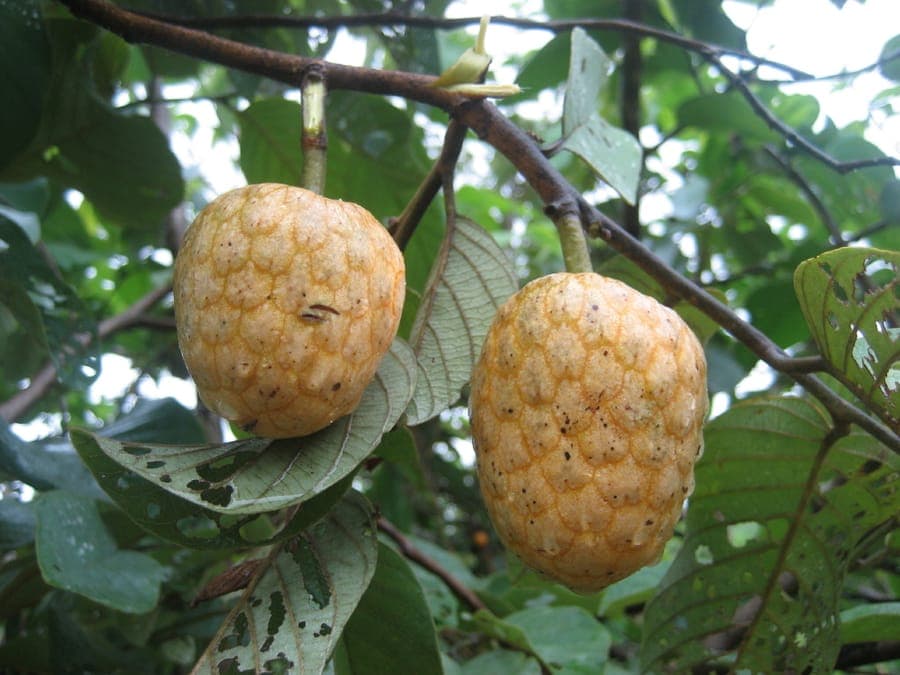
Ton Rulkens from Mozambique / CC BY-SA 2.0, via Wikimedia Commons
Wild custard-apple: complete guide
Annona senegalensis
¿Quieres ver Wild custard-apple: complete guide en tu jardín?
1 minuto, sin tarjeta de crédito
Annona senegalensis, commonly known as Wild Custard-Apple, African Custard-Apple or Pomme Canelle in French, is a fascinating fruit tree from Africa that is slowly gaining recognition outside tropical regions. Originally native to the African continent where it grows wild in Senegal, Benin, Nigeria and many other countries, this tree can now be cultivated in temperate zones as well. The fruits are exceptionally delicious and nutritious, with a sweet, creamy texture much like the sugar-apple (Annona squamosa).
The Wild Custard-Apple is a medium-sized tree that can reach seven to eight metres in height, though it is easily kept to smaller proportions in containers. The tree bears elliptical, lance-shaped leaves approximately ten to fifteen centimetres in length. The flowers are small and yellowish-green, rather inconspicuous, but they are followed by impressive large green fruits that grow in clusters. When ripe, the fruits turn yellow-brown and emit an aroma reminiscent of pineapple and vanilla.
The fruits of Annona senegalensis can grow to ten to twelve centimetres in diameter and are significantly larger than many other annona species. They have a firm skin and contain seedless flesh segments with very high sugar concentrations. Once mature they weigh approximately two hundred to four hundred grams. The interior of the fruit is white to yellow with a silky texture that you can literally spoon out. Once tasted, many people become devoted to the flavour.
For optimal growth, this tree requires abundant direct sunlight. Ensure it is positioned where it receives at least six hours of full sun daily. In Mediterranean climates and southern European regions, Annona senegalensis grows quite readily outdoors. Position the tree in the UK and northern Europe in a sunny, protected location, ideally against a sunny wall or on a sunny terrace where it receives maximum sunlight.
Soil and drainage are vital for healthy growth. The tree grows best in loose, well-draining soil with abundant organic matter. Heavy clay soils should be improved by adding sand and compost. Ensure water never pools around the roots, which can cause root rot. In containers, use quality potting compost with good drainage.
Watering is essential, especially when the tree is young and fruiting. During the growing season (spring and summer), trees should be watered regularly so the soil remains moist but not waterlogged. During drought periods, you should increase watering frequency. With mature trees you can water less frequently, but you must ensure sufficient moisture for fruit development. In winter water less, especially if the tree is dormant.
Fertiliser promotes growth and fruiting. Use a balanced fertiliser, slightly enriched with potassium and phosphorus, especially as the tree flowers and fruits. During the growing season you can feed monthly. Organic fertilisers such as compost tea are also effective. Many growers use slow-release fertiliser for convenience.
Early pruning encourages a strong, well-shaped tree. Prune young trees in their first years to develop a good branching framework. Remove dead wood and damaged branches regularly. As the tree matures and fruits, minimise pruning since fruit-bearing branches are formed in previous seasons.
An annual maintenance calendar helps you manage this tree effectively. March to May: plant or repot during the growing season. April to October: provide regular water and fertiliser. July to September: harvest ripe fruits. October to January: allow dormancy as growth slows. February: perform heavy pruning if needed.
Annona senegalensis can be fairly winter-hardy for a tropical fruit tree, but needs protection in countries with frost. Bring container plants indoors for winter. For trees in the ground in Mediterranean zones, protect them from severe frost with reed mats or jute.
Plant combinations that work well with Wild Custard-Apple include other exotic fruit trees such as mangos, papaya and avocado. These share similar sun and warmth requirements. In gardens with more temperate climates, you typically grow the tree as a potted specimen.
In the UK and Europe you can source young Annona trees from specialist tropical plant nurseries and online seed merchants. Look for healthy, vigorous plants with well-developed root systems. Seeds are also available, although seed-grown trees can take seven to eight years before fruiting. On gardenworld.app you'll discover more information about growing exotic fruit trees and plant collection strategies. Begin small, for instance with a container plant on a sunny location, and gradually build toward a larger collection that suits your climate.
¿Quieres ver Wild custard-apple: complete guide en tu jardín? Crea un diseño gratis ahora.
Sube una foto, elige un estilo y obtén un diseño fotorrealista con lista de plantas en menos de un minuto.
Más de 10.000 jardines diseñados
Sin tarjeta de crédito


Plantas similares
Corkwood: complete guide
Annona glabra
Grow corkwood (Annona glabra) for tropical fruit. Pond-apple tree for wet gardens, edible fruit, soft tropical flesh.
Calabash-nutmeg: complete guide
Monodora myristica
Discover Monodora myristica, a tropical fruit tree with striking blooms and aromatic seeds. Learn cultivation techniques for warm and subtropical climates.
Pawpaw Tree: complete guide
Asimina triloba
Discover Asimina triloba, the Pawpaw or Indian-banana. A North American fruit tree with large leaves, purple flowers, and delicious yellow-green fruits. Edible fruits.