
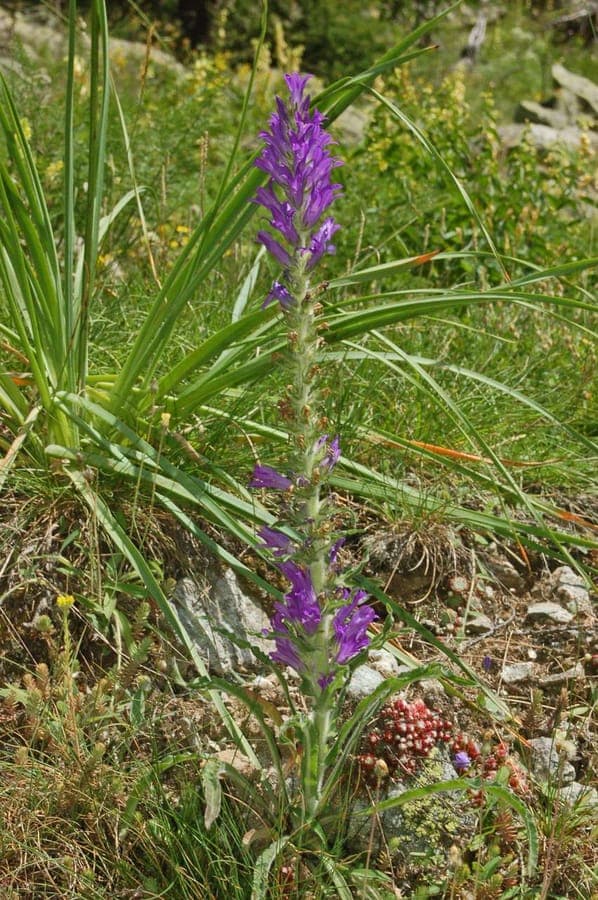
Hectonichus / CC BY-SA 3.0, via Wikimedia Commons
Spiked bellflower: complete guide
Campanula spicata
¿Quieres ver Spiked bellflower: complete guide en tu jardín?
1 minuto, sin tarjeta de crédito
Overview
Spiked bellflower (Campanula spicata) is an elegant alpine plant from the Campanulaceae family, native to the Alps and South European mountains. This robust mountain species produces striking blue flowers in dense spikes. Perfect for rock gardens, stony slopes, and alpine containers. Extremely frost-hardy and drought-tolerant, it is a favorite for mountain gardeners.
Appearance & Bloom
This plant grows 30-50 cm tall in a compact, densely branched form. The leaves are lance-shaped and greyish-green. Flowers are intense blue to violet, small but numerous, arranged in dense flower spikes. Blooming period July through August. The plant forms attractive seedheads after flowering.
Ideal Location
Perfect for fully sunny locations on rocky, well-drained slopes. Excels in rock gardens, alpine troughs, stone walls, and pergolas. Less suited to shady spots. Chooses locations with strong air circulation to prevent fungal diseases. Alpine habitats at elevation make this specimen ideal.
Soil
Requires extremely well-drained, loamy to sandy soils. Add grit for drainage. pH neutral to slightly acidic (6-7.5). Poor soil is not a problem; this plant thrives in moderate conditions. Preference for calcareous mountain soils. No stagnant water tolerated.
Diseño gratis
¿Quieres ver Spiked bellflower: complete guide en tu jardín? Crea un diseño gratis ahora.
Watering
Moderate water needed; once established, extremely drought-tolerant. After planting, water regularly until roots establish (first summer). After that, water only during prolonged drought. Overwatering is the main problem; minimize moisture in winter. In very hot summers, water sparingly.
Pruning
Limited maintenance. Remove spent flower spikes after blooming for tidiness. In spring, prune dead material. No aggressive pruning needed. Plant can be pruned to maintain compact form, but this is optional.
Maintenance Calendar
Spring: Inspect for winter damage, pruning tasks. Summer: Minimal watering in drought, monitor for pests. Autumn: Stop watering, prepare for winter. Winter: No care; plant rests. Annually divide old clusters for rejuvenated growth.
Winter Hardiness
Extremely frost-hardy (down to -25C). Winter hardy zones 3-8. Plant enters dormancy in winter. Snow cover protects shallow roots. Excellent for alpine climates.
Companion Plants
Combine with other alpine species: Dianthus, Saxifraga, Sedum, Sempervivum. Larger structural plants (Festuca, Armeria) provide contrast. In rock gardens pair with low grasses and other mountain plants. Common soil preferences make combinations easy.
Closing
Spiked bellflower is ideal for mountain gardeners and rock enthusiasts. Very reliable, long-lived, and attractive to bees. For more alpine plant advice, visit gardenworld.app/en or consult local alpine nurseries.
¿Quieres ver Spiked bellflower: complete guide en tu jardín? Crea un diseño gratis ahora.
Sube una foto, elige un estilo y obtén un diseño fotorrealista con lista de plantas en menos de un minuto.
Más de 10.000 jardines diseñados
Sin tarjeta de crédito


Plantas similares
Campanula alaskana: complete guide
Campanula alaskana
Discover Campanula alaskana, the delicate alpine bellflower from Alaska. Growing tips, hardy requirements, and design ideas for rock gardens and alpine troughs.
Campanula scouleri: complete guide
Campanula scouleri
Discover Campanula scouleri, the refined Pacific bellflower. Growing tips, care requirements, and design ideas for woodland and mountain gardens.
Doublehorn calicoflower: complete guide
Downingia bicornuta
All about Downingia bicornuta - the doublehorn calicoflower: sowing, location, bloom and care for this rare annual in your garden.