
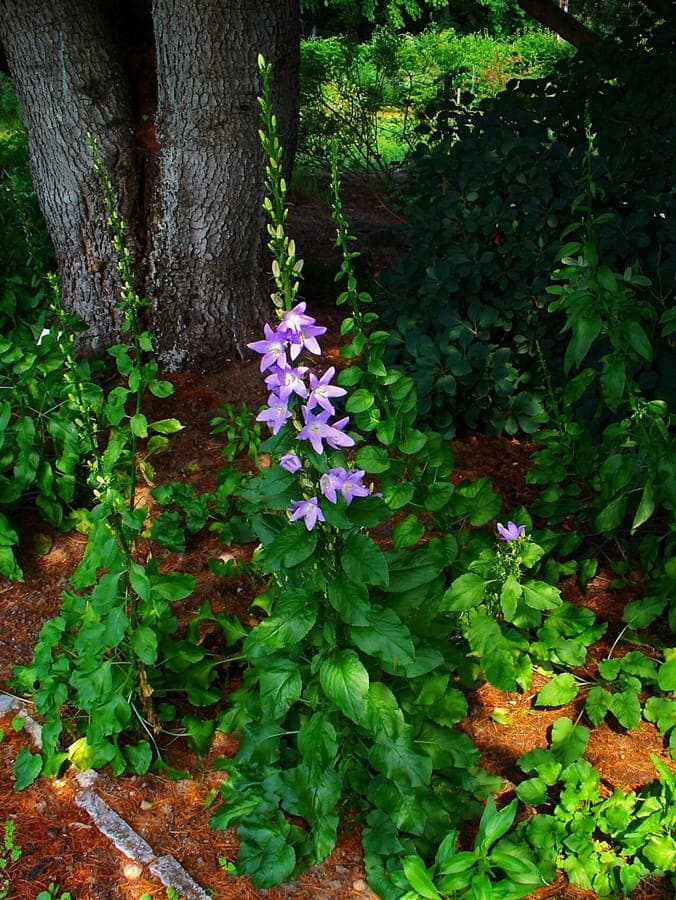
H. Zell / CC BY-SA 3.0, via Wikimedia Commons
Chimney bellflower: complete guide
Campanula pyramidalis
¿Quieres ver Chimney bellflower: complete guide en tu jardín?
1 minuto, sin tarjeta de crédito
Overview
Chimney bellflower (Campanula pyramidalis) is a striking, upright-growing perennial that adds vertical drama to cottage gardens and mixed borders. Native to mountainous regions of Italy and former Yugoslavia, this short-lived perennial or biennial thrives in well-drained soils and reaches heights of 100 to 150 cm. Hardy in USDA zones 5 to 7, it's a reliable choice for gardeners across much of Europe and North America who want height without the fuss of staking tall delphiniums or hollyhocks.
Its architectural flower spikes bloom from June to August, making it a standout mid-summer performer. While individual plants often die after flowering, they readily self-seed under the right conditions, ensuring a recurring presence year after year. On gardenworld.app, you can design a planting scheme that integrates Chimney bellflower's height and bloom time into your seasonal garden flow.
Appearance & bloom cycle
The name 'pyramidalis' refers to the plant's dense, pyramid-shaped flower spike, which grows vertically and opens from the bottom up. Each flower is a classic bell shape, soft sky-blue to deep violet, with a delicate, almost waxy texture. White forms like 'Alba' also exist, offering a gentler contrast in moon gardens or pale-themed borders.
The foliage forms a low rosette in the first year, with lance-shaped, slightly toothed green leaves. In the second year, a single, sturdy stem shoots upward, carrying dozens of blooms. The flowering period lasts 6 to 8 weeks, peaking in July. After blooming, the plant may set seed if not deadheaded, and the main stem gradually withers.
Because it behaves as a biennial for many gardeners, succession planting or encouraging light self-seeding helps maintain a constant display. Avoid overcrowding, as poor air circulation can lead to mildew, especially in humid conditions.
Ideal location
Chimney bellflower grows best in full sun to partial shade. In cooler climates, full sun encourages stronger stems and denser flowering. In hotter regions, afternoon shade protects the plant from scorching and moisture stress. Position it towards the back of borders, where its height won't block shorter companions.
It also works well along fences, walls, or in groups of three to five plants for a natural, cottage-garden effect. In exposed or windy gardens, consider using twiggy brushwood or pea sticks for light support. Avoid metal stakes-they disrupt the plant's natural grace.
Using gardenworld.app, you can visualise spacing and mature dimensions so your Chimney bellflower doesn't overcrowd neighbours or lean awkwardly.
Soil requirements
Well-drained soil is essential. Heavy clay or waterlogged ground leads to crown rot, especially in winter. Amend the soil with grit or composted bark to improve drainage. A neutral to slightly alkaline pH (6.5–7.5) suits it best, but it tolerates mildly acidic conditions.
If your garden has poor drainage, grow it in a raised bed or mix it into a gravel garden where excess water runs off quickly. Avoid overly rich soils, which promote leafy growth at the expense of flowers.
Diseño gratis
¿Quieres ver Chimney bellflower: complete guide en tu jardín? Crea un diseño gratis ahora.
Watering
During active growth (May through September), keep the soil evenly moist but never soggy. Water deeply at the base to prevent wet foliage, which invites fungal issues. Once established, the plant shows moderate drought tolerance, but prolonged dry spells reduce flower production and stem strength.
Mulch lightly with compost or leaf mould in spring to retain moisture and suppress weeds. Keep mulch away from the crown to prevent rot.
Pruning
Deadheading spent flowers helps prolong blooming and prevents excessive self-seeding, which may not be desired in formal gardens. Cut back the entire flower spike to the base after blooming. If you want to encourage natural reseeding, leave a few stems to mature and scatter seed.
In autumn, remove any dead or diseased foliage. In milder zones, you can leave basal leaves for winter protection.
Maintenance calendar
- January: No action needed; check for winter damage
- February: Clear remaining debris if not done in autumn
- March: Apply a light layer of compost; prepare soil for new plants
- April: Sow seeds or transplant young plants; keep soil moist
- May: Monitor for aphids; water during dry spells
- June: Start of bloom; check for stem support
- July: Peak flowering; maintain consistent moisture
- August: Deadhead or allow seeding; watch for slugs on young rosettes
- September: Reduce watering; stop fertilising
- October: Cut back dead stems; clean up fallen leaves
- November: Apply dry mulch in colder areas to protect crowns
- December: Dormant period; avoid disturbing soil
Winter hardiness
Hardy in USDA zones 5–7, Chimney bellflower survives winter cold but is vulnerable to wet soil. In areas with heavy winter rainfall, ensure good drainage or grow in raised beds. In containers, move pots against a sheltered wall or wrap with burlap to insulate roots.
Young rosettes are more cold-tolerant than flowering stems, so plants sown in late summer often overwinter better than spring-planted ones.
Companion plants
Pair Chimney bellflower with plants that share its growing conditions. Good companions include tall Phlox, Echinacea, Verbena bonariensis, and Nepeta. The blue flowers contrast beautifully with golden Yarrow or deep red Monarda.
For a romantic look, grow it near old-fashioned roses or white-flowering Clematis. Avoid invasive spreaders like mint or ground-covering Vinca, which can smother its base.
Closing
Chimney bellflower brings effortless elegance to the summer garden. With tall, graceful spikes and long-lasting blooms, it's a standout in borders and naturalistic plantings. It asks little in return-just decent drainage, a bit of sun, and occasional deadheading. You'll find young plants at garden centres across the UK and North America in late spring and early summer. Look for them at trusted retailers where quality stock is standard. With thoughtful placement and a touch of planning, Campanula pyramidalis will become a dependable feature in your garden for years to come.
¿Quieres ver Chimney bellflower: complete guide en tu jardín? Crea un diseño gratis ahora.
Sube una foto, elige un estilo y obtén un diseño fotorrealista con lista de plantas en menos de un minuto.
Más de 10.000 jardines diseñados
Sin tarjeta de crédito


Plantas similares
Campanula alaskana: complete guide
Campanula alaskana
Discover Campanula alaskana, the delicate alpine bellflower from Alaska. Growing tips, hardy requirements, and design ideas for rock gardens and alpine troughs.
Campanula scouleri: complete guide
Campanula scouleri
Discover Campanula scouleri, the refined Pacific bellflower. Growing tips, care requirements, and design ideas for woodland and mountain gardens.
Doublehorn calicoflower: complete guide
Downingia bicornuta
All about Downingia bicornuta - the doublehorn calicoflower: sowing, location, bloom and care for this rare annual in your garden.