
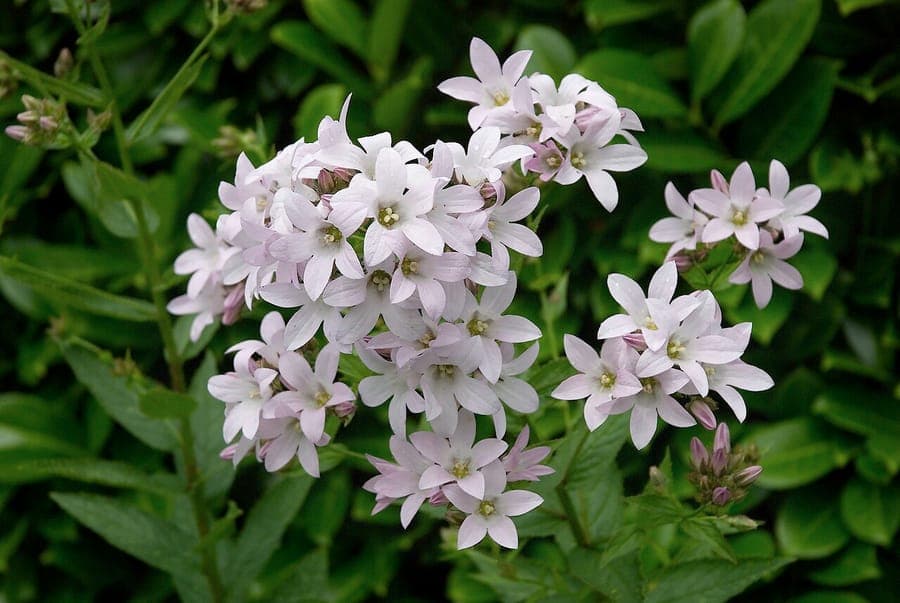
Wouter Hagens / Public domain, via Wikimedia Commons
Milky Bellflower: complete guide
Campanula lactiflora
¿Quieres ver Milky Bellflower: complete guide en tu jardín?
1 minuto, sin tarjeta de crédito
Overview
The Milky bellflower (Campanula lactiflora) is a stately perennial from the bellflower family (Campanulaceae). Native to the mountain regions of northeastern Turkey, Iran, and the Caucasus, this plant makes an impressive display in any garden setting.
Appearance and bloom cycle
The Milky bellflower grows 120-150 cm tall, forming dense flower panicles. Flowers are typical bell-shaped campanula blooms, usually white to soft pink, appearing from June through September. This extended bloom period provides months of floral interest.
Leaves are oblong and hairy-textured, adding visual interest beyond the flowering season. Growth is sturdy and upright, ideal for borders and perennial plantings.
Ideal location
Place your Milky bellflower in full sun to part shade, requiring at least 4-6 hours of direct sunlight daily for optimal flowering. In very hot climates, afternoon shade is beneficial.
This height makes it perfect for mid-to-back placement in borders and cutting gardens. The tall stems provide excellent cut flower material.
Soil requirements
The Milky bellflower prefers well-draining soil with average moisture. Heavy clay should be amended with sand and compost. Waterlogged soil causes winter root rot.
Optimal pH ranges from neutral to slightly alkaline (pH 6.5-7.5). Add plenty of organic matter at planting time. A thick compost layer helps retain moisture without waterlogging.
Watering
Water regularly during the growing season, especially in dry periods. Soil should remain moist but never soggy. Once established, the plant tolerates moderate drought well.
Supplementary watering may be necessary during extended dry spells. Container plants require more frequent checking than garden-grown specimens. Keep drier in winter.
Diseño gratis
¿Quieres ver Milky Bellflower: complete guide en tu jardín? Crea un diseño gratis ahora.
Pruning
Stake or support plants as their height makes them susceptible to wind damage. Good airflow through staking prevents disease.
Deadheading spent flowers extends the bloom season. Cut back to approximately 5 cm above ground in late autumn. Pinching young shoots in spring creates a more compact plant.
Maintenance calendar
March-April: Stems emerge from dormancy. Refresh soil and add compost. Install supports.
May-June: Begin regular watering. Start monthly feeding.
June-September: Flowering period. Water regularly and remove spent blooms. Check supports.
October-November: Flowering diminishes. Stop feeding. Cut back in early December.
December-February: Dormant season. Water sparingly in very dry periods.
Winter hardiness
The Milky bellflower is fully hardy to USDA zone 3 (-35°C). No winter protection needed in temperate climates. Good drainage helps in very wet winters.
Old foliage can remain until late autumn, providing young shoot protection.
Companion plants
Combine beautifully with other tall bloomers like delphiniums and summer chrysanthemums. Softer plant forms provide textural contrast to the dense flower panicles.
Use lower-growing perennials like sedges and sedums as edging. Works well in borders alongside gaura and verbascum.
Closing thoughts
The Milky bellflower is a reliable and beautiful choice for permanent plantings. With extended bloom time and stately presence, it adds elegance to any garden design. Check your local garden center or nursery for plant selections. Explore more garden inspiration on gardenworld.app.
¿Quieres ver Milky Bellflower: complete guide en tu jardín? Crea un diseño gratis ahora.
Sube una foto, elige un estilo y obtén un diseño fotorrealista con lista de plantas en menos de un minuto.
Más de 10.000 jardines diseñados
Sin tarjeta de crédito


Plantas similares
Campanula alaskana: complete guide
Campanula alaskana
Discover Campanula alaskana, the delicate alpine bellflower from Alaska. Growing tips, hardy requirements, and design ideas for rock gardens and alpine troughs.
Campanula scouleri: complete guide
Campanula scouleri
Discover Campanula scouleri, the refined Pacific bellflower. Growing tips, care requirements, and design ideas for woodland and mountain gardens.
Doublehorn calicoflower: complete guide
Downingia bicornuta
All about Downingia bicornuta - the doublehorn calicoflower: sowing, location, bloom and care for this rare annual in your garden.