
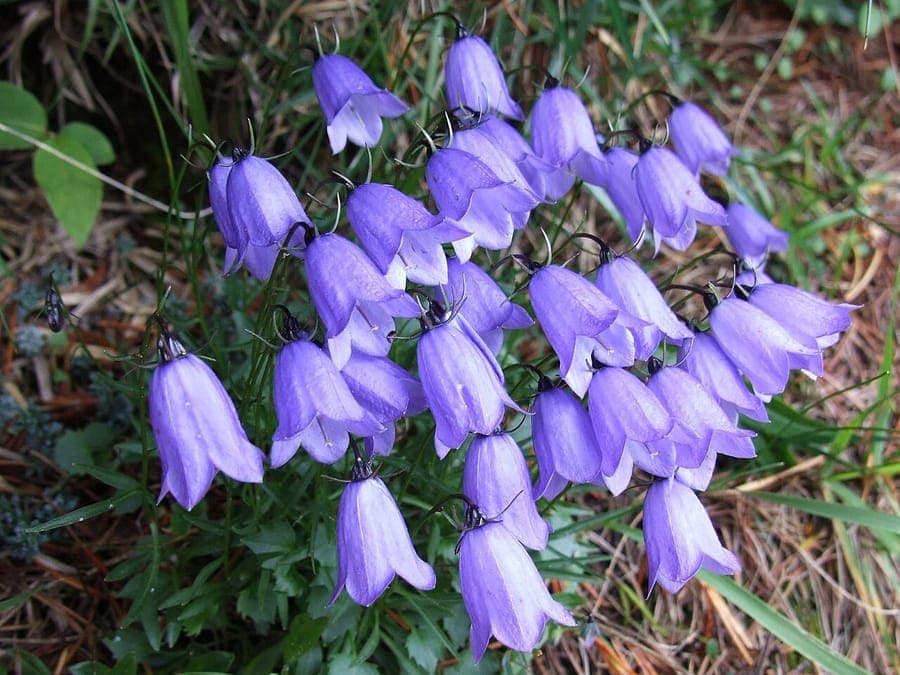
Jerzy Opioła / CC BY-SA 4.0, via Wikimedia Commons
Fairies'-thimbles: complete guide
Campanula cochleariifolia
¿Quieres ver Fairies'-thimbles: complete guide en tu jardín?
1 minuto, sin tarjeta de crédito
Overview
The Fairies'-thimbles (Campanula cochleariifolia), also called earleaf bellflower or dwarf bellflower, is a charming miniature alpine plant from the Pyrenees and Carpathians. This delicate species, with its exquisite blue to purple flowers, is essential for alpine gardens and rock features.
Appearance & bloom cycle
Fairies'-thimbles grows into diminutive tufts just 5-10 cm tall, spreading via underground rhizomes to 30 cm wide. Leaves are tiny (0.5-1 cm), spoon-shaped and glossy green - remarkably elegant compared to larger bellflowers.
The flowers are the main attraction - delicate, drooping small bells in soft blue to lavender-purple, approximately 1 cm long. They appear in July-September in astonishing numbers on fine stems. A single plant can produce hundreds of flowers.
Attractive seed heads follow. The plant is evergreen to semi-evergreen.
Ideal location
This plant tolerates full sun to half-shade. Full sun produces the most prolific flowering. Fairies'-thimbles thrives in steep rock crevices, alpine troughs, and gravel beds. It requires perfect drainage.
Winter hardiness is excellent - hardy to USDA zone 3 (-35°C). Garden centres throughout the UK stock this miniature treasure.
Soil requirements
Perfect drainage is essential. Create a gravel mix with coarse sand and fine gravel. The plant tolerates poor soils better than fertile soils. Apply no fertilizer.
This plant grows best in neutral to slightly acidic soil (pH 5.5-7.0). Strongly alkaline soils can cause problems.
Diseño gratis
¿Quieres ver Fairies'-thimbles: complete guide en tu jardín? Crea un diseño gratis ahora.
Watering
Ensure perfect drainage - this is paramount. Water when the top 1 cm of soil feels dry. Once established, this plant is remarkably drought-tolerant. Avoid overwatering.
In winter, minimal water is needed - only in extreme drought.
Pruning
This plant requires no pruning. Its natural tuft form is perfect. Remove only dead leaves or damaged stems.
Maintenance calendar
- March-April: Check drainage. New growth emerges. Minimal intervention.
- May-June: Monitor for weeds. Small plants can be smothered by larger weeds.
- July-September: Flowering period - the highlight! Water lightly if extremely dry.
- October-November: Collect seed if you wish to propagate.
- December-February: Winter dormancy. Plant is evergreen, always visible.
Winter hardiness
Fairies'-thimbles is very hardy to USDA zone 3 (-35°C). In wet winters, roots can rot, so perfect drainage is essential.
Companion plants
Perfect alpine companions:
- Sempervivum and other sedums
- Saxifrages and alpine relatives
- Tiny sedums
- Edelweiss
- Alpine cinquefoils and other alpine plants
Plant in clusters of 3-5 for maximum effect. Perfect for miniature alpine designs on gardenworld.app.
Closing thoughts
The Fairies'-thimbles is a miniature alpine gem. With its delicate flowers and minimal care requirements, this plant deserves a place of honour in alpine gardens. Ideal scale for contemporary alpine designs.
¿Quieres ver Fairies'-thimbles: complete guide en tu jardín? Crea un diseño gratis ahora.
Sube una foto, elige un estilo y obtén un diseño fotorrealista con lista de plantas en menos de un minuto.
Más de 10.000 jardines diseñados
Sin tarjeta de crédito


Plantas similares
Campanula alaskana: complete guide
Campanula alaskana
Discover Campanula alaskana, the delicate alpine bellflower from Alaska. Growing tips, hardy requirements, and design ideas for rock gardens and alpine troughs.
Campanula scouleri: complete guide
Campanula scouleri
Discover Campanula scouleri, the refined Pacific bellflower. Growing tips, care requirements, and design ideas for woodland and mountain gardens.
Doublehorn calicoflower: complete guide
Downingia bicornuta
All about Downingia bicornuta - the doublehorn calicoflower: sowing, location, bloom and care for this rare annual in your garden.